On This Page

July 16, 20267 min read

Imagine standing near a busy road, at a construction site, or beside loudspeakers at a music event. Each situation exposes you to different levels of sound. While some noise is harmless, continuous exposure to high noise levels can cause permanent hearing damage over time.
That’s why monitoring sound levels matters, especially in workplaces and public spaces where noise exposure is continuous. Understanding how sound intensity is measured and controlled, let’s start with the tool designed for the job: the decibel meter.
In this article, we’ll explore what a decibel meter is, how it works, what sound is measured in, and how to determine when noise becomes too loud. Whether you’re a safety professional, employer, or someone simply looking to manage noise exposure, this article will help you understand how to measure and control sound effectively.
A decibel meter is a device used to measure sound pressure level in decibels (dB), the standard unit for indicating the loudness or quietness of a sound. It’s also commonly called a sound level meter or noise meter.
The device typically includes a microphone (to capture sound waves), an amplifier (to boost the signal), a processor (to analyse the data), and a digital display (to show results). It converts sound waves into electrical signals and expresses them in decibel readings.
Decibel meters are used in various settings, including workplace noise surveys, environmental monitoring, and home and neighbourhood noise checks. They help identify whether a particular environment meets health and safety standards or poses a risk to hearing.
In short, a decibel meter is a practical tool that enables users to understand and control sound exposure accurately. But before you start using one, it’s essential to know precisely what the device measures and what a “decibel” actually means.
Sound is measured in decibels (dB), a logarithmic scale that compares the intensity of sound pressure relative to a reference value of 20 micropascals (µPa). This reference represents the faintest sound the average human ear can detect.
Here’s how different sounds compare on the decibel scale:
Sound Source | Approx. dB Level |
Quiet library | 30 dB |
Normal conversation | 60 dB |
Busy traffic | 90 dB |
Rock concert or Siren | 120 dB |
Now that you can visualise how sound levels vary, let’s explore what those numbers actually mean for your hearing. Because the human ear doesn’t respond equally to all frequencies, sound measurements often use the A-weighted scale, shown as dB(A). This scale reflects how humans actually perceive sound and is the standard for most health and safety assessments.
In simple terms, the higher the decibel value, the louder the sound and the more attention you should pay to protecting your hearing.
A decibel chart visually shows how sound levels relate to real-world noises. It’s a simple way to know when everyday sounds become potentially dangerous.
Sound Source | Approx. Decibel (dB) Level | Category / Effect on Hearing |
Breathing | 10 dB | Barely audible-very quiet |
Whisper or rustling leaves | 20-30 dB | Soft and safe |
Quiet library | 30-40 dB | Peaceful and comfortable |
Normal conversation | 55-65 dB | Typical, safe, daily sound |
Office background noise | 60-70 dB | Acceptable but continuous exposure may cause fatigue |
Busy traffic | 80-90 dB | Loud - prolonged exposure can be harmful |
Lawnmower or power tools | 90-100 dB | Hearing protection recommended |
Motorcycle or nightclub | 100-110 dB | Unsafe for long periods |
Rock concert or siren | 110 - 120 dB | Dangerous-can cause pain or hearing damage |
Jet engine (close range) | 130-140 dB | Extremely loud- immediate damage possible |
Fireworks or gunshot | 150+ dB | Pain threshold-permanent hearing loss likely |
Noise above 85 dB can cause hearing loss with prolonged exposure. A decibel chart helps you assess which sounds are safe, when protection is necessary, and where noise control measures should be applied.
Understanding where your environment sits on this scale and using a noise meter to verify is key to maintaining healthy hearing levels.
Experts such as the World Health Organisation (WHO) provide clear guidance on safe decibel levels for humans:
Below 70 dB: Safe for long-term exposure.
85 dB for up to 8 hours: Acceptable workplace limit.
100 dB: Risk of hearing damage after 15 minutes.
120 dB+: Immediate harm possible.
Long-term exposure to noise above 85 dB may cause irreversible hearing loss. The higher the decibel level, the shorter the safe exposure time. To protect yourself:
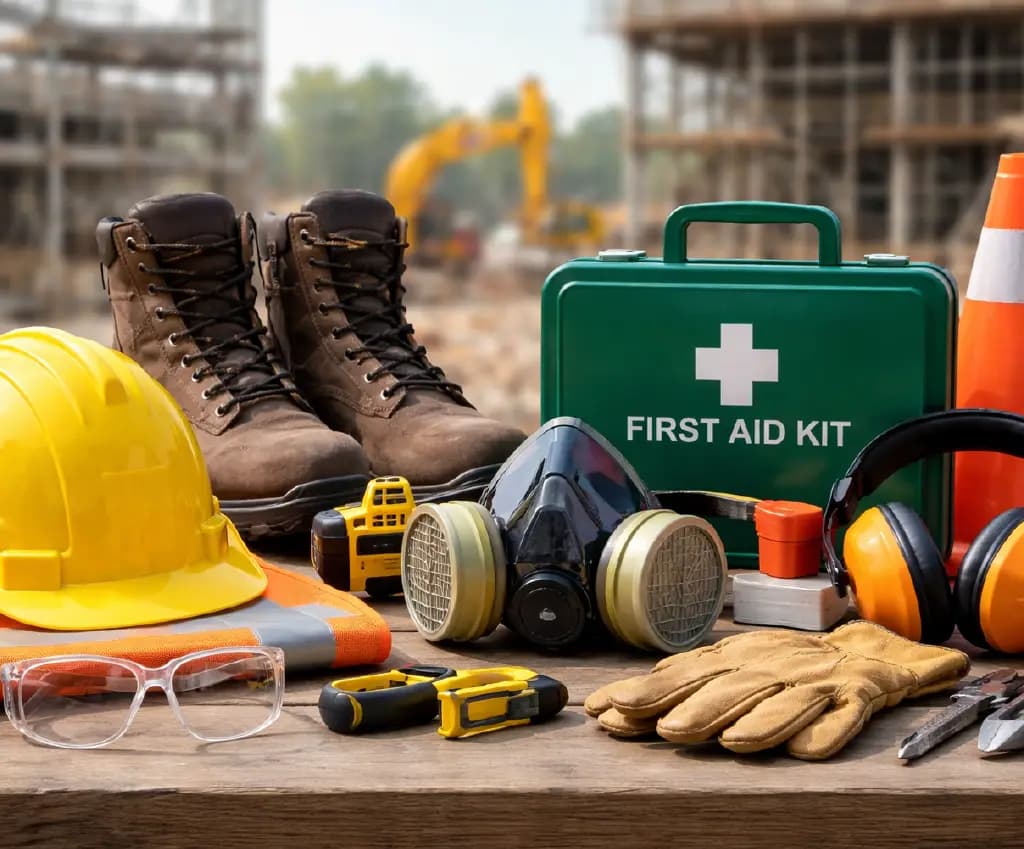
Use hearing protection (earplugs or earmuffs).
Limit exposure to loud environments.
Regularly measure noise with a decibel meter.
Even moderate noise, when experienced over many hours daily, can lead to cumulative damage, making awareness and monitoring essential.
The answer depends on both loudness and duration. Noise becomes “too loud” when it starts to strain your hearing or cause discomfort, even temporarily.
Here are a few examples:
90 dB (lawn mower): Hearing damage possible after several hours.
100 dB (concert or nightclub): Risk after 15–30 minutes.
120 dB+ (siren, fireworks): Immediate pain and damage possible.
If you find yourself raising your voice to be heard, it’s a sign the environment is already too loud. Using a decibel meter or noise meter app can help you check noise levels in real time and take action, especially if readings consistently exceed 85 dB.
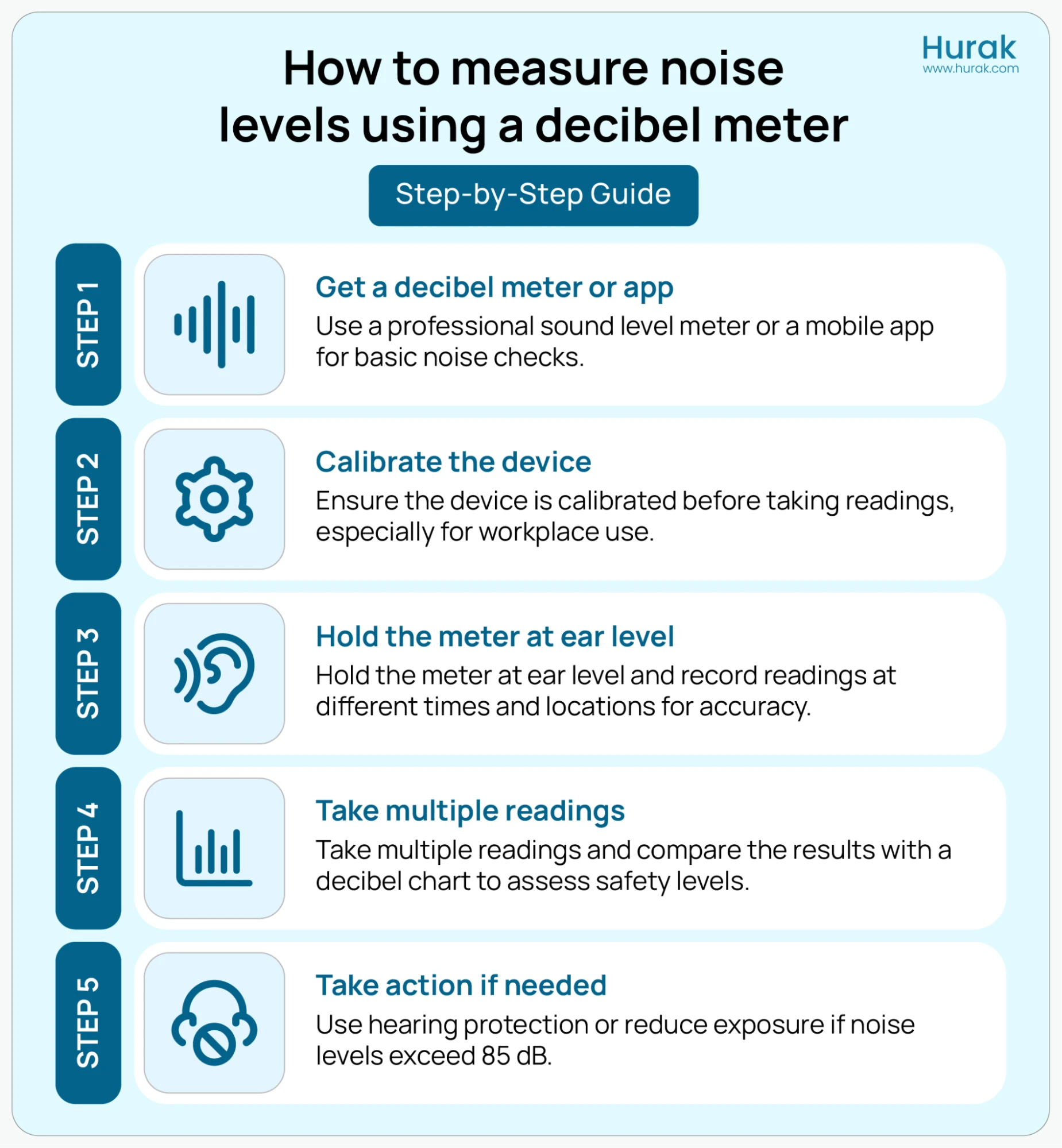
Measuring sound is straightforward when done correctly. Follow these simple steps to get accurate results:
Get a Decibel Meter or App: Use a professional sound level meter for precise readings, or a smartphone app for quick checks.
Calibrate the Device: Calibration ensures your readings are accurate, especially for workplace safety inspections.
Hold the Meter at Ear Level: This helps capture the actual sound exposure a person experiences.
Take Multiple Readings: Measure at different times and distances to find average exposure levels.
Record and Compare: Match readings to the decibel chart to determine if noise levels are within safe limits.
Take Action: If readings exceed 85 dB, use ear protection or reduce exposure time.
Decibel meters come in different types to suit various needs:
Type 1 (Precision Grade): Used in laboratories or professional testing environments. Offers the highest accuracy and complies with strict standards.
Type 2 (General Purpose): Ideal for use in workplaces, schools, or at home, this device is accurate enough for everyday noise monitoring.
You’ll also find digital and analogue meters, as well as mobile noise meter apps. While apps are convenient, they can’t always match the precision of calibrated instruments. Workplaces conducting official noise assessments should always use Type 1 or Type 2 calibrated meters that meet international standards such as IEC 61672.
When selecting a decibel meter, look for these important features:
Measurement Range: Typically 30–130 dB.
Frequency Weighting: A or C weighting (A is most common for human hearing).
Data Logging: Useful for recording long-term readings.
Display Readability: A clear, backlit screen helps in all lighting conditions.
Portability and Battery Life: Handy for field inspections.
Check for compliance with IEC 61672 or ANSI S1.4 standards to ensure accuracy. The right decibel meter helps professionals conduct practical noise assessments and maintain workplace compliance, reducing risks and protecting hearing health.
Workplace noise isn’t just disruptive; it can cause long-term hearing damage, reduce focus, and increase accident risks when warnings aren’t heard. Protecting employees starts with the right training and legal compliance.
Build a safer workplace with our accredited Health & Safety courses:
Empower your team to manage risks confidently and stay compliant.
Decibel meters have a wide range of uses across industries and daily life:
Construction Sites: Monitor heavy machinery noise and protect workers.
Workplaces: Ensure compliance with legal noise exposure limits.
Hospitals and Schools: Maintain quiet, controlled environments.
Entertainment Venues: Manage speaker volume to prevent overexposure.
Home & Neighbourhood: Measure and manage unwanted background noise.
By using a noise meter, both organisations and individuals can create safer, more comfortable spaces while meeting health and safety standards.
Employers are legally responsible for managing workplace noise exposure under UK health and safety law. Accurate noise risk assessments depend on reliable readings from a decibel meter.
Regular monitoring helps identify noisy areas, determine safe exposure durations, and decide when protective equipment is required.
By integrating noise monitoring into everyday safety culture, employers can ensure compliance and protect their employees’ hearing for the long term.
Monitoring sound isn’t just about comfort; it’s about protection. Prolonged exposure to high noise levels can lead to irreversible hearing damage, making awareness and measurement essential.
A decibel meter helps you understand your environment, identify risks, and stay within safe decibel levels for humans.
Whether you’re a safety professional or simply mindful of your surroundings, start measuring today.
A decibel meter measures sound intensity to check if noise levels are safe for hearing or need control measures.
They’re suitable for general checks but lack the precision of professional, calibrated sound level meters.
Sound is measured in decibels (dB), indicating the strength of sound pressure.
Anything above 85 dB can be harmful over time, while 120 dB+ can cause immediate damage.
Continuous exposure below 70 dB is safe; 85 dB for 8 hours is the occupational limit.
Use a decibel meter or noise meter app, hold it at ear height, and compare readings with a decibel chart.
Courses
Upskill with job-ready training.
Mock Tests
Measure your learning progress.
Create an online video course, reach students across the globe and earn money