
When a child’s cheeks suddenly turn bright red, it can be a source of concern for parents. However, in most cases, red cheeks in children are harmless and do not require alarm. This common occurrence is often linked to
slapped cheek syndrome, also known as fifth disease, which is caused by the parvovirus B19 and typically affects children between the ages of 4 and 15.
While it’s less common in adults, it can still occur. Despite the striking red rash on the cheeks, slapped cheek syndrome is not a dangerous illness and usually resolves on its own.
In this article, we’ll explore the causes of red cheeks in children, the symptoms of slapped cheek syndrome, how the virus spreads, and answer key questions, such as whether children can attend school with the rash and whether pregnant women are at risk.
What Does a Slapped Cheek Look Like?
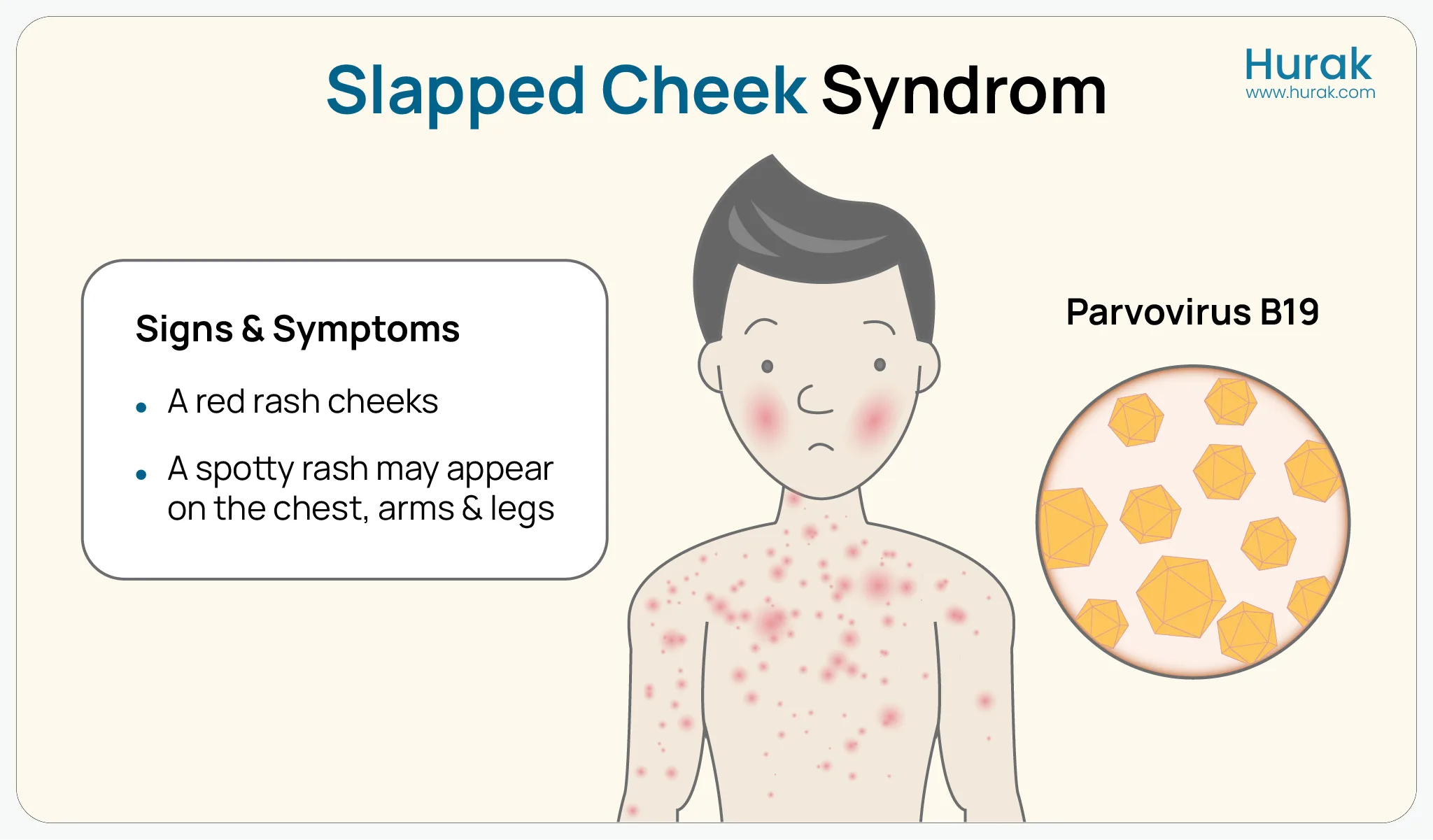
If you’re curious about what slapped cheek looks like, the image above represents the typical appearance of this condition. The rash gives the child’s cheeks a bright red, flushed appearance, as if they have been slapped, which is why it’s commonly known as slapped cheek syndrome.
Typically, the rash begins on both cheeks, giving them a bright, flushed appearance, and it may later spread to the rest of the body.
Symptoms of Fifth Disease
Early signs of the fifth disease in children can be subtle, making it tricky for parents to recognise. It usually begins with mild flu-like symptoms, which may appear a few days before the distinctive red cheeks develop.
Common early symptoms include:
- Mild fever or low temperature
- Headache or general discomfort
- Runny or stuffy nose
- Sore throat
- Upset stomach
After these initial signs, children typically develop bright red cheeks, which may sometimes spread to the chest, back, arms, and legs. Teenagers and adults may also experience joint pain or swelling in some cases.
Can Toddlers Have Red Cheeks Without Fever?
Yes, your child might not have a high temperature, but they may still have slapped cheek syndrome.
While fever is a common symptom in many children with fifth disease, it’s not always present. In some cases, toddlers can develop red cheeks without any signs of fever. The flushed, red cheeks are the key sign of parvovirus B19, and they can appear with or without a fever.
If you notice red cheeks in your toddler but no fever, the rash could still be due to fifth disease, which is usually mild and resolves on its own. However, if you’re concerned, check for any of the other symptoms mentioned earlier.
How Long Does Slapped Cheek Syndrome Last?
The rash from slapped cheek syndrome typically disappears within 1 to 3 weeks. However, it’s not uncommon for the rash to come and go during this time, particularly if the child is exposed to heat, stress, or sun.
While joint pain or stiffness can affect both children and adults, it is more common in adults and may persist for several weeks. Fortunately, it usually resolves without causing long-term issues.
What Causes Red Cheeks in Children?
The most common cause of red cheeks in children is slapped cheek syndrome, which is caused by parvovirus B19, as we discussed earlier.
This virus spreads primarily through respiratory droplets when an infected person coughs or sneezes. It can also be transmitted through hand-to-hand contact or by touching contaminated surfaces and objects. Parvovirus B19 is most contagious before the rash appears, during the phase when the child may have cold-like symptoms. Once the rash develops, the child is usually no longer infectious, and the risk of spreading the virus is significantly reduced.
Can My Child Go to School with Slapped Cheeks?
Yes, once the rash has appeared, it’s generally safe for your child to return to school.
Although slapped cheek syndrome is contagious before the rash develops, the risk of spreading the virus significantly decreases once the rash is visible. Most schools and childcare settings allow children to return once the rash appears.
However, in the event of an emergency situation in school, having trained personnel and a structured first aid program in place is crucial for ensuring the safety and well-being of students and staff.
It is best to keep your child at home if they are still feeling unwell or have other symptoms.
Managing Slapped Cheek Syndrome: Treatment and Prevention
Slapped cheek syndrome is a viral infection that usually resolves without medication, however, there are a few simple steps you can take to ease your child’s symptoms and prevent spreading the virus to others.
Do’s and Don’ts of Treatment and Prevention:
Do:
- Ensure your child rests as much as possible to help them recover.
- Encourage your child to drink plenty of fluids to stay hydrated. Babies should continue their regular feeds.
- Wash your hands frequently to help prevent the spread of the virus.
- Use tissues when coughing or sneezing, and dispose of them immediately.
Don’t:
- Do not give aspirin to children under 16, as it can cause Reye’s syndrome, a rare but serious illness linked to viral infections.
- Do not expose your child to direct sunlight or hot weather, as the rash can become more pronounced.
- Don’t send your child to school or daycare while they have symptoms before the rash appears, as this can help prevent the virus from spreading.
While slapped cheek syndrome typically resolves on its own, following these simple steps can help make your child more comfortable and reduce the risk of spreading the infection to others.
Additionally, having knowledge of the 3 P’s of first aid can be incredibly useful, as it allows you to act quickly and effectively in case of an emergency.
Potential Risks of Fifth Disease for Vulnerable Groups
Although fifth disease is generally mild, it can cause severe complications for certain people. Understanding the risks and knowing when to seek medical advice is essential, particularly for those in high-risk categories such as:
Pregnant Women
Pregnant individuals, especially those in the early stages of pregnancy, face a higher risk of complications. The virus can cause fetal anaemia, which in rare cases can lead to miscarriage or stillbirth, though most pregnancies are unaffected.
People with Weakened Immune Systems
Those with weakened immune systems, such as individuals with HIV/AIDS or cancer, can experience severe anaemia as a result of parvovirus B19. This may require medical intervention, including blood transfusions, to restore red blood cell levels.
People with Blood Disorders
People with blood disorders such as sickle cell anaemia or thalassemia may experience complications from fifth disease due to a drop in red blood cells. This can lead to severe symptoms and may require hospital treatment.
If you or someone you know belongs to one of these high-risk categories, it is essential to consult with a healthcare provider to manage the situation effectively. Prompt treatment, close monitoring, and preventive measures can significantly reduce the risk of complications.
Additionally, having emergency first aid training can be beneficial, as it enables you to handle the situation before help arrives, potentially saving lives and preventing the situation from worsening.
When Should I Call the Doctor?
If you’re ever unsure whether your child or you needs medical attention, it’s always better to be cautious. Certain symptoms and high-risk situations require prompt consultation with a healthcare professional to ensure safety and proper care.
In Case of Children:
|
In Case of Adults or People with the Following Conditions
|
Conclusion:
While slapped cheek syndrome is usually harmless, being aware of the symptoms and knowing how to care for your child during an outbreak is essential. If you or your child belongs to a high-risk group, or if you’re concerned about any symptoms, seeking timely medical advice is crucial.
Additionally, being prepared with first aid knowledge is invaluable, especially in case of emergencies. Although the symptoms are generally mild and resolve on their own, your understanding of the situation, combined with prompt actions, can make a significant difference in your child’s recovery.