On This Page

July 20, 20268 min read

If your child suddenly develops a red, rough rash along with a sore throat and fever, you might be wondering if it’s scarlet fever. Scarlet fever is a contagious bacterial infection that mostly affects children, though adults can get it too. Scarlet fever is caused by the same bacteria that cause strep throat. This often starts with fever, sore throat, and a bright red rash. If your child has any of these symptoms, it is important to treat them early with antibiotics. If treated properly, scarlet fever does have an excellent prognosis. Early diagnosis will help avoid serious complications and allow your child to return to their regular activities sooner rather than later.

Understanding scarlet fever helps parents and carers take early precautions to prevent the illness. The cause of scarlet fever is a bacterial infection triggered by Streptococcus pyogenes (group A streptococcus), the same bacteria responsible for strep throat. This infection releases toxins that lead to the characteristic red rash, sore throat, and high fever associated with scarlet fever.
Scarlet Fever is a highly infectious disease; transmission occurs via respiratory droplets (from sneezing, coughing, etc.) produced by an affected individual, or through direct contact with contaminated surfaces and objects (such as sharing personal items, including cutlery, towels, toys, etc.). The age group most commonly affected by scarlet fever is 5-15 years, particularly in close-contact settings, such as daycare centres and schools. Like children, adults can also develop Scarlet Fever, but most cases in adults manifest with milder symptoms.
Bacteria can spread from one person to another for a few days before symptoms appear, and they can still spread after 24 hours of starting antibiotic treatment. Therefore, it is essential that people with scarlet fever be diagnosed promptly and treated with prescribed antibiotics. In addition to speeding up recovery, prompt treatment prevents the continued spread of the disease among family and friends.
To reduce the risk of infection, practice good hygiene habits, such as frequent handwashing, avoiding shared cups or cutlery, and keeping children home from school until they are fully recovered. Understanding both the cause and spread of scarlet fever is the first step toward protecting yourself and others.
The symptoms of scarlet fever can look slightly different depending on a person’s age. While the infection most often affects children between 5 and 15, babies and adults can also catch it. Recognising the signs of scarlet fever early, such as fever, sore throat, and the typical scarlet fever rash, helps in getting the proper treatment quickly and preventing complications.
Babies | Children (5–15 years) | Adults |
Mild or low-grade fever | Sudden high fever | Moderate fever or body ache |
Irritability and crying more than usual | Sore throat and difficulty swallowing | Sore throat and mild fatigue |
Poor feeding or refusal to eat | Headache and chills | Headache and mild chills |
Rah may appear faint or patchy | Classic scarlet fever rash- red,sandpaper-like texture starting on the chest and neck | Sometimes a mild or no rash |
Vomiting or upset stomach | Nausea and vomiting | Mild nausea or upset stomach |
Fussiness and tiredness | Swollen glands in the neck | Slight swelling of glands |
Peeling skin is less common | Peeling skin on fingers and toes during recovery | Peeling skin is mild or absent |
Hard to notice strawberry tongue | Distinct strawberry tongue -Red and bumpy | Red tongue may occur |
Cough or cold-like symptoms | Flushed face with a pale area around the mouth | Facial redness may appear mild |
Dehydration signs- dry mouth, fear wet nappies | Fatigue and general weakness | Fatigue and body aches |
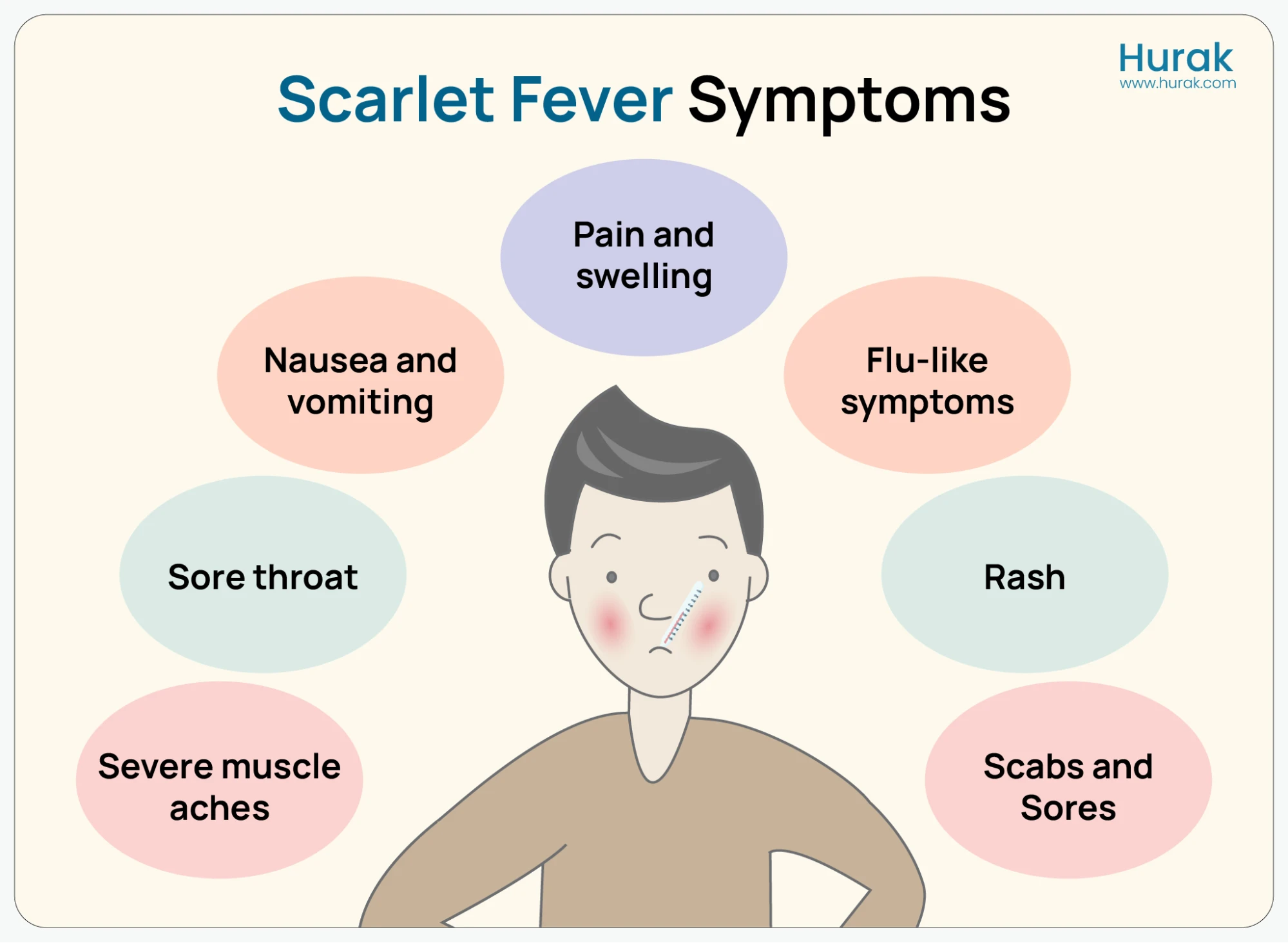
Even though the signs of scarlet fever vary slightly, the most common features across all ages include a sore throat, fever, and the scarlet fever rash, which feels rough like sandpaper and spreads from the chest and neck to other parts of the body. Early attention to these symptoms can help prevent the infection from becoming serious or spreading to others.
If you notice any scarlet fever symptoms, it’s essential to see a doctor right away. Diagnosis is usually made through a physical examination and a throat swab to detect group A streptococcus, the leading cause of the infection. In some cases, doctors may run a rapid strep test for faster results. Early diagnosis ensures timely antibiotic treatment, speeds recovery, and helps stop the infection from spreading within families or classrooms.
To regain a person’s health as quickly as possible, immediate medical attention is essential. The primary treatment for scarlet fever involves administering antibiotics to eliminate the Group A Streptococcus bacteria. Taking the antibiotic will shorten the time the patient remains contagious and lower the risk of serious complications, such as rheumatic fever or kidney inflammation. Although some antibiotics are commonly prescribed for scarlet fever, it is important to complete the full course to ensure all bacteria are killed, even if the patient feels better before finishing the regimen.
In addition to antibiotics, doctors may recommend:
Fever reducers (as advised by your doctor)
Adequate hydration to replace fluids lost from fever or sweating
Plenty of rest to help the body recover
Soothing warm liquids to relieve soreness.
With proper treatment, most children will start to feel better between 48 and 72 hours. The rash associated with scarlet fever typically resolves within 1 week of starting antibiotic treatment; peeling of the skin on the hands and feet may occur during the healing phase, but this condition resolves naturally.
Full recovery generally takes 5 to 7 days, although fatigue can persist slightly longer. During this period, it’s essential to:
Continue resting and staying hydrated
Monitor the rash and other symptoms for improvement.
Complete the entire antibiotic course, even if the child feels well.
With proper treatment, most children start feeling better within a few days, and the rash typically fades within a week. Scarlet fever treatments are effective, and the infection usually resolves completely with medical care. Alongside proper medical care, knowing the benefits of first aid training ensures an immediate and effective response at home or school.
Although most people recover fully with timely scarlet fever treatment, untreated or delayed cases can sometimes lead to serious complications. These occur when the group A streptococcus bacteria spread to other parts of the body or when the immune system reacts to the infection.
Untreated scarlet fever can result in various complications, including the following:
Rheumatic fever: A condition that causes an inflammatory response in the heart, joints, and nervous system.
Post-streptococcal glomerulonephritis: An inflammatory disease of the kidney.
Ear or sinus infections: may develop from direct bacterial spread from the throat to these areas.
Pneumonia or abscesses: rare but serious bacterial complications of untreated scarlet fever.
Joint pain or swelling: resulting when the immune system is in the process of reacting to an infection with streptococcus bacteria.
Children under five years old, individuals with weakened immune systems, or those who delay medical treatment are more at risk of developing these complications. Early antibiotic therapy and proper rest remain the best ways to avoid such outcomes.
While scarlet fever is most common among school-aged children, adults can also contract the infection, especially parents, teachers, or caregivers who are in close contact with children. Adult cases usually present milder symptoms, such as sore throat, fever, fatigue, and occasionally a faint scarlet fever rash.
Adults can transmit the bacteria even when symptoms are mild. Therefore, practising good hand hygiene, avoiding any contact with those who are infected, and ensuring you finish all antibiotic prescriptions are important for preventing further spread of the infection.
Understanding the potential for disease spread reduces the risk of outbreaks in family, work, or community environments. You may wish to conduct research if you are uncertain of the best first aid method for your situation in order to make a sound, scientific decision.
Taking simple precautions can go a long way in preventing the spread of scarlet fever, especially in households, schools, and childcare settings. Because scarlet fever is contagious, especially among children, maintaining good hygiene is key to preventing its spread. Since the illness is highly contagious, practising good hygiene and responding early to symptoms helps protect both children and adults.
To reduce the risk of infection and stop the spread of scarlet fever symptoms:
Wash your hands frequently with soap and water, especially after coughing, sneezing, or touching shared surfaces.
Avoid sharing utensils, cups, towels, or toothbrushes with anyone who is ill.
Cover coughs and sneezes with a tissue or elbow to prevent droplets from spreading.
Keep infected children at home until they’ve taken antibiotics for at least 24 hours and are fever-free.
Clean and disinfect commonly touched objects, such as toys, doorknobs, and countertops.
These habits not only reduce the chances of catching scarlet fever but also help contain the infection before it spreads to others. These prevention steps align with the key principles of the 3 P’s in first aid, helping reduce risks and respond safely.

Seek immediate medical attention if your child or another family member shows any of the following:
High or persistent fever that does not respond to medication
Difficulty breathing or swallowing
Rash spreading quickly or becoming painful.
Extreme tiredness or confusion
Symptoms are not improving after 48 hours of antibiotic treatment.
Most cases of scarlet fever recover smoothly with prompt care, but early medical attention ensures proper diagnosis, a faster recovery, and prevents complications such as rheumatic fever or kidney inflammation.
We believe that first aid training should be practical, easy to understand, and accessible to everyone. Enrolling in a Paediatric First Aid course, Emergency First Aid at Work (EFAW) and First Aid at Work ensures you learn the life-saving techniques under expert guidance
Scarlet fever is a contagious but treatable bacterial infection. Recognising the symptoms, understanding the causes, and seeking early treatment are key to ensuring a quick recovery. Most children recover fully with proper care, and adults can also be affected, though usually with milder symptoms. By following preventive measures and being alert to warning signs, parents and carers can protect their families and reduce the spread of this infection.
Choosing the right first aid training qualification is essential for ensuring you have the skills and knowledge to respond effectively in emergencies. Whether for workplace safety, childcare, or general preparedness, selecting a recognised and comprehensive course helps build confidence and competence.
Sore throat, fever, headache, swollen glands, nausea, rough red rash, and sometimes “strawberry tongue”.
Red, rough, sandpaper-like rash starting on the chest and neck, spreading to other areas.
Group A Streptococcus bacteria are spread through coughing, sneezing, or contaminated surfaces.
Antibiotics, rest, hydration, and fever management.
Yes, it spreads through droplets and close contact with infected people.
Yes, often milder symptoms, but adults can still spread it.
Typically 5–7 days with proper treatment.
Rarely, if untreated, complications can include rheumatic fever or kidney problems.
Red rash, sore throat, fever, headache, swollen glands, nausea, and sometimes strawberry tongue.
Expand your emergency preparedness by exploring our selection of first aid courses tailored to suit every need, profession, and level of experience:
Emergency First Aid at Work (1 Day): Teaches the essentials of CPR, wound care, and how to respond to unconscious casualties. Ideal for smaller businesses.
First Aid at Work Requalification Course (FAWR): A focused two-day course for those renewing their FAW certification before it expires. Refreshes essential knowledge and ensures full compliance with HSE standards.
First Aid at Work (3 Days): A full three-day qualification covering a wide range of medical emergencies essential for high-risk workplaces.
Paediatric First Aid (2 Days): Focused on child and infant care, including choking, fever, and allergic reactions.
Advanced First Aid Training: Go beyond the basics with advanced trauma care, oxygen use, and secondary assessments.
First Aid for Mental Health: Understand and support individuals showing signs of anxiety, stress, or depression.
Courses
Upskill with job-ready training.
Mock Tests
Measure your learning progress.
Create an online video course, reach students across the globe and earn money