

When the weather turns hot and sticky, that prickly, itchy feeling on your skin could be more than just sweat; it might be heat rash. This common skin irritation appears when sweat ducts get blocked, trapping sweat beneath the skin and causing small red bumps, itching, or a mild burning sensation. Heat rash can sneak up on anyone when the temperature climbs and your skin stays hot and moist. Heat rash is usually harmless and easy to treat at home. In this guide, we’ll explore the main causes of heat rash, the most common symptoms, and the best treatment and prevention tips to help you keep your skin cool, comfortable, and healthy all summer long.
What Is Heat Rash?
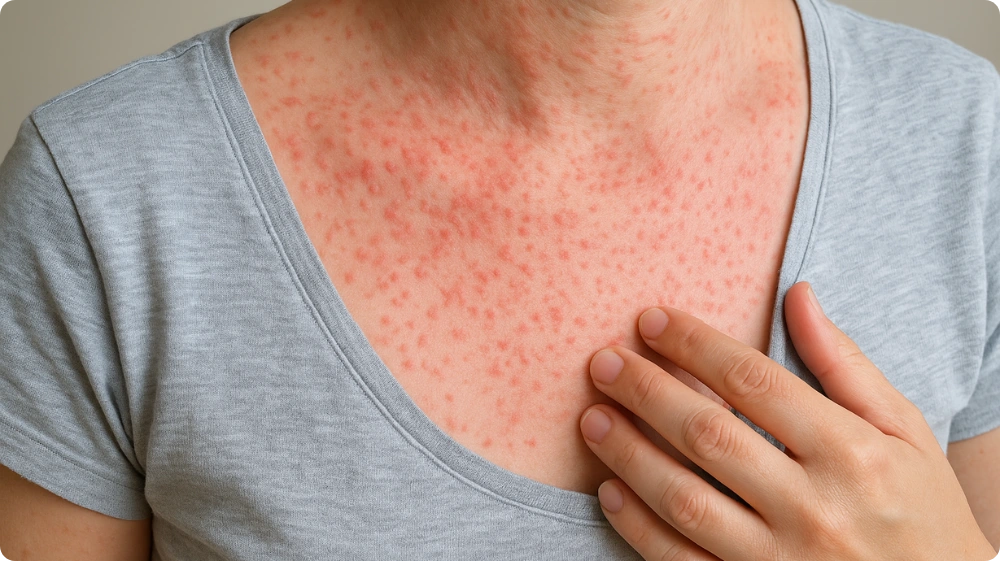
Heat rash, also known as prickly heat or miliaria, is a skin condition that develops when your sweat glands become blocked, trapping sweat under the skin. This leads to tiny red or pink bumps, mild swelling, and a prickly or itchy sensation. It often appears in areas where sweat tends to collect, such as the neck, chest, back, underarms, or groin.
Although anyone can get heat rash, it’s especially common in babies, young children, and people who are active in hot or humid conditions. It’s not contagious and usually clears up within a few days once your skin cools down and stays dry.
Causes of Heat Rash
Heat rash happens when sweat ducts become blocked, trapping perspiration beneath the skin instead of allowing it to evaporate. This trapped sweat irritates the surrounding tissue, leading to tiny red spots, itching, and a prickly or stinging feeling.
The most common causes of heat rash include:
- Hot and humid weather: When the air is moist, sweat doesn’t evaporate easily, making it more likely to get trapped under the skin.
- Excessive sweating: Vigorous exercise, outdoor work, or tight clothing can cause you to sweat more, increasing the risk of prickly heat.
- Overheating: Wearing heavy or synthetic clothing that doesn’t allow your skin to breathe can block sweat ducts.
- Friction: Skin rubbing against skin or fabric can irritate pores, leading to blocked sweat glands.
- Immature sweat ducts in babies: Because of this, sweat doesn’t move smoothly to the surface of the skin. Instead, it gets trapped under the skin, especially in hot or humid conditions.
This is why babies are more likely to get heat rash, their skin is more delicate, their sweat ducts are easily clogged, and they can’t regulate body heat as well as adults.
Symptoms of Heat Rash
The symptoms of heat rash can vary from mild irritation to more intense itching, depending on how deep the blocked sweat ducts are. You’ll typically notice heat rash symptoms such as an outbreak of small bumps (1–3 mm wide), often red on lighter skin or grey/white on darker skin tones. In most cases, it’s easy to recognise and often clears up on its own once your skin cools down.
Here are the most common signs and symptoms of heat rash to look out for:
- Tiny Red or Pink Bumps:
The first sign of heat rash is usually the appearance of small red or pink bumps on the skin. These bumps often feel rough or raised and may form in clusters. In lighter skin, they appear red; in darker skin, they may look more purple or dark brown. - Itching or Prickly Sensation:
Many people describe the feeling as tingling, prickly, or itchy, especially when they start sweating again. This discomfort is what gives the condition its common name – prickly heat. - Mild Swelling and Inflammation:
The affected area may look slightly swollen, warm, or tender to the touch. This happens as sweat becomes trapped beneath the skin, causing mild inflammation and irritation. - Tiny Fluid-Filled Blisters:
In more severe cases, heat rash can develop into small, clear blisters that may burst and release fluid. This type of heat rash is sometimes called miliaria crystallina. - Burning or Stinging Feeling:
The rash may cause a mild burning sensation, particularly in areas where sweat collects, such as the back, chest, or inner thighs. - Redness and Skin Irritation:
The skin around the rash often looks red or irritated, especially where clothing rubs or where skin folds meet. Tight clothing or friction can make the rash worse.
Where Heat Rash Commonly Appears
Heat rash often develops in warm, covered, or sweaty areas of the body, such as the:
- Neck and upper chest
- Back and shoulders
- Underarms and groin
- Inner thighs
- Under the breasts
- Elbows or waistline (where clothing fits tightly)
In babies and infants, heat rash is most common on the neck, shoulders, chest, and diaper area, where the skin is sensitive and often covered.
Heat rash can worsen quickly if not treated properly!
Learn how to spot, treat, and prevent heat-related issues with Hurak’s First Aid Courses. Begin with the Emergency First Aid at Work (EFAW), advance to the First Aid at Work (3 Days), or stay updated with the First Aid at Work Refresher Course.
These courses meet UK legal requirements and help you respond with confidence.
Allergic Reaction Heat Rash
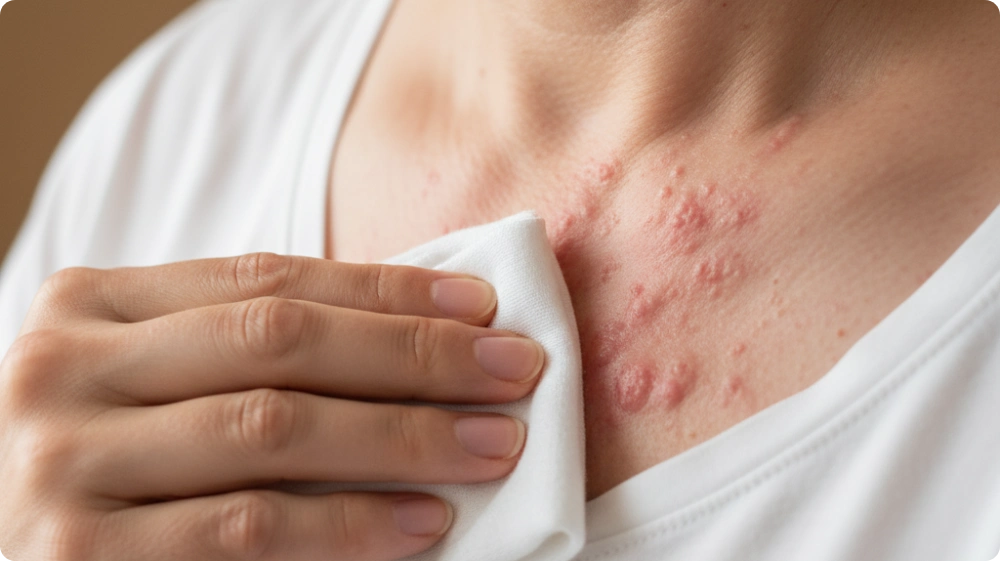
An allergic reaction heat rash is a type of skin irritation that develops when your body reacts to heat, sweat, or allergens such as skincare products, fabrics, or environmental triggers. It looks similar to a regular heat rash (prickly heat) but is actually caused by an allergic response rather than just blocked sweat glands. When your body becomes overheated your immune system releases histamines, leading to itching, redness, swelling, and small raised bumps on the skin.
This type of heat rash allergy often appears suddenly after sweating, sun exposure, or applying a product that doesn’t suit your skin. It can occur anywhere on the body, but is most common in areas that trap heat, such as the neck, back, underarms, chest, or inner thighs. People with sensitive skin, eczema, or a history of allergies are more likely to develop it.
Unlike a normal heat rash, which usually improves once your skin cools down, an allergic reaction heat rash may last longer and can become more irritating when you sweat again or come into contact with the same allergen. The rash might also feel warmer, itchier, and more inflamed, and in some cases, tiny hives (urticaria) may appear, but if the rash worsens or you experience swelling of the face or breathing difficulty, it’s important to seek medical advice.
Allergic Reaction vs Normal Heat Rash
| Feature | Allergic Reaction Heat Rash | Normal Heat Rash |
| Cause | Reaction to products or fabrics | Blocked sweat glands |
| Look | Red, raised bumps or hives | Small red or clear spots |
| Itching | Intense itching or burning | Mild prickly feeling |
| Swelling | Sometimes present | Rare |
| Improves with Cooling | Usually no | Yes |
| Duration | Lasts longer | Clears in a few days |
Heat Rash Treatment: How to Get Rid of Heat Rash Quickly
If you’re suffering from an itchy or prickly rash after being in hot, humid conditions, don’t worry; heat rash treatment is simple and effective when done early.
Move to a Cooler Area
Find a shaded or air-conditioned space as soon as possible. Cooling your body temperature helps stop sweating – the most effective first step in how to get rid of heat rash quickly.
Take a Cool Shower or Bath
Use cool (not cold) water and gentle, fragrance-free soap. After bathing, pat your skin dry with a soft towel instead of rubbing, as friction can worsen irritation.
Apply a Soothing Lotion or Natural Remedy
You can ease the itching and redness with gentle, cooling treatments such as:
- Aloe vera gel – naturally cools and hydrates irritated skin.
- Calamine lotion – helps relieve itching and reduce inflammation.
- Cold compress – applying a cool, damp cloth for 10–15 minutes can calm the rash.
Wear Loose, Breathable Clothing
Switch to cotton or lightweight fabrics that let air circulate. Tight or synthetic clothing can trap moisture, making heat rash symptoms worse.
Stay Hydrated
Drink plenty of water throughout the day. Hydration helps your body control its temperature and supports natural healing.
Avoid Scratching
Although tempting, scratching may break the skin and lead to infection, especially if it’s an allergic reaction heat rash. Try cool compresses or an antihistamine cream if itching is severe.
Most cases of heat rash clear up within a few days. However, you should seek medical advice if the rash becomes painful, develops pus-filled blisters, or is accompanied by fever, swelling, or dizziness.
How Long Does Heat Rash Last?
The duration of heat rash depends on how quickly you cool your body and treat your skin. In most cases, heat rash is a short-term skin irritation that clears up within a few days, especially once your skin is kept cool, dry, and free from friction. In mild cases, the rash improves within 2 to 3 days once you’re in a cooler environment and follow proper heat rash treatment steps. Babies and children may take a little longer to recover because their sweat glands are still developing, but the rash typically disappears on its own without any long-term effects.

However, the exact length of time can vary depending on the severity of the rash and how quickly treatment begins:
If the irritation persists or shows signs of infection, it’s best to seek medical advice. Taking simple precautions during hot weather can help you stay comfortable and prevent the rash from coming back.

Prevention of Heat Rash
Preventing heat rash starts with understanding what triggers it and making small adjustments to your daily routine.
Plan Your Activities Wisely
Try to avoid strenuous physical activity during the hottest hours of the day. Early mornings and late evenings are better times to exercise or work outdoors.
Keep Humidity Under Control
Use a fan or dehumidifier indoors if you live in a humid area. Proper ventilation helps reduce sweat buildup – a common cause of heat rash.
Maintain Good Skincare Hygiene
Exfoliate gently once or twice a week to remove dead skin cells that can block sweat glands. Always use mild, fragrance-free products suited for sensitive skin.
Avoid Heavy Fragrances or Harsh Products
Perfumed sprays, strong detergents, or chemical-based skincare can irritate the skin, sometimes triggering an allergic reaction or heat rash. Opt for hypoallergenic or dermatologically tested alternatives.
Being mindful of your environment and skincare choices is the best way to prevent heat rash. Consistent, gentle care keeps your skin calm, even when the temperature rises.
Conclusion
Heat rash is a minor discomfort, but by knowing its causes, identifying the symptoms, and using effective treatment and prevention measures, one can greatly minimise their risk and remain comfortable even during the hottest weather. Don’t forget to keep cool, dress in light clothing, and consult a doctor if the condition gets worse or fails to improve.
So, the next time the weather heats up and your skin starts to protest, you’ll know exactly what to do. A few smart choices in warm weather can keep your skin calm, healthy, and rash-free.
FAQs
What is heat rash?
Heat rash, also known as prickly heat or miliaria, is a skin condition that occurs when sweat becomes trapped under the skin. It often appears as small red bumps or blisters, causing itching or a prickling sensation, especially in hot or humid weather.
How can I treat heat rash at home?
You can relieve heat rash by keeping the affected area cool and clean, wearing loose-fitting clothes, and avoiding further heat exposure. Applying calamine lotion or aloe vera gel can help soothe irritation. Avoid using heavy creams or oils, as they can block pores.
When should I see a doctor for a heat rash?
You should consult a doctor if your rash lasts longer than a week, becomes painful, swollen, or filled with pus. Seek medical advice immediately if you develop a fever or feel unwell, as it could indicate an infection or another heat-related condition.
Does heat rash spread from person to person?
No, heat rash is not contagious. It cannot spread through physical contact, sharing towels, or clothing. It develops solely due to blocked sweat glands and heat exposure.
Can children or babies get heat rash?
Yes, babies and young children are especially prone to heat rash, as their sweat glands are still developing. It often appears on their neck, back, or nappy area. Keeping them cool and dressing them in light, breathable clothes helps prevent it.