On This Page

October 14, 202610 min read
Occupational Health and Safety (OHS) is not just a concept; it is a critical responsibility for protecting employees and creating a safe, healthy work environment. Every company, regardless of industry, must take OHS into account. Companies in Construction, Hospitality, Retail, Healthcare, Logistics, or Office should include OHS as part of their organisational plan.
This Guide provides insights into what OHS encompasses and why it is essential for companies of all sizes and industries to implement effective OHS systems to protect their employees.
To further understand the significance of OHS, this Guide outlines common Workplace Hazards, Employer and Employee responsibilities for providing a safe working environment, and Developing and Implementing Effective OHS Programs. Additionally, Training and Qualifications such as NEBOSH, IOSH, Manual Handling, Fire Safety, and First Aid Training are provided to support employees in Remaining Safe and Compliant.
Occupational Health and Safety (OHS) refers to the systems, policies, standards, and behaviours designed to protect workers from injuries, illnesses, and long-term health issues arising from their work. The goal is simple: ensure everyone can work in an environment where risks are managed and safety is prioritised.
OHS consists of two key parts:
This focuses on preventing accidents and physical injuries, ranging from workplace slips and trips to motor vehicle collisions involving commercial drivers where consulting pittsburg car accident attorneys may be necessary for legal recourse. Examples include cuts, falls from height, machinery incidents, fire hazards, and electrical risks.
The concept of OHS concerns long-term health problems arising from employment conditions. Examples include respiratory diseases (often from airborne contaminants), musculoskeletal injuries (typically from using repetitive motions), hearing impairment (often due to excessive noise levels), and workplace-related psychological issues (for example, stress from work-related pressures) due to potential exposure to hazardous chemicals.
While most people believe that OHS is exclusively for "high risk" industries such as construction and engineering, the reality is that all workplaces have hazards associated with them, including office environments (example: an employee sitting in front of a computer for an extended period may develop health problems if they have poor ergonomics).
The goal of implementing a strong OHS program is to
Keep workers from being harmed.
Mitigate risks by taking a proactive approach through proper planning.
Encourage employees to be both mentally and physically healthy.
Ensure compliance with applicable laws.
Create a safer, more productive workplace for all involved (employees, employers, customers, and society in general).
Why OHS Matters in Every Workplace
Safety isn't just a requirement; it’s essential for creating a positive and productive working environment. Here’s why OHS is important for all industries:
Prevents Injuries and Saves Lives: Falls, burns, chemical exposure and equipment-related injuries can lead to severe harm. Effective OHS systems significantly reduce these risks and create safer environments.
Reduces Illnesses and Long-Term Health Problems: Work-related illnesses such as back pain, respiratory issues, skin problems, or hearing loss are common and often preventable through proper safety measures.
Improves Employee Wellbeing: Workers who feel safe are happier, more confident, and more motivated. This boosts morale and job satisfaction.
Builds Trust Between Employers and Employees: A strong safety culture shows employees they are valued. This improves engagement, loyalty, and teamwork.
Meets Legal and Ethical Responsibilities: Most countries, including the UK, require employers to follow strict workplace safety laws. Poor safety practices can lead to legal penalties, fines, and reputational damage.
Safety is more than compliance; it’s a commitment to valuing people and protecting their lives.
The purpose of every OHS system is to achieve many of the following core objectives:
To Prevent Workplace Injuries & Illness: The primary goal is to reduce the risk of harm by correctly identifying and controlling hazards.
To support worker well-being (including mental health), ergonomics, reasonable hours of work and methods of managing workplace stress.
To Establish Safe Work Systems: Clearly defined processes and safety policies will help ensure that all tasks are carried out safely and consistently.
To Increase Productivity: Healthy workers commit fewer errors, take fewer sick days, and contribute more effectively to their organisation's success.
Understanding different types of workplace hazards is essential for creating a safer environment and ensuring that organisations can put the right controls in place. From physical risks to psychological pressures, every hazard type affects workers differently and needs proper management.
Physical Hazards: These are the most visible risks and can cause immediate injuries or accidents. They include slips, trips, and falls; moving machinery; noise and vibration; heat or cold exposure; working at height; electricity; and poor housekeeping.
Chemical Hazards: These arise when workers handle or are exposed to harmful substances such as cleaning agents, fumes, vapours, dusts, solvents, and industrial chemicals. Adequate controls include proper storage, good ventilation, PPE, and regular training.
Biological Hazards: Common in healthcare, laboratories, waste management, and childcare settings, these hazards include viruses, bacteria, mould, and bodily fluids. Good hygiene, vaccinations, and safe waste disposal help reduce risks.
Ergonomic Hazards: These relate to poorly designed tasks or workstations and may lead to musculoskeletal disorders. Examples include poor posture, manual handling, repetitive movements, improper workstation setup, and prolonged sitting or standing.
Psychosocial & Mental Health Risks: Modern workplaces also recognise psychological hazards such as stress, fatigue, bullying or harassment, high-pressure workloads, and isolation, especially for remote workers. Managing these risks is crucial for supporting employee wellbeing.
Identifying and addressing these hazard types allows organisations to build safer, healthier workplaces. By applying proper controls, offering training, and promoting a strong safety culture, employers can significantly reduce risks and protect their workforce.
Occupational Health and Safety (OHS) is not solely the responsibility of one person; instead, it is a combination of the efforts of employers and employees to create a safe working environment. Both groups must work collaboratively toward the goal of keeping the work environment safe.
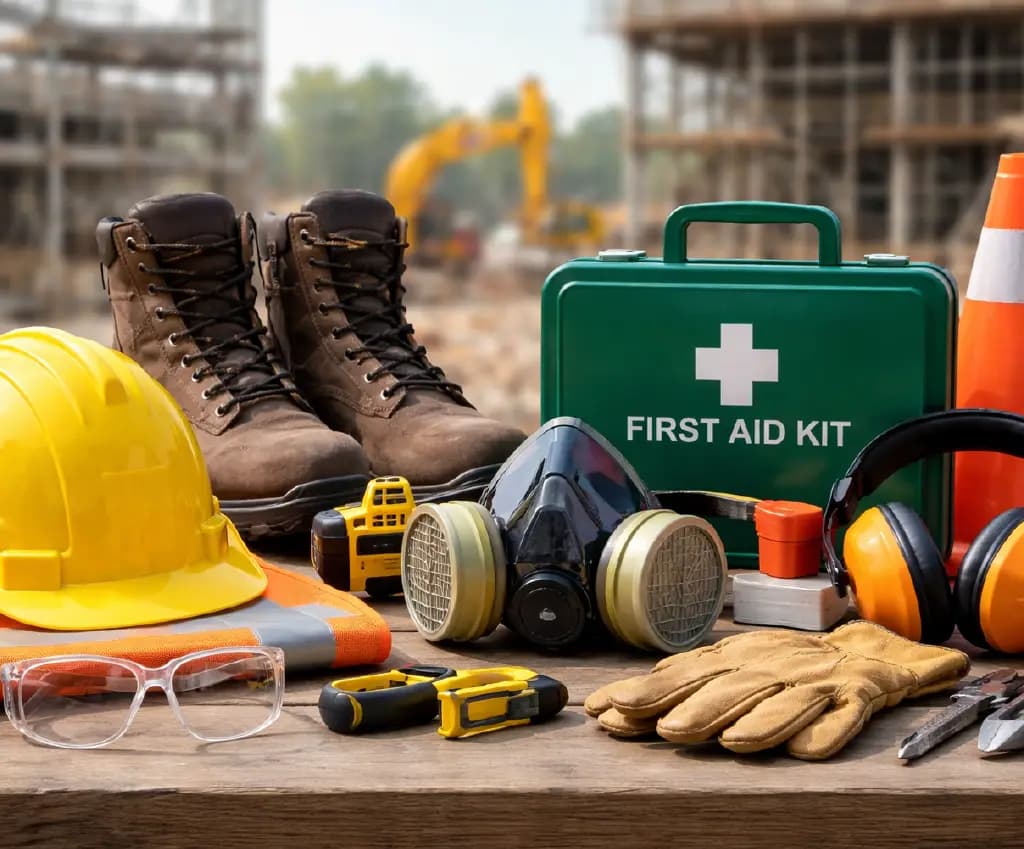
Employer responsibilities: Employers have certain statutory obligations to provide a safe working environment. Employers must ensure that all equipment used by their employees is safe and conduct risk assessments to identify potential workplace hazards. Employers are required to provide safety training, provide personal protective equipment, develop and communicate workplace safety policies, and conduct regular reviews. Moreover, employers are responsible for ensuring compliance with all applicable OHS regulations and for the health and safety of their employees.
Employee responsibilities: Employees also play an important role in ensuring workplace safety. Employees must follow safety training and instructions, use equipment safely and correctly, wear PPE when required, report hazards, and promptly report any near-misses or other unsafe actions. Finally, it is equally important for employees to take reasonable care of their own health and safety, as well as that of other employees.
If employers and employees understand their respective responsibilities, the effectiveness of OHS will improve. The partnership approach to OHS promotes awareness, prevents accidents, and enhances an organisation's safety culture.

A successful OHS programme relies on a set of proven principles that help organisations manage risks, protect workers, and create a safe working environment. These core elements form the foundation of an effective safety management system.
Risk Assessment: Every OHS programme begins with a thorough risk assessment. This involves identifying workplace hazards, understanding who may be harmed, and assessing the level of risk so organisations can prioritise control measures.
Control Measures: Once risks are identified, employers must apply the hierarchy of control. This includes eliminating the hazard where possible, substituting safer alternatives, using engineering controls, implementing administrative practices, and providing PPE when other controls cannot completely eliminate the risk.
Training and Awareness: Regular training ensures workers have the knowledge and confidence to perform tasks safely. Refresher training, toolbox talks, and on-the-job instruction reinforce safe behaviour.
Monitoring and Review: Safety systems must be continually reviewed. This includes inspections, audits, incident investigations, and updating policies to ensure they remain effective and compliant.
Communication and Worker Involvement: Open communication is essential. Workers should be involved in safety decisions, encouraged to report hazards, and feel empowered to participate in improving workplace practices.
When these principles work together, organisations can build a strong and proactive OHS programme that reduces risks, improves productivity, and supports a positive safety culture across the workplace.
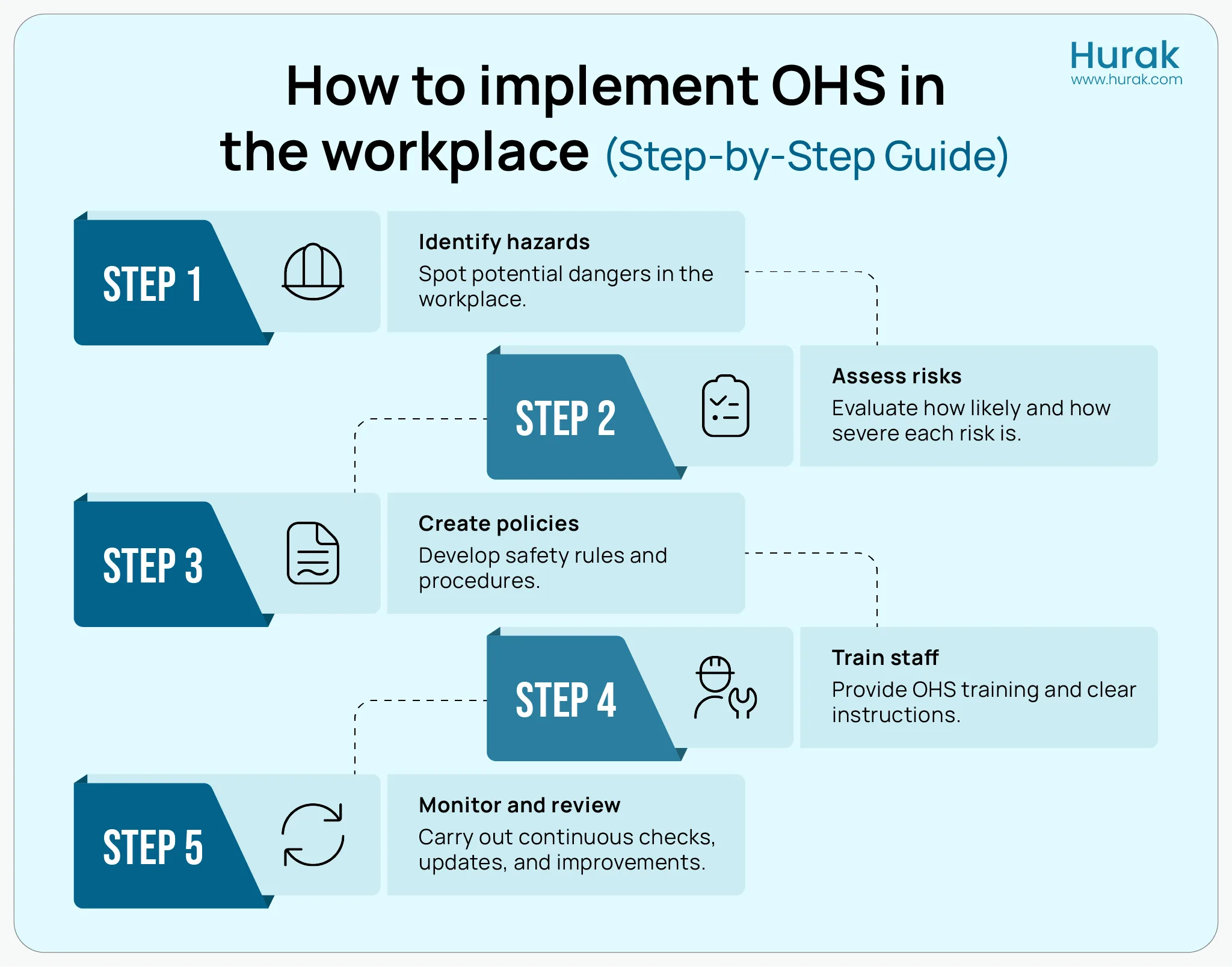
Here’s a simple implementation process for organisations:
Identify hazards and assess risks
Apply control measures using the hierarchy of control
Create written safety policies and procedures
Provide training, supervision, and refresher courses
Monitor performance through inspections and audits
Encourage a strong safety culture by promoting communication and feedback
This step-by-step approach helps businesses remain compliant and prevent accidents.
Workers and Employers benefit from a well-structured OHS system. An organisation can create an atmosphere that promotes worker satisfaction, value and safety by avoiding workplace injuries and illnesses. As a result, employees tend to have high morale, become more engaged, and are less likely to be absent from work.
Productivity will increase when all employees perform their jobs with confidence, knowing they have been properly trained. Financially, organisations reap the rewards of lower insurance premiums, fewer compensation claims, and a more efficient business.
Meeting high safety expectations helps build a company's excellent reputation, earn customer trust and confidence, and ensure compliance with current laws and regulations. Overall, creating a positive OHS environment brings long-term benefits of increased profitability, improved daily operations, and a happier, healthier, and more productive workforce.
Individuals have varying risk tolerance based on their age, experience, physical ability, or employment status. For instance, young and inexperienced workers typically require more hands-on training and supervision than older workers. Likewise, older workers who have previously been fit and healthy need 'adjustments' to their workplaces to accommodate their changed physical condition. Expectant mothers and disabled persons also require increased levels of protection and/or assistance, such as customised duties, ergonomic equipment, and/or flexible hours.
Similarly, migrant workers, along with temporary and agency workers, often have to deal with language barriers and/or procedures they are not familiar with and may require special education and training for these reasons.
To create a truly safe and inclusive work environment for all employees, employers must ensure that all employees have access to safety-related training, equipment, and safety procedures. This includes providing employees with direction, making reasonable adjustments, and involving a variety of workers in the safety decision-making process. Taking an inclusive approach to OHS not only helps to protect vulnerable populations but also enhances the overall well-being of the entire workforce.
Workplaces are evolving quickly, and OHS systems must keep pace with new technologies and flexible working arrangements. Modern safety challenges go beyond physical hazards and now include digital overload, remote work concerns, and the impact of automation on job roles.
Remote and hybrid work risks: With more employees working from home, poor workstation ergonomics, excessive screen time, mental fatigue, isolation, and work-life imbalance have become increasingly common. Employers should offer guidance on setting up safe home workstations, encourage regular breaks, and provide mental health support to remote teams.
Digital and technology-driven risks: As organisations rely more on automation and digital tools, new challenges arise. Workers may experience digital fatigue, cybersecurity pressure, concerns about increased monitoring, and the potential for automation-related incidents. To manage these risks effectively, modern safety training must include digital wellbeing, cybersecurity awareness, and guidance on data protection, including an understanding of how does a VPN work and how it can help secure online connections.
Addressing these modern challenges ensures that OHS programmes remain relevant, proactive, and supportive in today’s fast-changing work environment.
Occupational Health and Safety in the United Kingdom is governed by extensive legal frameworks that are intended to be supportive of all workers within all occupational sectors. The Health and Safety at Work Act 1974 (HSWA) and the Management of Health and Safety at Work Regulations 1999 establish the requirements for employers to proactively conduct a risk assessment and implement appropriate control measures. The Health and Safety Executive (HSE) is the national regulatory authority and has the responsibility to develop and provide guidance to employers, conduct inspections, and enforce compliance with relevant laws and regulations.
Although there are significant differences between the regulations in various countries, they all contain the same principal elements: risk identification, protection of workers from injury, and maintenance of a safe workplace. All countries demonstrate a commitment to safety as a global priority, no matter where they are located or which industries they serve.
Building a safer workplace starts with the right training and the confidence to take action when it matters most. Hurak offers a range of accredited Health & Safety courses designed to empower you, your team, and your organisation to prevent accidents, protect lives, and build a culture of care. Explore these essential courses and take the first step toward a safer, stronger workplace today:
The future of OHS is shaped by modern technology and increasing awareness of wellbeing. Key trends include:
Greater focus on mental health
Wearable safety technology
Data-based safety monitoring
Improved ergonomic design
Sustainability and environmental safety
More inclusive safety policies
These trends will continue to transform how workplaces manage risks.
Occupational health and safety are not only necessary by law but also protect workers, as well as add to the strength of the Company and create a positive working environment for employees. When an employer places a premium on safety, employees will feel more valued, and accidents will decrease, making it a safer place and a better place for business.
If you are an employer looking to provide a safer workplace for your employees or an employee who wants to improve their skill set, an investment in OHS training is a great way to move toward creating a safer future for yourself and your employer.
OHS is the practice of protecting workers’ health, safety, and well-being through policies, procedures, and risk management systems.
OHS means Occupational Health and Safety, focusing on preventing workplace injuries and illnesses, and promoting safe working environments.
It prevents accidents, reduces illness, boosts wellbeing, ensures legal compliance, and builds safer, productive workplaces for everyone.
Legislation defines employers’ and employees’ responsibilities, such as the Health and Safety at Work Act and HSE regulations.
Identify hazards, assess risks, train employees, use control measures, and create a proactive, safety-focused workplace culture.
Courses
Upskill with job-ready training.
Mock Tests
Measure your learning progress.
Create an online video course, reach students across the globe and earn money