On This Page

July 16, 20267 min read
Hazard symbols may not be something you think about daily, but if you’ve ever looked at a bottle of bleach, paint thinner, or even a cleaning spray, chances are you’ve already encountered them. These small images convey significant messages, informing us about the potential hazards of substances, including the ability to burn, corrode, poison, explode, or harm the environment. But over the past decade, the way these symbols look and how we interpret them has changed significantly.
This transformation was brought about by the UK’s adoption of the Globally Harmonised System (GHS) of classification and labelling of chemicals. Implemented through the COSHH (Control of Substances Hazardous to Health) regulations, these reforms have shifted us away from the old orange hazard signs to a new, more unified system of red diamonds. Understanding this change isn't just crucial for scientists or safety officers; it's essential for anyone who uses, handles, or stores chemical products, whether in the workplace or at home.
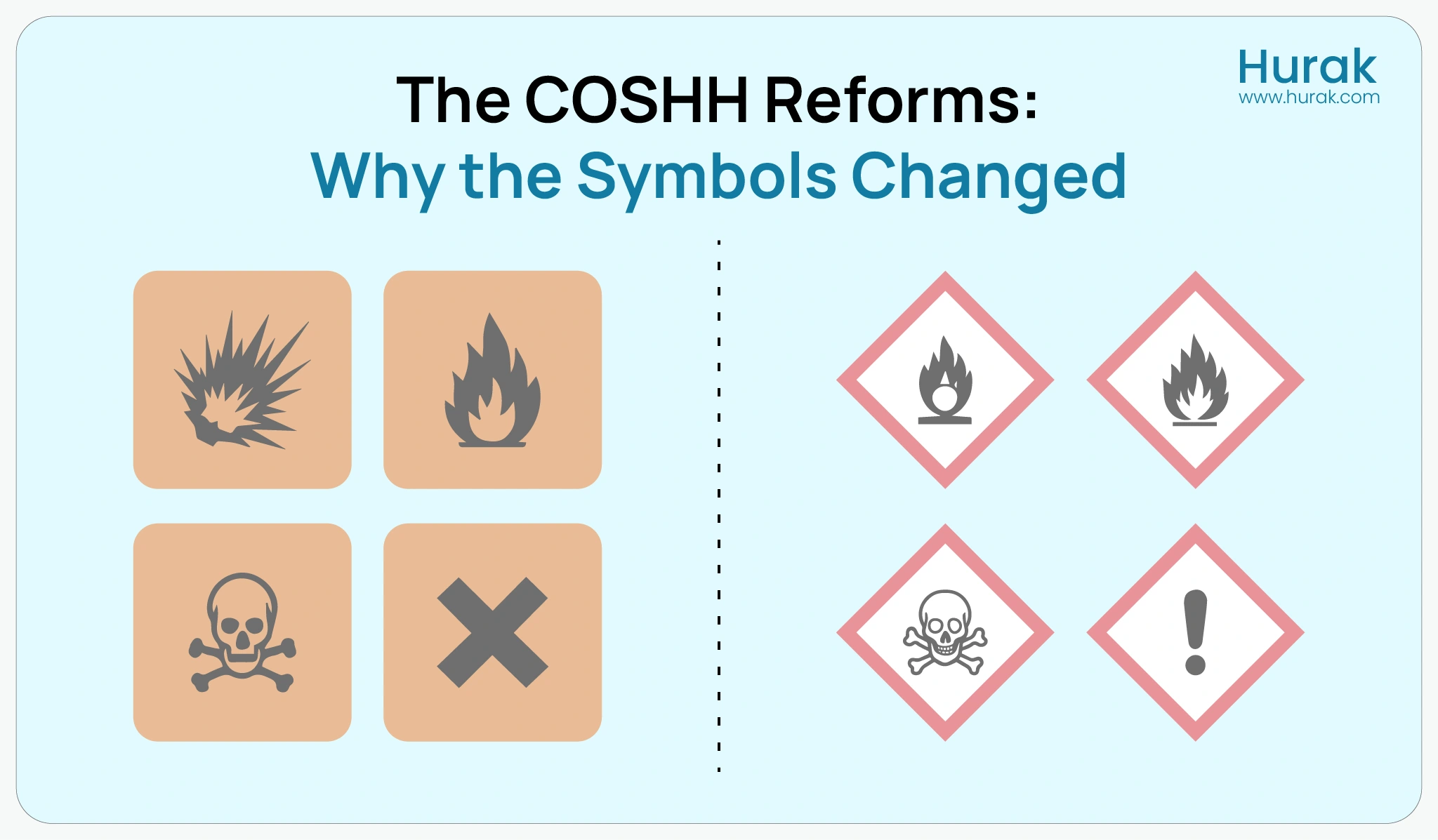
Before 2015, the UK followed its system of hazard classification, which used bright orange squares with black icons. While effective to a point, this system had a significant limitation: it wasn’t standardised internationally. As global trade increased and safety communication became more complex, the need for a universal language around hazardous substances became clear.
To address this, the United Nations developed the GHS: a global system designed to create consistency in how hazardous chemicals are labelled and communicated. In the UK, this system was introduced under the CLP Regulation (Classification, Labelling and Packaging), which replaced the older CHIP system. The most noticeable change? Those familiar orange squares were replaced with red diamond-shaped symbols containing bold black graphics.
This move brought the UK in line with international safety standards and made it easier to recognise hazards at a glance, no matter where the product comes from or who is using it. Whether you're an employer managing industrial chemicals or a parent using household cleaners, this standardisation helps everyone understand and respond to risks more effectively.
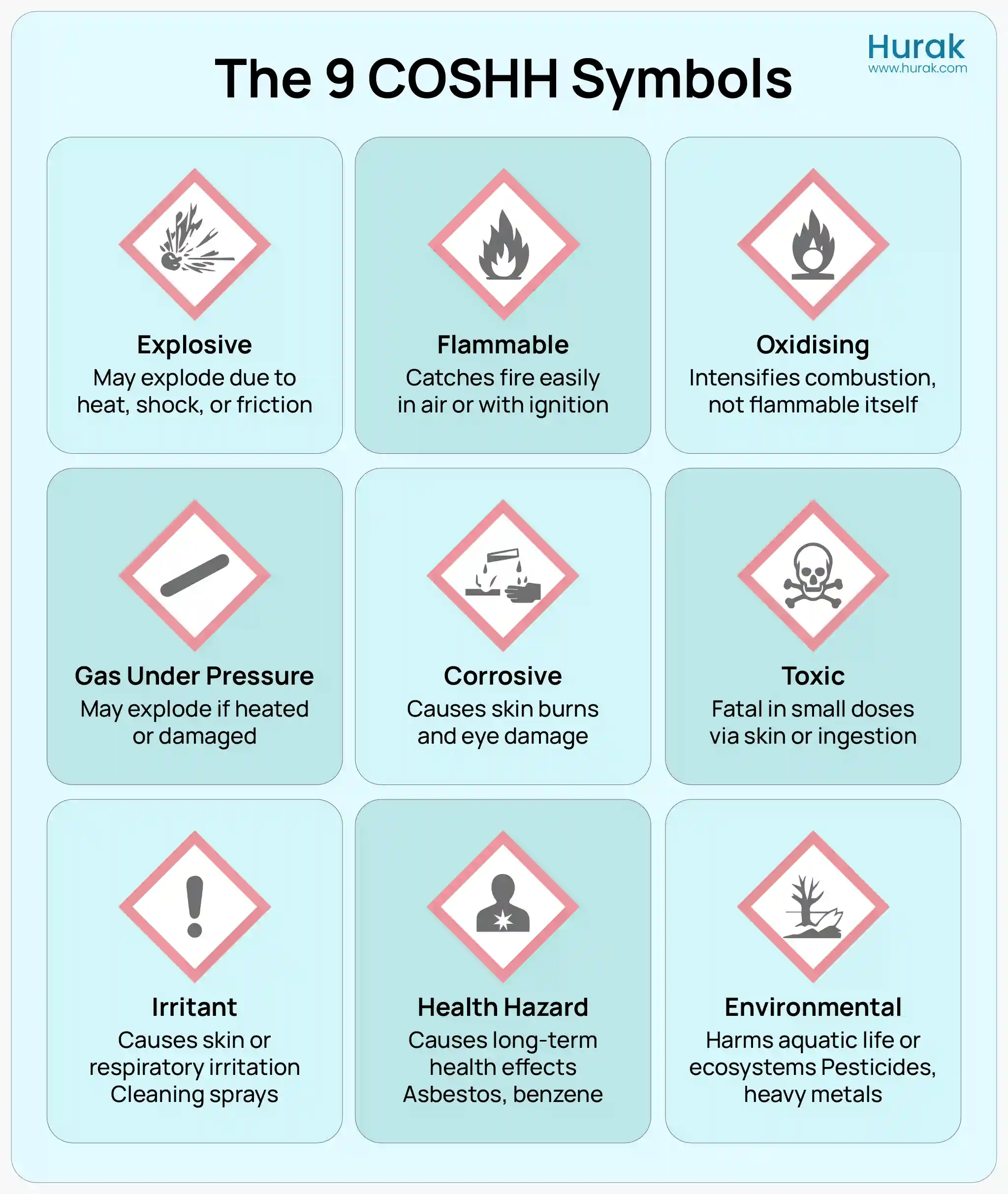
The current system features nine primary pictograms, each representing a different category of hazard. These symbols are designed to be instantly recognisable and universally understood. While they may look simple, the risks they signify are very real and often severe.
This symbol represents substances that can explode under certain conditions, such as heat, friction, or shock. These materials are typically found in environments dealing with fireworks, ammunition, or volatile chemicals. Proper storage and handling are critical, and safety training should always precede their use.
Flammable substances catch fire easily and can be dangerous even in small quantities. Found in aerosol sprays, gasoline, and alcohol-based cleaners, these products must be kept away from heat sources. It's essential to use such products in ventilated spaces and store them according to the manufacturer’s guidelines. Learn more in this fire safety guide for the workplace.
🔥Working in a fire-prone or hazardous setting?
Enrol in the Fire Marshal / Fire Warden Online Course to understand fire risks and emergency responsibilities.
Unlike flammable materials, oxidisers don’t burn themselves but can cause or intensify fires by providing additional oxygen. Hydrogen peroxide and bleach are common oxidising agents. These substances must be stored separately from combustibles to prevent unintended reactions and fires.
Compressed gases can pose serious hazards. If damaged or exposed to high heat, gas cylinders may rupture or explode. Gases like propane and carbon dioxide require proper handling and regular inspection. Safety caps, secure storage, and clear labelling are essential.
Corrosive chemicals can damage or destroy skin, eyes, and even metals. Acids and alkalis such as drain cleaners often bear this symbol. Direct contact must be avoided, and protective gear, such as gloves and goggles, is mandatory when handling them.
This chilling symbol warns of chemicals that are toxic even in small doses. These substances can be fatal if inhaled, swallowed, or absorbed through the skin. Pesticides and some industrial solvents fall under this category. Always consult the Safety Data Sheet and follow all handling instructions precisely.
This symbol indicates that the substance may cause skin or eye irritation, respiratory issues, or allergic reactions. It’s commonly found in everyday household products, such as cleaners and air fresheners. Though less severe than acute toxins, these substances still require careful use.
This symbol signals chronic health risks such as cancer, respiratory sensitisation, or reproductive harm. Long-term exposure to substances like asbestos or benzene can have life-altering consequences. It highlights the importance of wearing protective equipment and strictly adhering to safety protocols. For broader insight, read about the differences between risk control and hazard control.
This symbol, depicting a dead tree and fish, alerts users that a substance is harmful to aquatic life and ecosystems. Pesticides and heavy metals often carry this label. Disposal down the drain or near waterways should be strictly avoided.

Workers who regularly interact with chemicals must be trained not only to recognise these symbols but also to respond to them. This includes knowing what protective gear to wear, how to read safety data sheets, and what to do in the event of an emergency. Courses like IOSH Working Safely are ideal for employees across all sectors.
Under COSHH and the Health and Safety at Work Act 1974, employers are legally obligated to ensure that hazardous substances in their workplaces are clearly labelled and properly handled. This includes conducting risk assessments, training staff, and maintaining up-to-date safety documentation. For managerial staff, training such as Level 3 Health and Safety for Managers is crucial to staying compliant and ensuring team safety.
🧭Managing people, substances, or sites?
Get certified with the IOSH Managing Safely Course and show you’re ready to lead safely and legally.
Even at home, chemicals in cleaning products, garden treatments, and adhesives can carry hazard symbols. Understanding these labels allows consumers to take the proper precautions, such as keeping products out of children’s reach and using ventilation during application.
A frequent source of confusion is mistaking one symbol for another, particularly the exclamation mark and the skull and crossbones. While the former suggests irritation or less severe symptoms, the latter signals potentially life-threatening toxicity. Another mistake is continuing to rely on the obsolete orange symbols, which were phased out in 2015.
It’s also important not to overlook accompanying label elements like signal words ("Warning" or "Danger"), hazard statements (e.g., "May cause respiratory irritation"), and precautionary measures (e.g., "Wear protective gloves"). Together, these elements create a complete picture of the risks and safe practices.
The COSHH reforms were designed with one primary goal in mind: to make safety a universal priority. By adopting the GHS system, the UK has made hazard communication clearer, faster, and more effective for everyone. Whether you're on a construction site, managing a laboratory, or cleaning your kitchen, recognising these symbols helps you make better, safer decisions.
✅Start Your Safety Journey Today
Understanding hazard symbols is just the beginning. Take your awareness further and stand out professionally.
Enrol in the Level 2 Health and Safety in the Workplace Course — Gain essential knowledge that applies across industries and proves your commitment to a safe and compliant workplace.
The exclamation mark symbol under COSHH indicates less severe risks such as skin irritation, eye damage, or dizziness. It’s commonly found on cleaning products and sprays. Unlike the skull and crossbones, it doesn’t represent fatal toxicity.
Since 2015, the UK has replaced the old orange hazard labels with red diamond GHS pictograms under the CLP Regulation. These COSHH hazard pictograms are now standard for all hazardous substances in the workplace and retail products.
Yes. Products like bleach, drain cleaner, or insect sprays often feature COSHH hazard symbols. Understanding these safety symbols with names helps you use and store chemicals more safely at home.
Hazard symbols warn you about the risks of a substance (e.g. flammable or toxic), while safety symbols guide your protective actions (e.g. wear gloves or goggles). COSHH focuses on hazard pictograms, while general workplace signage includes both.
Explore these training courses to deepen your understanding of workplace hazards, fire safety, and risk management:
Level 2 Health and Safety in the Workplace – Ideal for general staff to build foundational knowledge.
IOSH Managing Safely Course – Tailored for managers overseeing workplace safety.
Level 3 Health and Safety RQF – A nationally recognised qualification for team leaders.
Fire Marshal & Fire Warden Online – Essential training for designated fire safety personnel.
NEBOSH Fire Safety Certificate – Advanced certification for those in fire safety roles.
Fire Safety Manager Advanced Diploma – Designed for professionals managing fire risk across large teams or sites.
These resources can support continuous learning and help ensure your workplace or home remains safe, compliant, and informed.
Courses
Upskill with job-ready training.
Mock Tests
Measure your learning progress.
Create an online video course, reach students across the globe and earn money