On This Page

July 16, 20267 min read
Have you ever felt like you’re suffocating or about to pass out, even when there’s plenty of air around you? Hyperventilation can be a scary and disorienting experience, often triggered by stress, anxiety, or underlying medical conditions. Many people experience hyperventilation at some point in their lives, yet few truly understand why it happens.
It is a condition where rapid or shallow breathing disrupts the balance of oxygen and carbon dioxide in the body. It can cause dizziness, shortness of breath, and anxiety, often appearing during stressful situations or panic attacks.
In this article, we’ll explore the causes, symptoms, and treatment options for hyperventilation, helping you understand and manage this common yet often misunderstood condition.
Hyperventilation is a condition in which a person breathes faster or more deeply than usual, resulting in an imbalance of oxygen and carbon dioxide in the body. Healthy breathing occurs when an individual maintains a perfect balance between inhaling and exhaling. If the person is upset or stressed, there is an imbalance, and they start hyperventilating by exhaling more than they can inhale. It causes a rapid reduction of carbon dioxide in the body. If the carbon dioxide level drops, it leads to the narrowing of blood vessels. The blood vessels are responsible for supplying blood to the brain. This condition leads to light-headedness and a tingling sensation in the fingers. Therefore, in severe cases, the patient may lose consciousness. It also appears as a response to depression, anxiety, and anger.
Hyperventilation is also known as:
Rapid or deep breathing
Rapid or deep respiratory rate
Over breathing
Hyperventilation can occur for several reasons, and understanding the underlying cause is key to managing it effectively. The triggers are usually divided into psychological, physical and environmental factors.
Emotional and mental health factors are among the most common causes of hyperventilation.
Anxiety and Panic Attacks:
One of the leading causes of hyperventilation. When you’re anxious or panicking, your body enters “fight or flight” mode, causing faster breathing and lower carbon dioxide levels.
Emotional Stress:
Intense emotions, such as fear, anger, or excitement, can cause you to breathe faster without realising it, as your body reacts to heightened stress levels.
Depression or Chronic Worry:
Ongoing emotional strain may subtly alter your breathing patterns over time, leading to recurrent episodes of hyperventilation.
Certain medical or physical conditions can interfere with normal breathing rhythms.
Respiratory Conditions:
Diseases such as asthma, bronchitis, or chronic obstructive pulmonary disease (COPD) can make breathing difficult, sometimes triggering hyperventilation.
Heart-Related Issues:
Conditions that affect heart function, like arrhythmia or heart failure, can cause shortness of breath and fast breathing.
Pain or Injury:
Intense pain, especially from chest, back, or rib injuries, can cause faster breathing as the body reacts to discomfort.
Fever or Infection:
When your body temperature rises, your breathing may naturally speed up to help regulate internal heat, which can sometimes lead to hyperventilation.
Stimulants or Medications:
Excessive caffeine, nicotine, or certain prescription drugs can overstimulate your nervous system, increasing your breathing rate.
Your surroundings can also significantly impact how you breathe.
High Altitude:
At high elevations, the oxygen level in the air is lower. Your body compensates by breathing faster, which can result in hyperventilation.
Poor Air Quality:
Polluted or stuffy environments can make breathing feel more difficult, triggering rapid breaths.
Overexertion During Exercise:
Pushing your body too hard during workouts can temporarily cause hyperventilation, especially if you’re not properly conditioned.
Be ready to help someone experiencing hyperventilation by building your first aid skills with Hurak’s First Aid Courses. Learn essential techniques through the Emergency First Aid at Work (EFAW), gain in-depth knowledge with the Level 3 First Aid at Work (3 Days), or specialise in caring for young ones with the Paediatric First Aid Course. Equip yourself with the confidence to handle breathing emergencies calmly and effectively
Recognising the symptoms of hyperventilation early can help you regain control of your breathing before it worsens. When you breathe too quickly, your body loses too much carbon dioxide, which can cause a range of physical and emotional symptoms. An individual suffering from hyperventilation may show signs of the following:
Shortness of Breath
Many people feel as though they’re not getting enough air, even while breathing rapidly. This is because over-breathing changes the oxygen and carbon dioxide levels in the blood, making it seem like you can’t catch your breath, even though your lungs are full.
Dizziness or Lightheadedness
When carbon dioxide levels drop too low, blood vessels in the brain narrow, which can reduce blood flow and make you feel dizzy or faint. This is one of the most common sensations during hyperventilation.
Chest Tightness or Pain
Chest discomfort can feel like pressure, tightness, or even a sharp pain. Many people mistake it for a heart problem, but it’s usually caused by strained chest muscles or tension from rapid breathing.
Tingling or Numbness
Over-breathing alters blood chemistry, resulting in tingling (pins and needles) or numbness in the fingers, toes, and around the mouth. This can be unsettling but typically fades as breathing normalises.
Dry Mouth and Throat
During hyperventilation, fast breathing through the mouth can dry out your throat and mouth, adding to discomfort or difficulty speaking clearly.
Anxiety or Panic Feelings
The physical sensations of hyperventilation, like dizziness or chest tightness, can trigger panic or fear, creating a cycle where anxiety leads to even faster breathing.
Blurred or Distorted Vision
Temporary changes in vision, such as blurriness, tunnel vision, or spots, can occur because of reduced oxygen flow to the eyes and brain.
Treating hyperventilation focuses on calming your breathing and restoring the balance of oxygen and carbon dioxide in your body. With simple breathing techniques, relaxation methods, and medical guidance when necessary, most people can effectively manage hyperventilation.
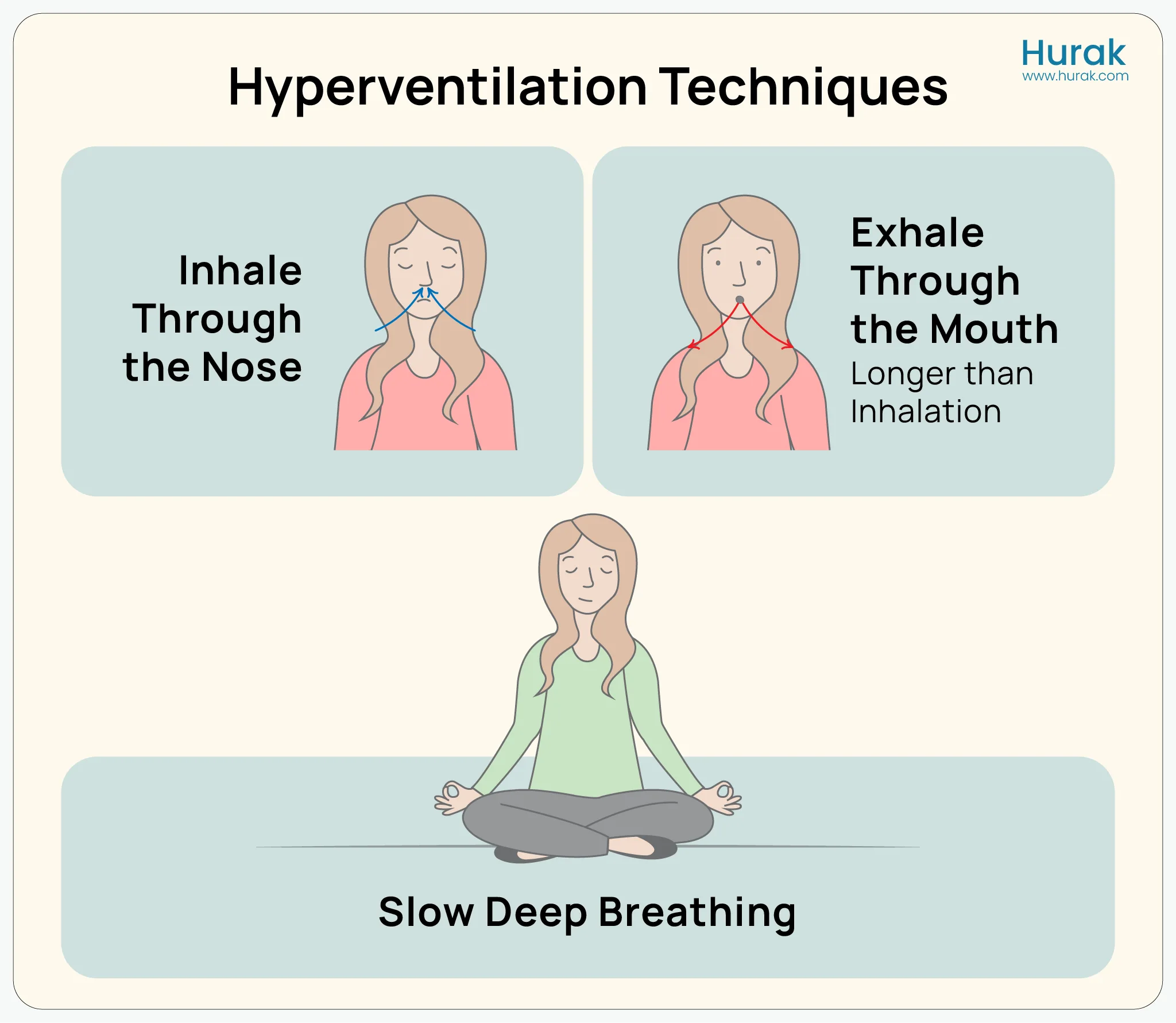
Controlling breaths can help treat hyperventilation and allow the patient to breathe normally. A person can practise in two ways:
Purse the lips:
In this method, a person should take a deep breath slowly through the nose and not the mouth. The patient should ensure the lips are in the same position as when one blows out a birthday candle. Breathe out slowly through the pursed lips. While taking a deep breath, take time to inhale, and while exhaling, try not to blow the air forcefully. The patient can repeat this technique until the breathing is regulated.
Limit the airflow:
Here, a person should try to keep their mouth closed and, with the help of one finger, close one nostril. Breathe in and out with the help of the other nostril. Remember not to inhale and exhale too quickly or forcefully. Repeat the above procedure several times, switching between nostrils with each breath. This procedure aims to make the patient breathe through the nose, not the mouth. Hyperventilating patients can be motivated to try these moves, but they should be instructed to exhale and inhale very slowly.
If a patient is affected by hyperventilation syndrome, it is required to find the cause of the syndrome. It is important to treat anxiety and stress immediately. Stress reduction and breathing techniques can help a patient control the condition.
Home remedies
Home remedies may do the trick to bring the breathing rate back to normal when an individual suffers from mild hyperventilation due to anxiety or stress. Some of the home remedies are as follows:
Diaphragmatic Breathing: Include the belly breathing technique. In this method, a person should focus on breathing from the diaphragm, not the chest.
Nostril breathing: In this technique, a person blocks one nostril and breathes through the other. Thus, alternating breathing between the nostrils and focusing on breathing.
Meditation: Try meditation to start focusing on slow breathing. Meditation helps calm the mind and body, reducing stress and helps individuals become more aware of their thoughts and emotions.
The doctor may prescribe medications such as alprazolam, doxepin, and paroxetine, depending on the severity of the condition. Medications should only be taken under the advice of a qualified healthcare professional. Self-medicating can lead to side effects or worsen symptoms. Breathing exercises, therapy, and lifestyle changes are typically recommended in conjunction with medication for optimal long-term results.

Although the terms sound similar, there’s a key difference between hyperventilation and hyperventilation syndrome (HVS). Hyperventilation is a symptom itself, whereas HVS is the diagnosis that occurs when these symptoms are frequent and disruptive.
Feature | Hyperventilation | Hyperventilation Syndrome (HVS) |
Definition | A temporary episode of rapid or deep breathing. | A chronic or recurring pattern of over-breathing, often linked to stress or anxiety. |
Causes | Exercise, stress, pain, fever, high altitude, or sudden triggers. | Mainly, anxiety, panic attacks, or emotional stress can occur without a clear physical trigger. |
Duration | Short-term; usually stops once the trigger is removed or breathing is controlled. | Long-term episodes can happen repeatedly, even at rest. |
Symptoms | Dizziness, shortness of breath, tingling in hands/ feet, rapid heartbeat. | Similar symptoms, but episodes are frequent and may occur without an obvious trigger. |
Treatment | Controlled breathing, relaxation, and removing the trigger. | Breathing exercises, stress management, therapy, and sometimes medications for anxiety or panic disorders. |
Hyperventilation, while often alarming, is a common condition that can affect anyone, particularly during stress, anxiety, or medical episodes. Hence, the abnormal breathing condition of the lung, which results in faster breathing, is nothing but hyperventilation. Recognising the early signs, such as rapid breathing, dizziness, or tingling sensations, is key to managing it effectively. Simple techniques like controlled breathing, staying calm, and seeking professional guidance when necessary can significantly reduce episodes and improve overall well-being.
By staying informed and practising preventive strategies, you can take control of hyperventilation and support both your physical and mental health. Remember, early awareness and proper management make all the difference.
Hyperventilation is a condition where a person breathes faster or more deeply than normal, causing an imbalance of oxygen and carbon dioxide in the body. This over-breathing can lead to symptoms such as dizziness, shortness of breath, chest tightness, tingling in the hands or feet, and a rapid heartbeat.
Symptoms include shortness of breath, dizziness, lightheadedness, tingling in the hands or feet, chest tightness, rapid or irregular heartbeat and sometimes dry mouth and numbness.
Emotional stress, anxiety, panic attacks, depression, fever, infections, heart or lung conditions, and even environmental conditions such as high altitude, poor air quality, can cause hyperventilation.
Hyperventilation syndrome is a chronic or recurring form of hyperventilation, often linked to long-term anxiety or stress, whereas occasional hyperventilation can happen suddenly and be short-lived.
Seek medical help if episodes are frequent, severe, or accompanied by chest pain, fainting, or heart palpitations. Persistent hyperventilation may indicate an underlying health issue.
Yes. Regular stress management, breathing exercises, avoiding triggers, and maintaining overall physical health can help prevent episodes.
Certain medications may help if hyperventilation is linked to anxiety or underlying medical conditions, but lifestyle changes and breathing techniques are often the first line of management.
First Aid at Work Training (3 Days): A comprehensive three-day course designed for those who want an in-depth understanding of first aid.
Emergency First Aid at Work (EFAW): A one-day course perfect for beginners or anyone who needs basic first aid training.
Online Emergency First Aid at Work Refresher (Refresh EFAW): This online Emergency First Aid at Work Refresher (EFAW Annual Refresher) course will equip you with the skills and understanding you need to refresh your Level 3 Emergency First Aid knowledge.
Paediatric First Aid: Specifically created for parents, teachers, and childcare providers, this course focuses on emergencies involving infants and children.
Courses
Upskill with job-ready training.
Mock Tests
Measure your learning progress.
Create an online video course, reach students across the globe and earn money