On This Page

July 23, 20269 min read
The UK security sector is more competitive than ever. With dozens of candidates applying for roles as door supervisors, security guards, or close protection operatives, your CV needs to stand out from the crowd.
Recruiters often decide within seconds whether to continue reading your CV or move on. That's why it must be clear, concise, and tailored, highlighting your SIA licence, relevant training, and practical on-the-job skills, all aligned with the job requirements.
This guide gives you everything you need: a recruiter-friendly security CV template, expert writing tips, and a complete sample CV to use as a reference.
Interested in a career in security and wondering how much it costs?
Check our SIA Badge Cost guide to understand the investment required, and read our Free SIA Training guide to discover how to begin your journey without breaking the bank.
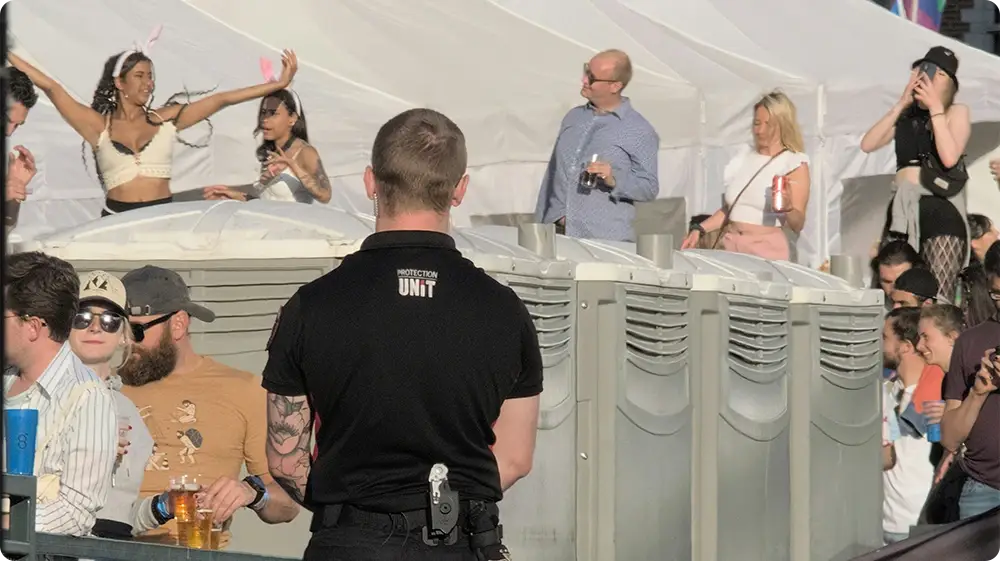
A successful security CV does more than list experience: it convinces employers you're reliable, compliant, and capable. Your CV is a trust-building tool and proves why you're the right candidate for the job.
Stand out in a competitive market: as many applicants are vying for roles like door supervisor, security guard, or close protection officer.
Showcase relevant skills and qualifications: including your SIA licence, CCTV, first aid, and conflict management certifications.
Demonstrate meaningful work experience: such as patrolling, surveillance, incident reporting, and customer service.
Match job requirements: reflect keywords and responsibilities from the job description.
Highlight key soft skills: communication, situational awareness, attention to detail, professionalism, and conflict resolution.
A strong CV not only showcases your strengths but also helps employers match your profile with their expectations, bringing you one step closer to landing your desired job.
Here's what employers typically expect to see in a well-written security CV:
Contextual experience: roles, worked environments, and specific duties like entry control or emergency response.
Certifications & licences: SIA licence, CCTV, first aid/CPR, with explicit licence numbers.
Hard skills: surveillance, access control, alarm systems, proactive monitoring.
Soft skills: vigilance, situational awareness, communication, conflict de-escalation.
Tailored content: align CV with the specific job ad by including matching keywords to pass ATS filters.
There are specific skills and areas of knowledge that employers specifically look for when hiring a security professional. From demonstrating your situational awareness to showcasing the proper certifications, your CV must reflect these expectations to be taken seriously.
If you're applying for a job as a security guard, make sure you're equipped with the right capabilities.
Read our article on the Essential Skills in a Security Guard to understand exactly what employers are looking for.
Boost Your Job Prospects with the Right Security Training
Hurak offers a range of security training programmes designed to help you meet employer expectations and enhance your CV.
Our courses cover everything from legal responsibilities and conflict management to customer service and emergency procedures—making you a stronger candidate for any security role.
Enhance your CV and skills with:
Join our course today and become job-ready.
A well-written CV can be the difference between getting shortlisted or being overlooked. Recruiters often scan CVs in under 30 seconds, so clarity, relevance, and professional formatting are essential.
When applying for a security job, your CV should speak directly to the employer's needs. It's not just about listing past roles; it's about clearly presenting your skills, training, and experience in a way that matches the job description.
Whether you're writing a door supervisor CV, security guard CV, or applying for a close protection role, think of your CV as your personal security briefing. It must be clear, focused, and show that you're fully equipped to handle the role. Employers are seeking precision, reliability, and the ideal balance of technical and interpersonal skills.
Here are the most important tips to help you stand out as a strong candidate:
Use specific keywords from the job ad. If the role mentions "conflict management " or "CCTV monitoring," be sure to reflect those in your experience and skills sections.
Avoid clutter. Stick to a minimal, modern format with clear headings, bullet points, and plenty of white space. A clean CV shows professionalism and is easy to scan
Include your SIA licence, First Aid training, CCTV certification, or any other relevant course. Mention full names of qualifications and licence validity dates where applicable.
Start each bullet point with an action verb, such as monitored, patrolled, responded, or reported, to communicate your responsibilities and achievements clearly.
List your most relevant roles first. Mention job titles, site types (e.g., retail, events, construction), and key tasks. Focus on what matters most to the role you're applying for.
From the language you use to the way you name your file (e.g., John_Doe_Security_CV.pdf), everything should reflect a professional and reliable image.
A well-drafted CV can help you stand out, but to truly succeed, you also need to understand what's expected from a licensed security professional.
Make sure you're fully prepared by exploring these essential guides:
A well-structured CV ensures that employers can quickly identify your suitability for the role. First impressions matter, especially in a competitive field like security.
Follow this standard security CV template to present your qualifications clearly and professionally:
CV Format
Place your full name, phone number, email, and address (or a location reference) at the top. Accuracy is essential.
Write a short statement (2-3 lines) highlighting your most relevant experience and qualifications for the role.
Bullet your strongest, role-specific skills:
Surveillance & monitoring
Risk assessment & threat analysis
Access control & patrol procedures
Emergency response & first aid
Conflict resolution & de-escalation
CCTV operation & reporting
Excellent communication
High attention to detail
IT proficiency
Physical strength & agility
List roles in reverse chronological order. For each job, include title, employer, location, dates, and bullet points of your duties. Focus on relevant roles; if you're new, include internships or related work.
Mention your most recent qualifications first. Include the qualification name, institution, location, and study dates. Add any relevant awards.
Clearly list your SIA licence (include badge number and validity) and any first-aid certification. Ensure everything is current.
Include any other relevant credentials, like a driving licence or language skills, that might add value.
Either list referees or write References available upon request. Then proofread your CV for consistency, spelling, and formatting. Ask a trusted friend to review it too.
A door supervisor CV will differ slightly from a security guard CV, as the responsibilities and employer expectations aren't the same.
It's crucial to understand your specific job requirements and tailor your CV accordingly.
Read our guide on the Difference Between Door Supervisor and Security Guard to explore their key differences.
If you're already working in security and aiming to renew your SIA licence or upskill, consider joining our Top-Up training courses.
Refresh and Upskill with Hurak Top-Up Courses
Enroll in our SIA refresher and top-up courses to not only keep your licence valid but also strengthen your CV
Join our top-up course today and strengthen your CV for your next security job.
When it comes to job applications, many candidates struggle with how to present their experience effectively. That's why we've created a ready-made CV sample tailored specifically for security professionals.
This example uses the correct format, tone, and details expected by employers.
Use it as inspiration to draft your own or simply download and customise it.
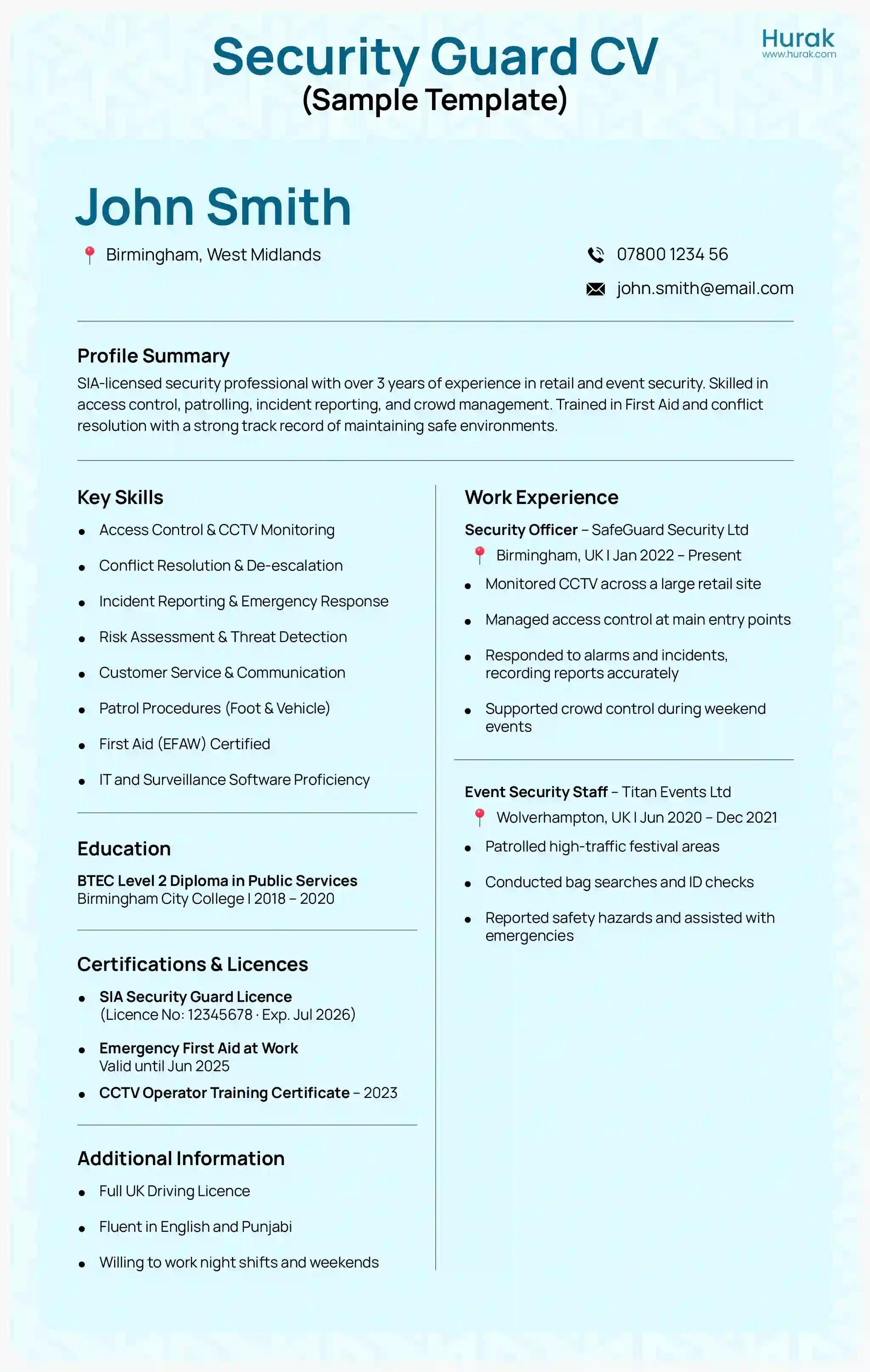
A well-written CV shows more than your qualifications- it shows your professionalism and attention to detail.
Make sure to tailor your CV to the specific security role you're applying for, whether that's guarding, CCTV operation, close protection or any other. Combine this with proper training, format, structure, layout and you're set to stand out.
Whether you're just entering the industry or looking to upskill, a great CV opens the door to your next opportunity.
A poorly structured CV can cost you the job, even if you have the right skills. A great CV isn't built on experience alone- it's built on how well you present that experience.
With employers reviewing dozens of applications, your layout, keywords, and clarity can all become key deciding factors. A scattered or outdated format won't communicate the high standards you're trained to uphold.
When you match a clean CV with strong security skills and current certifications, you immediately position yourself as a capable, job-ready professional.
A security officer's CV should include a professional summary, key skills such as conflict resolution and surveillance, work history, valid SIA licence details, and certifications, including first aid training.
To write a strong security guard CV, use a clean layout, tailor the content to the job description, highlight SIA certification, and showcase relevant experience such as patrolling, CCTV monitoring, or access control.
Yes. While both roles involve security, a door supervisor CV should emphasise customer-facing duties and conflict management skills. In contrast, a security guard CV may focus more on surveillance and static guarding tasks.
You can view a professional security CV sample template in this article, and download an editable version to customise for your job application.
Use a standard UK format: start with contact details and a profile summary, followed by key skills, work experience, education, certifications (like your SIA badge), and references.
Courses
Upskill with job-ready training.
Mock Tests
Measure your learning progress.
Create an online video course, reach students across the globe and earn money