On This Page

July 8, 20268 min read
The IOSH Code of Conduct serves as the backbone of ethical practice in the health and safety profession. It defines the standards every IOSH member must follow to maintain integrity, competence, respect, and service in their work. These principles ensure that safety professionals act responsibly, make fair decisions, and build public trust through their commitment to high standards.
Whether you’re a seasoned IOSH member or just beginning your safety career, understanding these principles helps you make sound professional decisions and uphold the highest standards.
This article examines the key principles, rules, and ethical practices outlined in the IOSH Code of Conduct, helping UK safety professionals apply them effectively and strengthen their professional reputation within the field of occupational safety and health.

The IOSH Code of Conduct is a set of professional and ethical standards developed by the Institution of Occupational Safety and Health (IOSH) – the UK’s leading body for health and safety professionals. It defines how safety professionals should act, make decisions, and maintain integrity in their roles. The Code guides members to work responsibly, stay competent, protect people’s health and safety, and uphold the reputation of the profession. The Code applies to all IOSH members, regardless of their grade or experience, and ensures that every professional acts responsibly towards employers, colleagues, and the public. It serves as a benchmark for ethical behaviour, guiding members in situations where legal, professional, or moral questions may arise.
By adhering to the IOSH Code of Conduct, professionals strengthen public trust and demonstrate their ongoing commitment to excellence, accountability, and the highest standards of safety practice.
The IOSH Code of Conduct serves as the ethical foundation for all safety professionals. It defines how members should behave, make decisions, and uphold professional standards in their workplace. Here’s why it truly matters:
The Code helps safety professionals act with honesty and fairness, earning respect from employers and colleagues.
It guides members to make responsible choices that prioritise safety and wellbeing above all else.
Professionals are held responsible for their actions, promoting transparency in every aspect of their work.
It sets a uniform standard of conduct, ensuring safety practices remain reliable across all industries.
By following the Code, professionals commit to safeguarding people’s health, safety, and environment.
Upholding the Code reflects a strong moral compass and reinforces credibility within the safety community.
Ultimately, the IOSH Code of Conduct reinforces the responsibility safety professionals have toward people and workplaces. It ensures that every action they take reflects integrity, accountability, and a genuine dedication to safety.
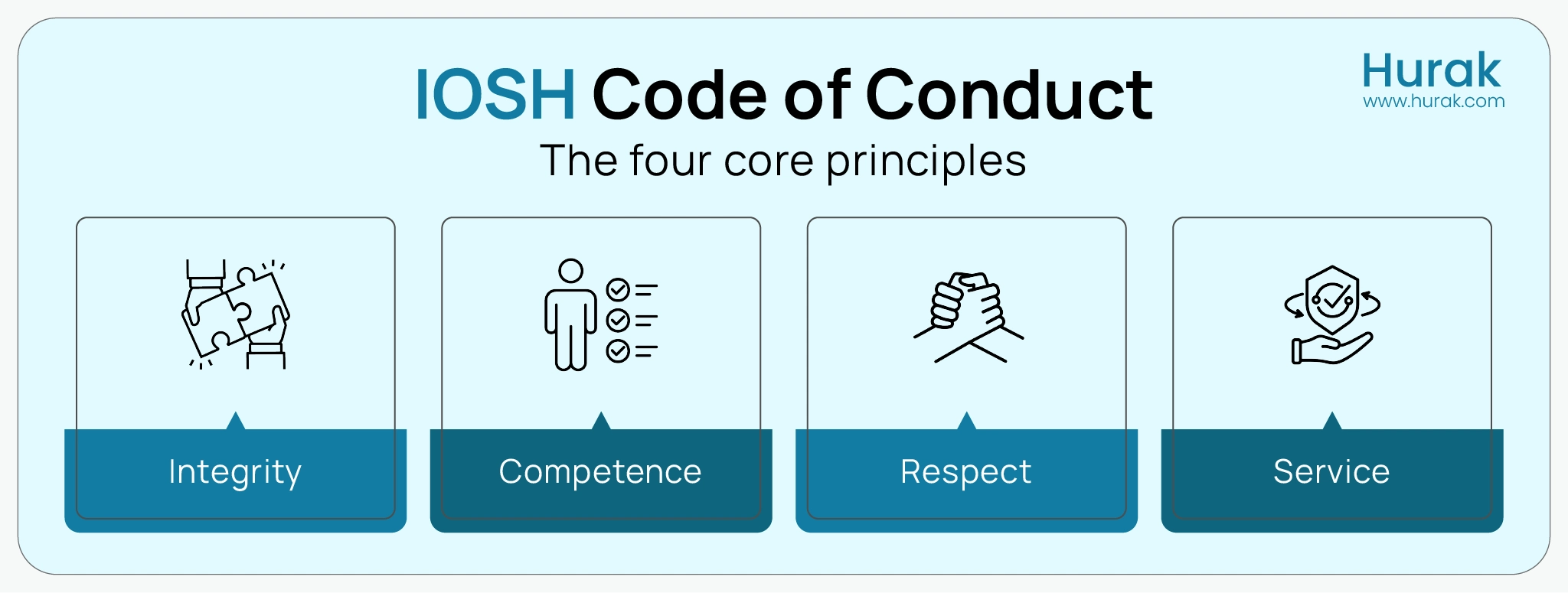
The IOSH Code of Conduct is founded on four essential principles that capture the true essence of being an ethical health and safety professional. These principles serve as a guide for members to uphold integrity, professionalism, and accountability in every aspect of their work. Each principle reflects the standards that IOSH members are expected to follow in their daily practice.
Act with honesty and fairness in all professional dealings. IOSH members should never mislead others, misuse authority, or compromise their ethical standards.
Key Points:
Maintains transparency and honesty in every form of communication.
Declare any conflicts of interest.
Uphold the reputation of IOSH and the profession through integrity and trustworthiness.
Competence refers to maintaining the knowledge and expertise necessary to perform safety duties effectively. Members must engage in lifelong learning to keep their skills up to date.
Key Points:
Participate in continuous professional development (CPD) to enhance your knowledge and expertise.
Work only within your area of competence.
Share insights and best practices responsibly with colleagues and clients.
IOSH members must treat everyone with dignity, equality, and understanding. They should encourage inclusive and fair workplaces.
Key Points:
Promote diversity and inclusion by treating everyone fairly and without discrimination.
Safeguard confidentiality in all professional interactions.
Communicate professionally and courteously.
Service reflects an IOSH member’s duty to protect life and promote wellbeing. Members must deliver high-quality, responsible advice in the public interest.
Key Points:
Prioritise public safety above personal or corporate gain.
Take full responsibility for your professional decisions and advice.
Strive for excellence in all health and safety practices.
Together, these four principles form the foundation of the IOSH Code of Conduct, guiding safety professionals to act ethically, competently, and responsibly.
Gain a deeper understanding of the IOSH Code of Conduct
Explore how the IOSH Code of Conduct shapes best practices in health and safety management. Whether you're new to the industry or a seasoned professional, understanding the principles of ethical safety practice is essential.
IOSH Working Safely – Perfect for beginners and frontline staff to learn core safety responsibilities.
IOSH Managing Safely – Designed for managers and supervisors to apply safety principles effectively.
Strengthen your health and safety practices and make ethical decisions that promote a safer workplace. Start your journey today.
The IOSH Code of Conduct sets clear rules that guide members on how to maintain professionalism, integrity, and accountability in their daily roles. These responsibilities ensure that every IOSH member contributes to a culture of safety, transparency, and ethical practice within the workplace.
IOSH members must always act in ways that protect and promote the reputation of both the Institution and the profession. This means demonstrating ethical behaviour, providing accurate advice, and maintaining the highest level of professionalism.
Members must:
Provide accurate, evidence-based safety advice.
Represent IOSH with honesty and fairness.
Avoid actions that could harm their professional reputation.
Every IOSH member has a duty to report unethical or unsafe conduct. This ensures accountability and prevents harm to individuals or organisations.
Members must:
Report serious breaches of the Code or unsafe practices to IOSH.
Cooperate in investigations or disciplinary processes.
Support transparency and accountability within the profession.
Members must respect the confidentiality of information obtained through their professional role. Information should only be disclosed when legally required or in the public interest.
Members must:
Safeguard confidential business or personal information.
Avoid misusing data for personal gain.
Protect client and employer trust at all times.
Failure to comply with the IOSH Code can result in disciplinary action, including suspension or termination of membership. This ensures accountability and maintains the profession's credibility.
Possible actions include:
Investigation by IOSH’s Professional Standards Committee.
Formal warnings, suspension, or expulsion.
Public disclosure of disciplinary outcomes.

Applying the IOSH Code of Conduct goes beyond understanding its principles – it’s about putting them into action every day. Ethical practice ensures that health and safety professionals make fair, responsible, and transparent decisions that protect people and build trust at work.
Demonstrate honesty, fairness, and respect in all safety interactions to set a positive tone for others.
Encourage open discussions about risks, near misses, and improvements without fear of blame.
Regularly update your skills through IOSH training, workshops, and CPD activities to ensure informed decision-making.
Provide clear, factual safety information and avoid exaggerating or concealing details that could affect outcomes.
Maintain confidentiality and use data only for legitimate safety purposes.
Speak up or report actions that breach professional or safety standards.
Consider legal, ethical, and practical aspects before implementing any health and safety measures.
Foster teamwork, diversity, and inclusion while maintaining a respectful workplace environment.
When safety professionals consistently follow the IOSH Code of Conduct, they set the foundation for a safer, more respectful, and ethically responsible workplace. Their actions inspire others to value integrity and professionalism.

In conclusion, the IOSH Code of Conduct serves as the foundation of professional ethics in health and safety practice. By understanding its four core principles–Integrity, Competence, Respect, and Service and following the key rules and responsibilities, IOSH members can make responsible decisions, protect the public, and uphold workplace safety standards across the UK.
Applying these principles through ethical practice not only ensures compliance but also strengthens professional credibility, fosters trust, and promotes a culture of accountability in every organisation. Whether you’re an experienced practitioner or new to IOSH, embracing the Code helps you navigate complex situations with confidence and integrity, ultimately contributing to safer and more ethical workplaces.
The IOSH Code of Conduct is a set of ethical guidelines for safety professionals, outlining the standards of integrity, accountability, and professionalism expected in health and safety practice.
It ensures that safety practitioners act responsibly, maintain professional integrity, protect the well-being of others, and uphold public trust in workplace safety.
All IOSH members and safety professionals are required to follow the Code of Conduct, regardless of their role, industry, or level of experience.
By guiding ethical decision-making and professional behaviour, the Code fosters a culture of trust, responsibility, and continuous safety improvement in organisations.
Yes. Breaching the Code can damage credibility, lead to disciplinary action from IOSH, and negatively impact professional reputation and career growth.
Courses
Upskill with job-ready training.
Mock Tests
Measure your learning progress.
Create an online video course, reach students across the globe and earn money