Who Does the Control of Asbestos Regulations Apply To? A Clear Guide for Duty Holders
On This Page

July 19, 20267 min read
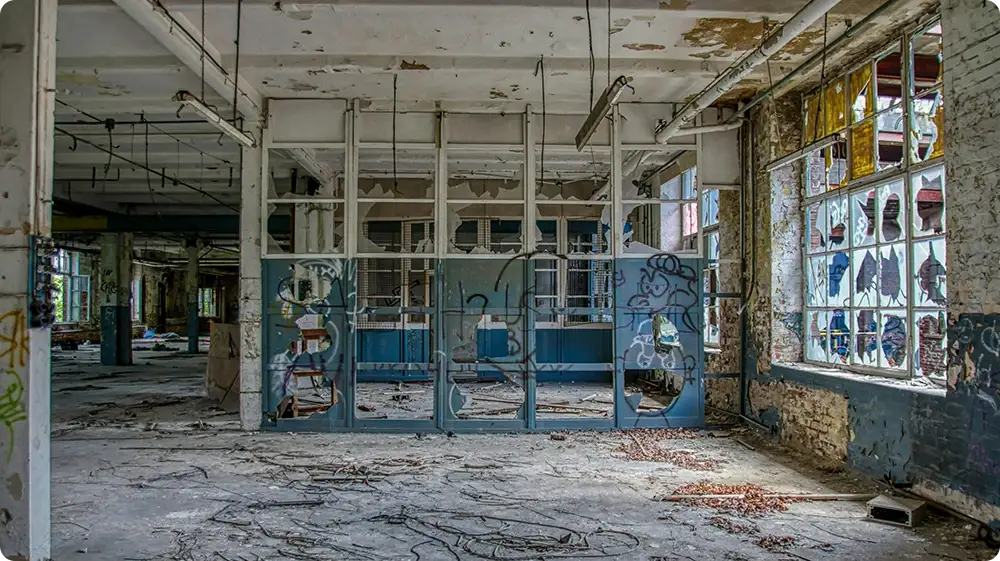
Asbestos remains one of the most dangerous substances found in older buildings across the UK. Although its use was banned in 1999, it still lingers in insulation, flooring, ceilings, and pipework of countless properties built before the year 2000. The risk arises when these materials are disturbed, releasing tiny fibres that can cause fatal diseases, including mesothelioma, asbestosis, and lung cancer.To prevent exposure, the UK government introduced the Control of Asbestos Regulations 2012 (CAR 2012), which applies to anyone responsible for managing or working in buildings that may contain asbestos. These regulations are not just for specialists; they affect landlords, property managers, contractors, supervisors, and tradespeople.
Why Are These Regulations Still Relevant Today?
Each year, asbestos exposure leads to around 5,000 deaths in the UK, a figure higher than those killed on the roads. Many of these cases come from past exposures, but the risk hasn't disappeared. Maintenance, refurbishment, or even simple DIY work in older buildings can unknowingly disturb asbestos-containing materials.
The threat remains real because asbestos is often hidden and forgotten. And unless appropriately managed, it can be just as deadly now as it was decades ago. That's why the law requires clear accountability and a proactive approach to managing this risk in the workplace.
If you're involved in construction, property management, or facilities maintenance, understanding the health and safety risks on construction sites includes being aware of hidden dangers, such as asbestos, as well as visible hazards like working at height or moving machinery.
? For New Starters in Construction:
If youre new to site work, the CITB Health and Safety Awareness Course teaches you how to identify asbestos risks and stay safe. It's also the course needed for a CSCS Green Card.
Who Is Responsible for Complying with Asbestos Regulations?
Understanding the Role of the Duty Holder
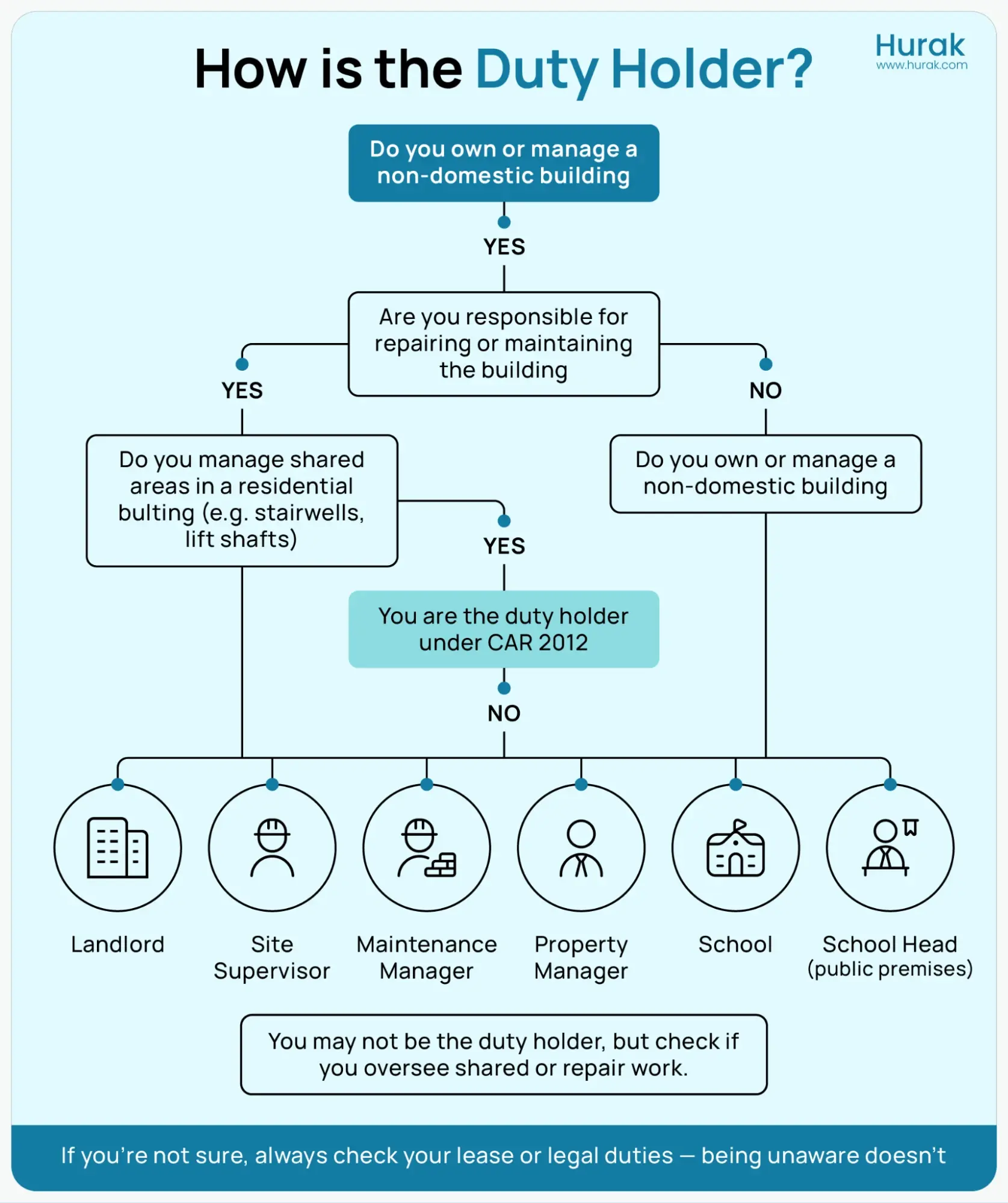
Under the Control of Asbestos Regulations, the term duty holder refers to the individual or organisation responsible for maintaining non-domestic premises. This includes:
Commercial property owners
Employers occupying a workspace
Facilities or building managers
Landlords or letting agents
Contractors in charge of building maintenance or repair
Site supervisors overseeing renovation or refurbishment
Even if you lease a property, if your lease places responsibility for maintenance on you, you are the duty holder.
For Managers and Duty Holders:
If you oversee construction or maintenance projects, the CITB SMSTS Course helps you understand the legal duties under asbestos regulations and how to safely manage your site and team.
Shared Responsibilities in Domestic Settings
In residential buildings, the regulations apply to common areas such as stairwells, plant rooms, and lift shafts. While the individual flats themselves are excluded, managing agents and housing providers still have a legal duty to ensure safety in shared spaces.
If you're unsure whether the law applies to you, a simple rule is: If you're in control of a building's upkeep and it was built before 2000, you should assume that asbestos is present and act accordingly.
What Are You Required to Do as a Duty Holder?
The regulations are designed to ensure that asbestos risks are actively managed rather than ignored. As a duty holder, you are required to:
1. Determine If Asbestos Is Present
This can be done by commissioning a professional asbestos survey. If no survey is available, you must assume asbestos is present.
2. Maintain an Asbestos Register
If asbestos is found, you must maintain an up-to-date register detailing its location and condition.
3. Conduct a Risk Assessment
Not all asbestos needs to be removed. You must assess whether the material is likely to be disturbed and, if so, what level of risk it poses.
4. Create an Asbestos Management Plan
Based on your findings, you must outline how asbestos will be monitored, managed, or removed over time. This plan must be reviewed regularly.
5. Inform and Protect Those at Risk
Anyone carrying out work in the building, such as electricians, plumbers, decorators, or contractors, must be informed of the risks associated with asbestos. Clear signage and documentation are required.
This structured approach helps ensure that no one is unknowingly exposed, a core principle of effective health and safety officer responsibilities.
Who Needs Asbestos Training?
Training is not optional if there's any chance of encountering asbestos. Regulation 10 of CAR 2012 requires that workers likely to disturb asbestos receive proper instruction.
This includes:
Tradespeople (electricians, plumbers, joiners)
Caretakers and cleaners
Site supervisors and project managers
Maintenance teams
Contractors and building surveyors
Even individuals overseeing safety plans or construction workflows should be aware of the protocols for asbestos. For those supervising site work, completing an SSSTS training course can provide essential knowledge in managing on-site risks, including exposure to asbestos.
For Supervisors:
If you lead teams on-site, the CITB SSSTS Course will equip you to manage safety risks, including asbestos, and carry out your responsibilities with confidence.
A Broader Approach to Workplace Risk
Asbestos is just one part of your workplace risk profile. Those responsible for safety must also address manual handling risks, fire hazards, and overall site coordination and management. This requires a comprehensive understanding of health and safety obligations.
If you're building a career in this space or stepping into a leadership role, understanding the differences between risk control and hazard control can help you better structure safety protocols. Equally important is ensuring that your teams follow fire safety tips in the workplace to create a safe working environment.
Managing asbestos is a specialist task, but it fits into a much broader framework of protecting workers and building a responsible safety culture.
Final Thoughts: Knowing Your Role Could Save Lives
If you're working in or around older buildings, it's your responsibility to know what risks lie beneath the surface. Whether you're a landlord, contractor, or facilities manager, the Control of Asbestos Regulations 2012 may apply to you.
Taking action, whether through risk assessment, communication, or proper training, protects not only your team but also your legal standing.
Remember, asbestos-related diseases develop silently over time. But with the right steps today, you can help prevent tomorrow's tragedies.
Frequently Asked Questions
Who is responsible for preventing your exposure to asbestos?
The person or organisation in control of building maintenance is responsible for preventing your exposure to asbestos. This includes employers, landlords, site managers, and duty holders under the Control of Asbestos Regulations 2012. Their responsibilities include identifying asbestos risks, informing workers, and ensuring safe working practices. If you're a tradesperson or contractor, you also have a duty to follow procedures and raise concerns if risks aren't managed properly.
When was asbestos legally banned in the UK?
Asbestos was entirely banned in the UK in 1999. Before that, blue (crocidolite) and brown (amosite) asbestos were banned in 1985, while white asbestos (chrysotile) remained legal until the total ban came into effect. Despite this, asbestos-containing materials still exist in buildings constructed before 2000, which is why ongoing awareness and regulation are necessary today.
Managing asbestos in buildings is subject to which regulations?
Managing asbestos is governed by the Control of Asbestos Regulations 2012, which replaced earlier versions from 2006. These regulations require anyone with responsibility for building maintenance, such as property managers, landlords, and contractors, to assess, manage, and monitor asbestos risks. These rules apply not just in construction, but also in schools, hospitals, shops, and industrial units.
Asbestos is responsible for around how many deaths per year in the UK?
Asbestos-related diseases cause approximately 5,000 deaths per year in the UK, according to the Health and Safety Executive (HSE). These deaths include fatal illnesses such as mesothelioma, asbestos-related lung cancer, and asbestosis. The latency period for these conditions can be decades, which is why prevention and early awareness are vital.
What is asbestos legislation, and why is it important?
Asbestos legislation refers to the set of laws designed to prevent exposure to asbestos fibres in the workplace. The central regulation is the Control of Asbestos Regulations 2012, supported by health and safety law under the Health and Safety at Work etc. Act 1974. These laws place clear duties on employers and building managers to identify asbestos, train workers, and create safe working environments.
Which regulations outline how to deal with asbestos?
The Control of Asbestos Regulations 2012 outline the procedures for managing asbestos in the workplace. This includes identifying whether asbestos is present, maintaining an asbestos register, assessing the risk, preparing a management plan, and providing training to workers. If asbestos is likely to be disturbed, you may need to bring in a licensed contractor, as specific removal work requires proper certification.
Explore Related Courses
Staying compliant with asbestos regulations is just one part of workplace safety. These courses help you fulfill your legal duties, enhance your awareness, and build confidence, whether you're new to the industry or managing large teams.
Asbestos Awareness (Category A): Learn how to identify and safely manage asbestos risks in buildings.
CITB SSSTS: Essential for supervisors managing health and safety on construction sites.
CITB SMSTS: For site managers overseeing compliance and high-risk operations.
CITB Health and Safety Awareness (HSA): Ideal for workers applying for a CSCS Green Card or starting in construction.
Manual Handling training: Learn safe lifting techniques to minimise strain and reduce the risk of injury.
Related articles

Explore more from Hurak
Courses
Upskill with job-ready training.
Mock Tests
Measure your learning progress.
Teach the World Online
Create an online video course, reach students across the globe and earn money