Temporary CSCS Card � Why Would You Need a Red CSCS Card?
Temporary CSCS Cards enable you to work on construction sites as you work towards the qualifications necessary for your desired CSCS card.Read this blog post to understand temporary CSCS cards, the available types, and what to do in case of card expiration.What is a Temporary CSCS Card?A Red CSCS Card is a temporary card issued if you seek employment in the construction industry. The card is for temporary purposes while you work towards the qualifications necessary for your desired CSCS card.Types of Temporary CSCS CardsThe image below illustrates the five types of temporary CSCS cards, each with its specific set of requirements. For a more thorough understanding of these CSCS Red Cards, please refer to our blog, CSCS Red Card � Application, Types, and Cost (2023).How to Get a Temporary Card?Select a cardBefore you start the application process for a temporary card, you must review the various types of temporary cards and determine your eligibility.The CSCS Card Finder tool can simplify this process. By inputting your qualifications, the tool will guide you in identifying the card for which you meet the eligibility criteria.Provide proof of your registration for the relevant qualificationYou must provide proof of being registered for an apprenticeship. Proof can be provided in any of the following forms:A letter from your apprenticeship training providerAn email or letter from the managing agency of your apprenticeshipYour Apprenticeship AgreementPass the CITB Health, Safety, and Environment (HS&E) TestThe next step is to book and successfully pass your CITB test. To understand the CITB test, its costs, and the booking process, we recommend reading our blog on the various types of CITB tests.If you're still unsure about the steps for booking your CITB test, even after reading our blog, there's no need to worry. Hurak offers a convenient service to book your CITB test on your behalf. To utilise this service, click here.Prepare for your CITB test try out a mock exam or download one of our test prep books. #myImg{ cursor: pointer; } div.wpforms-container-full .wpforms-form label.wpforms-error{ display: none; } /* The Modal (background) */ .ebook-modal { display: none; /* Hidden by default */ position: fixed; /* Stay in place */ z-index: 1; /* Sit on top */ padding-top: 100px; /* Location of the box */ left: 0; top: 0; width: 100%; /* Full width */ height: 100%; /* Full height */ overflow: auto; /* Enable scroll if needed */ background-color: rgb(0,0,0); /* Fallback color */ background-color: rgba(0,0,0,0.4); /* Black w/ opacity */ } div.wpforms-container-full .wpforms-form input[type=submit], div.wpforms-container-full .wpforms-form button[type=submit], div.wpforms-container-full .wpforms-form .wpforms-page-button { border: 1px solid #ddd; font-size: 1em; font-family: inherit; padding: 9px 31px; background: #0f7c90; color: white; /* display: flex; */ /* width: 100%; */ position: absolute; bottom: -418px; right: -150px; /* margin: auto; */ justify-content: center; align-items: center; } /* Modal Content */ .ebook-modal-content { display: flex; flex-direction: column; justify-content: space-between; align-items: baseline; background-color: #fefefe; margin: auto; padding: 31px; border: 1px solid #888; width: 30%; position: relative; } /* The Close Button */ .ebookModal-close { color: #aaaaaa; float: right; font-size: 20px; font-weight: bold; cursor: pointer; position: absolute; right: 21px; top: 10px; } .ebookModal-close:hover, .ebookModal-close:focus { color: #000; text-decoration: none; cursor: pointer; } div.wpforms-container-full { margin: 0px auto 20px;!important } .ebookModal-header{ color:#0f7c90;font-size:30px;margin:0 30px } @media (max-width:576.888px){ .ebook-modal-content { width: 90%; } } @media (max-width:768.888px){ .ebook-modal-content { width: 70%; } .ebookModal-header{ font-size:20px!important; margin:0 } } @media (min-width:768.888px){ .ebook-modal-content { width: 50%; } } @media (max-width:1024.888px){ div.wpforms-container-full .wpforms-form input[type=submit], div.wpforms-container-full .wpforms-form button[type=submit], div.wpforms-container-full .wpforms-form .wpforms-page-button { width: 100%; position: static; } .ebookModal-header{ margin:0; font-size: 25px; } } @media (max-width:1280.888px){ .ebookModal-header{ margin:0; font-size: 30px; } } @media (min-width:992px){ .wpforms-submit-spinner{ max-width: 100%!important; position: absolute!important; top:250px!important; left:150px!important; transform: translate(-50%,-50%)!important; } @media (min-width:1280.888px){ div.wpforms-container-full .wpforms-form input[type=submit], div.wpforms-container-full .wpforms-form button[type=submit], div.wpforms-container-full .wpforms-form .wpforms-page-button { border: 1px solid #ddd; font-size: 1em; font-family: inherit; padding: 9px 31px; background: #0f7c90; color: white; /* display: flex; */ /* width: 100%; */ position: absolute; bottom: -380px; right: -150px; /* margin: auto; */ justify-content: center; align-items: center; } } Download our CITB Operatives and Specialists Test Prep Book for free! × [wpforms id="14869" title="false"] Check out our video tutorials to prepare for the CITB Health, Safety and Environment (HS&E) Test.Apply for the cardYou have two options for submitting your card application. The first is to apply online through the CSCS website by setting up an account, and the second is to contact CSCS at 0344 994 4777, where a CSCS representative will walk you through the application process over the phone. If you're looking for a detailed, step-by-step guide to applying online, check out our blog, How to Get a CSCS Card after Passing the Test.We suggest applying online, as it is generally the fastest way to obtain your CSCS card. By applying online, you can typically receive your card via mail within 3-5 working days.Moreover, our service is available to assist with your CSCS card application. Click the image below to obtain further information or benefit from this service.Cost of Getting a Temporary CSCS Card in 2023The application fee for all CSCS cards, including the temporary one, is �36. Additionally, there's an extra cost of �23.50 for booking the CITB test.For an in-depth comprehension of the various costs associated with acquiring a CSCS card, we recommend reading our blog on CSCS card price.Validity and Expiration of Temporary CSCS CardsRed CSCS Cards are intended to be used as a temporary measure, so they each have different expiration dates based on how quickly you complete your training and get a permanent card.To find out the validity duration for each temporary card, please review the table below.The Trainee Card is valid for 5 years. The Red Card for work placement is valid for 3 years. Supervisor, Manager, and Experienced Technical Card remains valid for 3 years. Moreover, the Apprentice Card is valid for 4 years and 6 months. If you have an Experienced Worker Card, it will remain valid for 1 year. The Provisional Card has a validity span of 6 months only.Temporary CSCS Card Renewal Unlike other CSCS cards, the temporary card cannot be renewed. So, it is important to complete your qualification for your desired occupation before the card expires.What to Do Next if Your Card Expires?When your temporary card reaches its expiration, it's advisable to initiate the process for an upgrade. Below, you'll find a list of available options to consider:Permanent CSCS CardsSuitable ForGreen CardThis card is for site labourers�Blue CardSkilled workers or experienced workers can get this cardGold CardThis card is for supervisors or those with a specialist level skill set.�Black/�White CardThese cards are for management level roles on a construction site.�FAQsWhat colour CSCS card is the best?The card that does the job for you is the best � if you want to become a labourer, the CSCS Green Card should be your first choice. If you�re a manager on a construction site, the CSCS Black Card is what you need.What is a CSCS card for?A CSCS card serves as proof to employers that you possess the necessary skills for a job associated with your CSCS card and a strong understanding of site safety practices.Wrapping UpTemporary CSCS Cards grant you access to construction sites while you pursue the qualifications required for your preferred CSCS card. To obtain a temporary CSCS card, you must successfully pass the relevant CITB test, which has a fee of �23.50, and then apply for your card online, with an application fee of �36. The card typically arrives within 3-5 working days.If you want to know the eligibility requirements for CSCS Red Cards, consider reading this article.

How Can You Become A Plant Operator? A Complete Guide
A vital part of any construction site is a heavy machinery operator or a plant operator. Plant operators are highly-skilled individuals with expertise in operating heavy machinery to dig, lift, and move materials on building sites.As easy as it may sound, becoming a professionally qualified plant operator isn�t a smooth ride at all. You need to gain a lot of work experience and also prove yourself competent in health and safety requirements.Are you interested in becoming a plant operator? Then this blog will chalk out all the education, work experience, and certifications requirements for you. Also, we will discuss how much you can make as a plant operator.So let�s get started!What Does A Plant Operator Do?The job description of a plant operator is simple: they have to be an expert in operating heavy machinery such as forklifts, cranes, bulldozers, excavators etc. Moreover, plant operators need to have decent spatial awareness to effectively operate the machines.Plant operators are required to operate 180 degrees and 360 degrees excavators. Also, plant operators are required to dig the land with excavators and dumper trucks. Plant operators who are proficient in crane operations need to work with slinger signallers via radio to move heavy materials from one place to another.Plant operators can be asked to level areas with compactors or use piling rigs and concrete pumps to build infrastructure. For example, in quarrying or mining, operators may use crushing and screening equipment, to process raw materials efficiently and safely.�Plant operators are also required by managers to carry out machine safety checks and repair any faults with the machines they operate such as changing buckets on cranes or maintaining the boom on an excavator.How To Become A Plant Operator?There are several pathways that you can take to become a plant operator. You can get a college education, an apprenticeship, or on-the-job training to start your career as a plant operator.EducationAlthough not all employers or training providers will ask for proof of formal education, some might ask for GSCEs with grades in English and mathematics. Also, if you are choosing to do a college course, then a GSCE will be a mandatory requirement.ApprenticeshipDoing an apprenticeship with a construction firm or a plant hire company is a good way to get started as a plant operator.If you are over the age of 16 then you are eligible for an apprenticeship. You will be fully employed by your company and you will be expected to work a minimum of 30 hours a week. You will be trained on the job and will also train at a college or by a training provider.You can complete an NVQ/SVQ Level 2 in Plant Operations or a Plant Operator or Lifting Technician intermediate apprenticeship. An intermediate apprenticeship takes almost two years to complete before you are able to work full-time.Work ExperienceIf you have experience operating heavy machinery then you can directly apply for a plant operator job. If you don�t have any experience, then you can work as a general labourer by obtaining a CSCS Green Labourer Card to gain construction site experience. Afterwards, your employer can offer you an on the job heavy machinery training.An experienced plant operator is expected to have many skills alongside the knowledge of operating heavy machinery. These skills include:Knowledge of engineering, science, and technologyDesign skillsAble to work under pressureAttention to detailMaintaining and repairing machines and toolsTypes of Plant Operator CardsTo become a plant operator, you don�t need a CSCS card. CSCS doesn�t issue cards to individuals in the plant sector. However, CSCS is partnered with other card schemes which provide their skill certification cards. These card schemes include:The Trade Association For The Lorry Loader Industry (ALLMI)Construction Plant Competence Scheme (CPCS)International Powered Access Federation (IPAF)The Mineral Products Qualifications Council (MPQC)National Plant Operators Registration Scheme (NPORS)ALLMIThe Trade Association For The Lorry Loader Industry or ALLMI is a plant scheme that is focused on issuing plant operator identity cards in the Lorry Loader industry. ALLMI issues identity cards as well as a certificate of achievement to those who successfully pass their assessment. The plant categories ALLMI is involved in areLorry Loader OperatorSlinger/SignallerCrane SupervisionRequirement: ALLMI issues identity cards to aspiring plant operators after the successful completion of its mandatory theoretical and practical assessment. This process is based on the requirements of BS7121 part 4 and other elements of the 7121 series. This process applies to both novice and experienced plant operators. It is also a mandatory requirement for card renewal.Card Validity: The cards issued by ALLMI are valid for 5 years.CPCSConstruction Plant Competence Scheme or CPCS issues plant operator cards to individuals working in construction and related industries who are responsible for operating heavy machinery. The cards offered by CPCS areTrained Operator CardCompetent Operator CardTester CardRequirement: CPCS issues cards based on their theory and practical tests. These tests are the CITB Health Test, Safety And Environment Test, and NVQ/SVQ tests.Card Validity: CPCS cards are valid for 2 to 5 years depending on the type of the card.IPAFInternational Powered Access Federation or IPAF issues cards to mobile elevator work platform operators who are working on a construction site. The only card issued by the IPAF is the Powered Access License Card.Requirement: Based on the training provided at IPAF centres, the IPAF issues the PAL cards. Applicants must complete a CITB or any other Health, Safety, and Environment test to be eligible for this card.Card Validity: PAL cards are valid for 5 years.MPQCThe Mineral Products Qualification Council or MPQC issues cards to plant operators working in road building, extraction, and construction. The cards offered by MPQC are:Assessed Operator CardCompetent Operator CardAssessor CardRequirements: You have to pass the MPQC theoretical and practical assessments, CITB Health, Safety and Environment Tests, and SVQ/NVQ Tests to be eligible for receiving these cards.Card Validity: These cards are valid for 2 to 5 years, depending upon the type of card.NPORSNational Plant Operator Registration Scheme or NPORS offers cards to plant operators working in various construction and allied sectors. These cards bear the CSCS logo. The cards offered by NPORS areTrained Operator CardCompetent Operator CardInstructor CardRequirements: NPORS issues cards based on passing their theoretical and practical assessment, NVQ/SVQ tests, and the CITB Health, Safety, and Environment Test.Card Validity: NPORS cards are valid for 5 years and can be renewed afterwards.How Much Does A Plant Operator Earn?The average salary of a plant operator in the UK is �23,122. However, some areas offer better pay and employment benefits. Here�s a list of areas where plant operators earn more than the average base pay.Location�Salary (Per Year)Rugby��20,231Selby��22,689St. Austell��22,699Bridgwater��24,060London��25,473Durham��26,290Grangemouth��30,596Chester��32,338Bristol��32,783Frequently Asked Questions (FAQs)How many plant operators are there in the UK?According to the CPA, training providers, and contractors, there are 289,000 plant operators working in the UK.What is the role of a plant operator?Plant operators are responsible for operating heavy machinery at a construction site. Also, they have to maintain and repair their machines and aid other construction teams in completing the project.ConclusionPlant operators are highly-skilled people capable of operating heavy machinery and capable of building awe-inspiring structures. However, to become a plant operator, you need to possess advanced qualifications to prove to your employer that you have the required knowledge of becoming a professional plant operator.Moreover, you have to choose carefully the Plant Operator Card that relates to your expertise, qualifications, and skill. With the appropriate operator card, you can increase your chances of attracting high-paying employers and also improve your career progression options.Well, I hope this guide helps you get the gist of what it takes to become a plant operator in the UK. Best of luck for your endeavours!

Exposing SIA Training Provider Scams: A BBC Investigation l Hurak
In recent weeks, the BBC News radio program "File on 4" brought to light a troubling issue in the UK's security training sector. Their documentary, Security Threat: Sham training courses risk public safety, exposes fraudulent practices within some British security training providers.Contents of the DocumentaryThe documentary featured an undercover reporter who attended a 'fast-track' Door Supervisor course.The role of a Door Supervisor is crucial in diverse security settings in the UK, such as festivals, shopping malls, bars, clubs, restaurants, offices, and hospitals. The process of obtaining this licence involves two steps: first, applicants must complete a mandatory 6-day training program covering topics like first aid, counter-terrorism awareness and crowd control, and then they must apply for a Door Supervisor licence from the Security Industry Authority (SIA), the governing body for the private security sector.The documentary exposed a situation where a Steps Institution trainer in East London accepted a bribe from an undercover reporter, allowing the reporter to complete the course in significantly less time than the total duration. To conceal this deception, the trainer forged timesheets, falsely indicating that the reporter had completed the entire six-day course. Additionally, the trainer instructed the reporter on which answers to circle during the exam as part of their fraudulent arrangement.The documentary also addresses the tragic Manchester Arena terrorist attack on May 22, 2017, during an Ariana Grande concert in Manchester, England and how the incident exposed a fatal lack of training. In the inquiry that followed, a steward revealed that had he received better training, he could have responded more effectively to the report made to him on the night of the attack, potentially preventing the tragic incident.SIA's Investigation and SuspensionsIn response to the documentary's release, the SIA has initiated an investigation and suspended the individuals involved. Given the evidence of potential criminal activities presented in the documentary, the SIA has referred the matter to the police. Furthermore, the SIA is collaborating with awarding bodies and Ofqual to conduct an extensive investigation. Licences will be suspended if they determine that qualifications have been awarded unsafely.Preventing Malpractice and Fraud in the IndustryThe SIA is actively committed to eliminating poor practices within the security sector and assisting training providers that maintain high standards. They have a stringent approach to combat malpractice and fraud. The SIA takes allegations of malpractice seriously and initiates investigations into such claims. They aim to maintain the integrity and reliability of qualifications within the industry.Additionally, awarding bodies play a crucial role in preventing malpractice and fraud. They conduct unannounced spot checks to ensure training providers adhere to industry standards and regulations. This proactive approach allows them to identify and rectify any malpractice promptly.My Message to YouFor students seeking SIA training, my advice is clear: steer clear of shortcuts and avoid shelling out extra money for so-called 'fast-tracked' courses. With subpar training, you jeopardise your safety and put the public at risk. While things usually go smoothly, that 1% chance of something going wrong can mean the difference between life and death. Therefore, it is vital to understand how to respond and act correctly in these circumstances.To those in the business of providing SIA training and the dedicated training staff, I commend most of you for maintaining high standards. I urge you to stay the course, and if you come across any instances of training centres engaging in malpractice, please report it to the relevant authorities. Through the collaborative efforts of the SIA, awarding bodies, and training providers, those who engage in wrongdoing and put the public in danger will hopefully be identified and barred from this industry.Awarding bodies, your role in upholding the quality of SIA training is crucial. I implore you to continue supporting training providers through increased announced and unannounced quality assurance visits, reviews, and telephone interviews with learners.ConclusionIn our ongoing effort to safeguard the UK, we must remain steadfast and remember that hope is still on the horizon. Many training providers adhere to the SIA and awarding body guidelines, ensuring quality training. Additionally, countless experienced and qualified security operatives who have completed their training properly are employed in the industry, working tirelessly to protect us daily.Remember, when pursuing SIA training, prioritise safety for yourself and others by avoiding shortcuts and carefully selecting a reputable training provider. .banner-blue { border-radius: 10px; overflow: hidden; border: 2px solid #ccc; box-shadow: 0 4px 8px rgba(0, 0, 0, 0.2); background-color: #fdf9ee; } .book-now { color: white; background-color: #DF3D52; border: none; padding: 15px 60px; border-radius: 5px; cursor: pointer; font-size: 20px; text-decoration: none; } .book-now:hover { /*text-decoration: none;*/ color: white; background-color: #c33f50; } Get your Legal SIA Licence by signing up for our SIA Security courses Security Courses Book Now Rated Excellent on major review sites FAQSWhat does it mean to have a fraudulent SIA certificate?A fraudulent certificate is one that has been obtained through actions that are not permitted by the SIA or its awarding bodies. This could involve obtaining the qualification without completing the entire course or failing to meet the total hours required by the SIA. Furthermore, receiving any form of assistance during exams that aids in achieving correct answers is strictly prohibited according to SIA regulations.How can I determine if a training provider adheres to regulations and avoids fraudulent practices?In general, you can assess the professionalism of a business by examining its website. A website that appears current, exhibits good design, and offers substantial, valuable information is often associated with a reputable business. This principle also applies when selecting your SIA training course provider. Investing a little more is advisable, as well as choosing a training provider with a sophisticated website, a sense of legitimacy, and a history spanning several years in the industry. If you need training, consider booking with Hurak, a company with over a decade of experience in the compliance training sector. It is renowned for its diligent screening and vetting of all its training providers.What should I do if I or someone I know has achieved a qualification fraudulently?If you or someone you know has acquired a qualification fraudulently, it's crucial to cease any related activities as it poses a risk to both personal safety and public well-being. The recommended course of action is to enrol with a reputable training provider and diligently complete the necessary training, including attending the entire duration of the course and successfully passing the exams without any external assistance.

Everything You Need to Know about CSCS Qualifications: Their Importance, Types, CSCS Cards, and Cost
To be eligible for a skilled level CSCS card, applicants must hold a nationally recognised construction related qualification. In this blog post, I�ll discuss CSCS qualifications in detail including its types, costs, and more.Different Types of CSCS QualificationsTo obtain a CSCS card, you must acquire the relevant qualification required for that specific card, and there are different types of CSCS qualifications to consider. Let's examine these qualification types closely.National Vocational Qualification (NVQs)In construction, NVQs play a pivotal role, as they are a mandatory requirement for a number of CSCS cards.These qualifications serve as a valuable means to demonstrate your competence in your chosen trade or profession. NVQs have a dual role: not only are they a requirement for several CSCS cards, but they also act as evidence to your employer, confirming your competence for work on construction sites.NVQs hold great importance in your construction career, as it�s one of the major requirement for getting different types of CSCS cards.The specific NVQ level for the required CSCS card varies based on your job role, experience, and qualifications.For example, to get a CSCS Blue Skilled Worker Card, you will need to hold an NVQ Level 2 or higher in your relevant trade. On the other hand, obtaining a CSCS Gold Supervisor Card requires a higher-level NVQ, such as Level 3 or Level 4, depending on the specific supervisory qualifications.For example, to get a CSCS Blue Skilled Worker Card, you will need to hold an NVQ Level 2 or higher in your relevant trade. On the other hand, obtaining a CSCS Gold Supervisor Card requires a higher-level NVQ, such as Level 3 or Level 4, depending on the specific supervisory qualifications.If you�re in Scotland, you�ll need to refer to� Scottish Vocational Qualifications (SVQs) instead of NVQs. However, the fundamentals of the qualifications are the same.ApprenticeshipsApprenticeships are one of the major pathways to obtaining a CSCS card in the UK construction industry. This provides a combination of on-the-job training and classroom learning, allowing you to gain valuable work experience and develop the skills necessary for your job.Registered apprenticeship is considered a gold standard in job training. Employers in the UK construction sector require apprenticeship from the employees. This is because they face complex workforce challenges due to high competition in the global markets. As for everyone, registered apprenticeship is a proof and best solution for retaining excellent, quality jobs.Types of ApprenticeshipsTypes�Intermediate Level 2The equivalent of grade 9-4Advanced Level 3The equivalent of 2-A levelHigher Levels 4, 5, 6, and 7The equivalent of a foundation degreeDegree Levels 6 and 7The higher bachelor's or master's degreeHNCsHNC (Higher National Certificate) is a high-level course for technical skills. This qualification depends on theoretical and practical skills and knowledge. HNC takes one year to complete.Higher National Certification in construction management develops knowledge such as the use of technology on the site or site administration. This certification is equal to SCQF level 7. The same course will be further used for the supervisor or manager level rank in the construction sector.HNDsThe HND or Higher National Diploma in the construction industry is considered a professional qualification because it builds on the knowledge of HNC and covers the fundamentals of construction. This includes planning, health and safety, HR, as well as management. HDN takes two years to complete.Professional QualificationsProfessional qualifications are academic certifications that are required by the employer to assess your knowledge of the construction sector. It often includes your degree in construction or chartered membership in a professional body like CIOB, RICS, ICE, etc.Moreover, the professional qualifications include degrees from certified universities or training courses that require a high level of competency.Historical QualificationsCSCS often requires an old qualification of employees that helps assess their skills and expertise. This includes a city craft or an approved apprenticeship. Other types of historical certifications include employer apprenticeship and guild craft. Generally, most historical qualifications are no longer available. Cost Of Getting CSCS QualificationsThe cost of CSCS qualifications depends on the type of qualification and the level of certification required. The prices can also differ based on the training provider you choose. Cost of NVQsThe cost of an NVQ varies depending on what type of card you want.Check the table below for the estimated cost of NVQ Levels:Cost of ApprenticeshipAs apprenticeship involves training, some companies even pay their employees to learn and gain valuable experiences on the construction site. So there is no cost of apprenticeship.Cost of HNCsThe cost of a Higher National Certificate (HNC) depends on the level and type of the certification. The cost of HNC varies and it usually starts from �4000 and reaches a maximum of �8000. This course is offered by higher education colleges in the UK and it lasts for one year.�Cost of HNDsThe Higher National Diploma(HND) in the United Kingdom is in the category of higher education certificate. If you meet the eligibility criteria, HND will cost you around �1285 per year. This cost is for those who are living in the UK. If you are living outside the UK then you may be charged a higher rate of �3000 per year.Cost of Professional QualificationsTypically, professional CSCS qualifications can include an undergraduate degree in a relevant field. The cost of an undergraduate degree in the UK depends on several factors such as the university, the course's duration, and whether it is for home/EU students or international students.The tuition fees for a full-time undergraduate degree for home/EU students in the UK generally range from approximately �9,000 to �9,250 per year. However, for international students, the fees are typically higher, ranging from around �10,000 to �38,000 per year, depending on the university and the chosen programme.CSCS Cards and Their Relevant QualificationsThere are a number of CSCS cards available. These cards show the level and qualifications of the workers. There are different colours on each card, reflecting the occupation of each labour.Let us talk further about CSCS cards and the CSCS qualifications required for getting these cards:CSCS Green CardThe green CSCS labourer card is for entry-level workers, but it still requires some qualifications for working on a construction site. It is a must for green CSCS card holders to have an awareness of important health and safety considerations.Getting this card requires one of the following qualifications:QCF level 1SCQF level 4 award in health and safetySCWF level 5 REHIS certificateAlternatives to the level 1 award .second-cta-block .main-heading { font-weight: bold; font-size: 22px; } .second-cta-block .book-now { background: #DF3D52; color: #FFFFFF !important; border-radius: 8px; } .second-cta-block .second-heading { font-size: 17px; } .second-cta-block .card { border: 0 !important; } .second-cta-block .card-body { border: 1px solid #909090; box-shadow: rgba(0, 0, 0, 0.16) 0px 1px 4px; border-top-right-radius: 100px; border-bottom-right-radius: 100px; background: #ECECEC; } .second-cta-block .image-wrapper { height: 134px; position: absolute; right: -100px; top: calc(50% - 67px); /* Center the image vertically */ } .second-cta-block .image-wrapper img { height: 100%; } .second-cta-block .trustpilot-widget { width: 256px; } .cta-heading-section { width: 75%; } @media screen and (max-width:991px) { .second-cta-block { padding-top: 100px; } .second-cta-block .card-body { border: 1px solid #909090; box-shadow: rgba(0, 0, 0, 0.16) 0px 1px 4px; border-radius: 19px; border-radius: 14px; background: #ECECEC; } .cta-heading-section { width: 100%; padding-top: 50px; } .second-cta-block .image-wrapper { height: 134px; right: 0; position: absolute; left: calc(50% - 108px); top: calc(50% - 203px); } } RQF LEVEL 1 COURSE for CSCS GREEN CARD Check the Course Rated Excellent on major review sites CSCS Blue CardA blue CSCS card is for the skilled worker. For a blue CSCS card, you need to complete an NVQ or SVQ level 2 in the construction field. Another option to obtain a blue card is to complete an apprenticeship that is approved by CSCS.CSCS Gold CardAs the name shows, the gold CSCS card is for experienced staff. This card is for the labour who are highly skilled in the construction sector and acquire advanced qualifications.Some of the major qualifications that are necessary to obtain a gold CSCS advanced card areNVQ/SVQ Level 3ApprenticeshipEmployer-Sponsored ApprenticeshipCSCS Black CardCSCS black card is a senior-level card that is available to managers. To obtain a CSCS black card, you need to have an NVQ or SVQ level 4, 5, 6, or 7 in construction management. Even if a low-skilled worker completes the required qualification and gets succeeded in achieving this card, they get prioritised by the employer.CSCS White CardCSCS white card is for those who don�t necessarily work on the construction site, rather they visit as an architect or a surveyor. This card shows that you�re certified and professional enough to safely visit the construction site. The White CSCS card is valid for 5 years and can be renewed.There are two types of white CSCS cards available:CSCS White Card (Academically Qualified Person)This CSCS white card requires a college degree in construction-related courses. If you have completed a relevant HND, HNC, or even have CIOB or NEBOSH certificates, you can get this white card which is primarily for academically qualified people. Moreover, getting a white card means you�re capable of managing site operations without any supervision. The AQP card is valid for 5 years.Requirements for this card:1. Qualification certificate2. Passing the CITB HS&E TestCSCS White Card (Professionally Qualified Person)This type of white CSCS card is designed specifically for those who are members of the approved CSCS professional bodies. These bodies include the ICE, CIOB, RICS, etc. The validity of this card is 5 years, but you don�t have the option to renew this card. However, you can reapply for a CSCS white card.Requirements for this card:Must be a member of one of the approved professional bodies.Pass a CITB HS&E TestImportance of CSCS QualificationsConstruction Skills Certification Scheme (CSCS) qualifications are important to ensure workplace safety. As the construction industry often faces hazardous conditions, CSCS qualifications ensure workers have the skills and knowledge to use heavy machinery, equipment, and sharp tools.Let�s read the following points to understand the importance of CSCS qualifications.Promotes Safe Work EnvironmentSafety is the top priority in the construction industry. CSCS qualifications help promote a safer work environment by ensuring that workers are aware of the potential hazards and possess the knowledge to mitigate risks effectively.Acceptance on National LevelCSCS is widely recognised in the construction sector, and having a CSCS card is a prerequisite for employment. Many construction companies and contractors require their workers to hold CSCS qualifications to ensure that they are hiring competent labour.Gives Better Job Opportunities CSCS qualifications can open doors to better job opportunities and career advancement. As workers gain more experience and acquire higher-level qualifications, they become eligible for more challenging and rewarding roles within the industry.Meeting Legal RequirementsIn some cases, CSCS qualifications are a legal requirement for specific construction tasks. For example, certain construction sites and public-sector projects mandate that all workers possess valid CSCS cards. div.wpforms-container-full .wpforms-form label.wpforms-error{ display: none; } /* The Modal (background) */ .ebook-modal { display: none; /* Hidden by default */ position: fixed; /* Stay in place */ z-index: 1; /* Sit on top */ padding-top: 100px; /* Location of the box */ left: 0; top: 0; width: 100%; /* Full width */ height: 100%; /* Full height */ overflow: auto; /* Enable scroll if needed */ background-color: rgb(0,0,0); /* Fallback color */ background-color: rgba(0,0,0,0.4); /* Black w/ opacity */ } div.wpforms-container-full .wpforms-form input[type=submit], div.wpforms-container-full .wpforms-form button[type=submit], div.wpforms-container-full .wpforms-form .wpforms-page-button { border: 1px solid #ddd; font-size: 1em; font-family: inherit; padding: 9px 31px; background: #0f7c90; color: white; /* display: flex; */ /* width: 100%; */ position: absolute; bottom: -418px; right: -150px; /* margin: auto; */ justify-content: center; align-items: center; } /* Modal Content */ .ebook-modal-content { display: flex; flex-direction: column; justify-content: space-between; align-items: baseline; background-color: #fefefe; margin: auto; padding: 31px; border: 1px solid #888; width: 30%; position: relative; } /* The Close Button */ .ebookModal-close { color: #aaaaaa; float: right; font-size: 20px; font-weight: bold; cursor: pointer; position: absolute; right: 21px; top: 10px; } .ebookModal-close:hover, .ebookModal-close:focus { color: #000; text-decoration: none; cursor: pointer; } div.wpforms-container-full { margin: 0px auto 20px;!important } .ebookModal-header{ color:#0f7c90;font-size:30px;margin:0 30px } @media (max-width:576.888px){ .ebook-modal-content { width: 90%; } } @media (max-width:768.888px){ .ebook-modal-content { width: 70%; } .ebookModal-header{ font-size:20px!important; margin:0 } } @media (min-width:768.888px){ .ebook-modal-content { width: 50%; } } @media (max-width:1024.888px){ div.wpforms-container-full .wpforms-form input[type=submit], div.wpforms-container-full .wpforms-form button[type=submit], div.wpforms-container-full .wpforms-form .wpforms-page-button { width: 100%; position: static; } .ebookModal-header{ margin:0; font-size: 25px; } } @media (max-width:1280.888px){ .ebookModal-header{ margin:0; font-size: 30px; } } @media (min-width:992px){ .wpforms-submit-spinner{ max-width: 100%!important; position: absolute!important; top:250px!important; left:150px!important; transform: translate(-50%,-50%)!important; } @media (min-width:1280.888px){ div.wpforms-container-full .wpforms-form input[type=submit], div.wpforms-container-full .wpforms-form button[type=submit], div.wpforms-container-full .wpforms-form .wpforms-page-button { border: 1px solid #ddd; font-size: 1em; font-family: inherit; padding: 9px 31px; background: #0f7c90; color: white; /* display: flex; */ /* width: 100%; */ position: absolute; bottom: -380px; right: -150px; /* margin: auto; */ justify-content: center; align-items: center; } } Download our CITB Operatives and Specialists Test Prep Book for free! × [wpforms id="14869" title="false"] #myImg{ cursor: pointer; } Frequently Asked QuestionsWho should get CSCS qualifications?CSCS qualifications are relevant to anyone working in or aspiring to work in the construction industry, from labourers to project managers.What are the minimum requirements for a CSCS card?You must be 16+ years old, have obtained the required CSCS qualification, and have passed the CITB health, safety, and environment test.Can I apply for a higher-level CSCS card later in my career?Yes, you can apply for a higher-level CSCS card as you gain more experience and advance in your career.Is CSCS a professional qualification?Yes, CSCS is a professional qualification that works as proof that you are a certified professional to work in the UK construction industry.What qualifications do I need for a CSCS card?It depends on the type of CSCS card you want to obtain. For example, for a green CSCS card, you need to get one of the CSCS qualifications from the list below:An RQF Level 1/SCQF Level 4 Award in Health and Safety in a Construction Environment.An SCQF Level 5 REHIS Elementary Health and Safety Certificate.The NOCN/C Skills Awards Construction Health and Safety (F/618/0738) unitAlternatives to the level 1 awardFinal Words!CSCS qualifications are a mandatory requirement for CSCS cards. These qualifications have various types and levels to match different roles within the construction industry, from labourers to skilled professionals. By obtaining the appropriate CSCS qualification, you canThese qualifications ensure that workers have the right skills and knowledge to perform their jobs safely and effectively.

The Importance of the CSCS Apprentice Card?
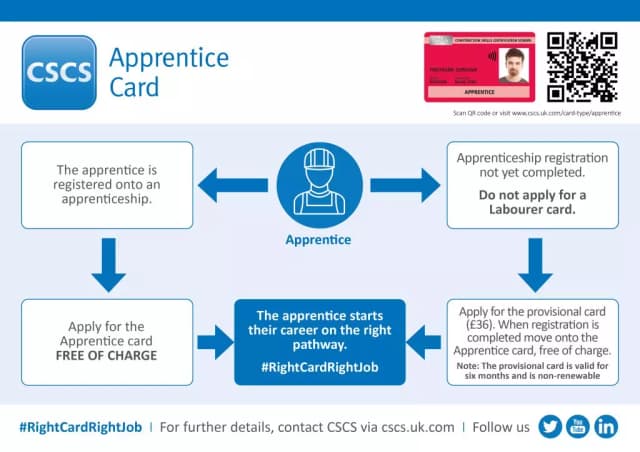
What is an Apprentice CSCS Card? The CSCS Apprentice Card is one of the five types of CSCS Red Cards, designed for construction workers. It�s specifically aimed at individuals who are registered as an apprentice with a construction company. Remember, the CSCS Red Card is one of the six types of CSCS cards. This card works as proof to an employer that you�re working towards a relevant qualification for your current job. The Apprentice CSCS Card is valid for 4 years and 6 months and cannot be renewed. To get this card, you must pass a CITB test within the last two years. You must also be currently enrolled in an apprenticeship. Do I Need a CSCS Card for an Apprenticeship? Having a CSCS card is not a legal requirement for an apprenticeship on site. However, in the UK�s construction industry, it�s really hard to get a job without one. Over the years, the widespread demand for CSCS cards in the construction industry has made them almost mandatory for every worker, with most employers expecting their employees to have a CSCS card as a prerequisite. Considering this, I�d say you definitely need this card if you�re an apprentice. Eligibility Criteria If you�re an apprentice and looking for a Red Apprentice CSCS Card, there are two major requirements you have to fulfil. Requirement 1: Proof of enrolment in an apprenticeship scheme The first requirement is to be enrolled in an accredited apprenticeship scheme. You must confirm to your employer that you�re associated with an apprenticeship scheme. You can confirm it in the following ways: Show your apprenticeship agreement to your employer. Provide a letter to your employer showing that you�re registered with your training provider in a specific qualification. Request a letter from the Managing Agency showing you�re registered on an apprenticeship scheme from the CSCS Approved Apprenticeship Standards list. Requirement 2: Pass the CITB HS&E Test The second requirement is to pass a CITB Health, Safety and Environment Test. CSCS also offers an exemption from this test if you have any of the below: Proof (letter or email) from your apprenticeship managing agency that assures you successfully meet their health and safety requirements. Submit a one-day CITB Health and Safety Awareness course certificate. If your induction or initial qualification includes a Health and Safety unit. At Hurak Learning, we can help you book your CITB test for you. Make a reservation now! Before you attempt a test, it's recommended to take a CSCS mock test for practice. How to Apply for the CSCS Apprentice Card? The best way to apply for your CSCS Apprentice Card is via the CSCS online application service. The other way is to call CSCS at 0344 994 4777 (8am to 6pm, Monday to Friday) and apply for the card over the phone. To apply online, start by creating an account or logging in if you already have one and start your application anytime. Click here to log in to the CSCS website. If you need detailed guidance on how to apply for a CSCS Apprentice Card, read our blog which offers step-by-step guidance on how to apply. Am I Eligible for an Apprenticeship in the UK? To be eligible for an apprenticeship in the UK, you must meet the following criteria: be aged 16+. be a UK or European Economic Area (EEA) citizen, or have a history of living in the UK/EEA for the past three consecutive years. Not enrolled on any full-time education. Benefits Of Having A Red CSCS Apprentice Card Provides Proof Of Your Enrollment In An Approved Apprenticeship Programme If you hold the red CSCS Apprentice Card, it works as a powerful tool to represent to your employer that you�re enrolled in an approved apprenticeship programme. Increases Your Chances Of Getting Jobs As you may know, getting a job in the construction industry without a CSCS card is very hard. It�s because employers have set CSCS cards as a prerequisite for workers. So while you work towards getting your CSCS card, getting an Apprentice Card will open up work opportunities for you. Gives Access To Construction Sites Without a CSCS card you won�t be able allowed on-site, so getting the Red Apprentice Card will help you with that. Helps In Understanding Health And Safety Practices The CSCS training you undergo to obtain the Red Apprentice Card equips you with essential knowledge of health and safety practices. It�s important to get this knowledge so you develop a safety-conscious mindset early in your construction career. Offers Skill Development Opportunities Although it�s a temporary card, this card serves as your first step into the construction industry, while also providing access to further training and development opportunities. Frequently Asked Questions (FAQs) How long is the Red CSCS Apprentice Card valid for? The CSCS Apprentice Card is valid for four years and six months, and cannot be renewed once expired. How do I apply for an Apprentice licence? You can apply for a Red CSCS Apprentice Card via CSCS official website or over the phone by calling at 0344 994 4777 (8am to 6pm, Monday to Friday). Can you renew a Red CSCS Card? No. The Red CSCS Card cannot be renewed and you�re expected to complete your apprenticeship by the time the card expires. Is apprenticeship free in the UK? Yes, apprenticeships in the UK are generally free. The cost of training and assessment is typically covered by the government and the employer. Do I need a work visa for an apprenticeship in the UK? If you�re a British citizen, you do not need a work visa for an apprenticeship in the UK. If you�re an EU citizen who arrived before December 31, 2020, you�re eligible to apply for the EU Settlement Scheme. For non-EU citizens, you can do an apprenticeship as an international student and must have a visa. Wrapping Up: CSCS Apprentice Card Being an apprentice and getting the CSCS Apprentice Card is a big accomplishment for you. As you take your initial steps in the construction industry, it helps builds a successful career.
What is CITB? Your Guide To The Construction Industry Training Board
CITB stands for Construction Industry Training Board, this board aims to promote adherence to safety standards on construction sites in the UK. Another core objective of CITB is to encourage skill development.CITB has Site Safety Plus (SSP) courses, ranging from a one-day health and safety course for the CSCS Green Card to the 5-day Site Manager�s course intended for construction site managers.Below is a list of a few CITB Site Safety Plus (SSP) courses you can enrol in to enhance your chances of securing a better job in the construction industry.CITB Site Supervisor Safety Training (SSSTS) OnlineCITB Site Manager Safety Training Scheme (SMSTS)CITB Site Supervisor Safety Training Scheme (SSSTS-R) Online RefresherCITB Site Management Safety Training Scheme Online RefresherFor instance, if you�re a site supervisor and your role is to oversee construction workers � you should look into the SSSTS course because it�ll help you communicate to your employers that you�re serious about maintaining safety standards. You'll also have access to a wide range of extra job opportunities, particularly those requiring applicants to hold a SSSTS certificate.If you�re confused about picking the right course, I recommend contacting�our support team for further clarification. .second-cta-block .main-heading { font-weight: bold; font-size: 22px; } .second-cta-block .book-now { background: #DF3D52; color: #FFFFFF !important; border-radius: 8px; } .second-cta-block .second-heading { font-size: 17px; } .second-cta-block .card { border: 0 !important; } .second-cta-block .card-body { border: 1px solid #909090; box-shadow: rgba(0, 0, 0, 0.16) 0px 1px 4px; border-top-right-radius: 100px; border-bottom-right-radius: 100px; background: #ECECEC; } .second-cta-block .image-wrapper { height: 134px; position: absolute; right: -100px; top: calc(50% - 67px); /* Center the image vertically */ } .second-cta-block .image-wrapper img { height: 100%; } .second-cta-block .trustpilot-widget { width: 256px; } .cta-heading-section { width: 75%; } @media screen and (max-width:991px) { .second-cta-block { padding-top: 100px; } .second-cta-block .card-body { border: 1px solid #909090; box-shadow: rgba(0, 0, 0, 0.16) 0px 1px 4px; border-radius: 19px; border-radius: 14px; background: #ECECEC; } .cta-heading-section { width: 100%; padding-top: 50px; } .second-cta-block .image-wrapper { height: 134px; right: 0; position: absolute; left: calc(50% - 108px); top: calc(50% - 203px); } } RQF LEVEL 1 COURSE for CSCS GREEN CARD Check the Course Rated Excellent on major review sites What is the CITB Test?The CITB Health, Safety and Environment (HS&E) test is an exam that CITB conducts to evaluate the candidate�s exposure to safety practices for construction sites in the UK.You must complete the relevant CITB test as a mandatory step before applying for any CSCS card.The types of CITB HS&E Test are as follows:OperativesSpecialistsManagers and Professionals (MAP)These three tests, as indicated above, are the CITB test types available. To qualify for a CSCS card, you must pass one of these tests. The specific CITB test you need to pass is determined by the CSCS card you aim to obtain.The cost of the CITB test is �23.50, and you can take the test at your nearest Pearson VUE test centre. Across the country, there are many Pearson VUE test centres for you to choose from, making it convenient for you to select the one closest to your location.To know more about which CITB (HS&E) test you need to do, please read this dedicated guide on CSCS card types. In this blog, we discuss the different types of CSCS cards, their target audiences, and the corresponding CITB test that is mandatory for each card.It's worth noting that when taking your CITB test, you can request special assistance, which allows you to complete the test with a voiceover audio recording available in both English and Welsh.For the Operatives test, you can choose from 12 languages: English, Welsh, Bulgarian, Czech, French, German, Hungarian, Lithuanian, Polish, Portuguese, Punjabi, Romanian, Russian, and Spanish.How Do I Book the CITB Test?Booking the test is a straightforward process; just visit CITB's website, create an account, and make an online booking.Alternatively, if you're uncertain about booking your test, we're here to assist and can handle the booking on your behalf; click on CITB Health, Safety & Environment (HS&E) Test to find out more. div.wpforms-container-full .wpforms-form label.wpforms-error{ display: none; } /* The Modal (background) */ .ebook-modal { display: none; /* Hidden by default */ position: fixed; /* Stay in place */ z-index: 1; /* Sit on top */ padding-top: 100px; /* Location of the box */ left: 0; top: 0; width: 100%; /* Full width */ height: 100%; /* Full height */ overflow: auto; /* Enable scroll if needed */ background-color: rgb(0,0,0); /* Fallback color */ background-color: rgba(0,0,0,0.4); /* Black w/ opacity */ } div.wpforms-container-full .wpforms-form input[type=submit], div.wpforms-container-full .wpforms-form button[type=submit], div.wpforms-container-full .wpforms-form .wpforms-page-button { border: 1px solid #ddd; font-size: 1em; font-family: inherit; padding: 9px 31px; background: #0f7c90; color: white; /* display: flex; */ /* width: 100%; */ position: absolute; bottom: -418px; right: -150px; /* margin: auto; */ justify-content: center; align-items: center; } /* Modal Content */ .ebook-modal-content { display: flex; flex-direction: column; justify-content: space-between; align-items: baseline; background-color: #fefefe; margin: auto; padding: 31px; border: 1px solid #888; width: 30%; position: relative; } /* The Close Button */ .ebookModal-close { color: #aaaaaa; float: right; font-size: 20px; font-weight: bold; cursor: pointer; position: absolute; right: 21px; top: 10px; } .ebookModal-close:hover, .ebookModal-close:focus { color: #000; text-decoration: none; cursor: pointer; } div.wpforms-container-full { margin: 0px auto 20px;!important } .ebookModal-header{ color:#0f7c90;font-size:30px;margin:0 30px } @media (max-width:576.888px){ .ebook-modal-content { width: 90%; } } @media (max-width:768.888px){ .ebook-modal-content { width: 70%; } .ebookModal-header{ font-size:20px!important; margin:0 } } @media (min-width:768.888px){ .ebook-modal-content { width: 50%; } } @media (max-width:1024.888px){ div.wpforms-container-full .wpforms-form input[type=submit], div.wpforms-container-full .wpforms-form button[type=submit], div.wpforms-container-full .wpforms-form .wpforms-page-button { width: 100%; position: static; } .ebookModal-header{ margin:0; font-size: 25px; } } @media (max-width:1280.888px){ .ebookModal-header{ margin:0; font-size: 30px; } } @media (min-width:992px){ .wpforms-submit-spinner{ max-width: 100%!important; position: absolute!important; top:250px!important; left:150px!important; transform: translate(-50%,-50%)!important; } @media (min-width:1280.888px){ div.wpforms-container-full .wpforms-form input[type=submit], div.wpforms-container-full .wpforms-form button[type=submit], div.wpforms-container-full .wpforms-form .wpforms-page-button { border: 1px solid #ddd; font-size: 1em; font-family: inherit; padding: 9px 31px; background: #0f7c90; color: white; /* display: flex; */ /* width: 100%; */ position: absolute; bottom: -380px; right: -150px; /* margin: auto; */ justify-content: center; align-items: center; } } Download our CITB Operatives and Specialists Test Prep Book for free! × [wpforms id="14869" title="false"] #myImg{ cursor: pointer; } What Do I Need to Bring to the CITB Test?To meet the requirements for taking the CITB test, you need to prove your identity by showing a valid form of ID with your photo and signature. The acceptable forms of ID are:Passport (UK or international)Driving Licence (UK or European)Biometric Residence Permit (BRP)Biometric Residence Card (BRC)The document you provide should be in your own name, in date at the time of the test, and must be original (no photocopies or digital copies). You can check the full list of identification requirements for HS&E tests.Is CITB the Same as CSCS? CITB and CSCS are two different organisations, although both of these non-governmental bodies work towards promoting establishment of safety standards on construction sites in the UK. CITB conducts safety tests to evaluate candidates� skill levels to keep themselves and those around them safe on construction sites. While CSCS cards not only confirm knowledge of health and safety principles but also account for experience and skill level. This being the reason, the CITB test is a mandatory requirement to apply for any CSCS card. Hence, both of these bodies go hand in hand. Their roles differ somewhat, but their primary aim remains consistent: promoting safety on construction sites.How Do I Get a CITB Card?CITB doesn�t give you a card on completion of a course or after passing the CITB (HS&E) test. The CSCS card is often mistaken for the CITB card.In other words, the general consensus is that CITB cards are the same as CSCS cards. However, this is a misconception. The CITB test is a compulsory step for obtaining a CSCS card.Below, you'll find the steps to follow in order to get a CSCS card in the UK:Select the cardGet the required qualificationsPass the health, safety, and environment testApply for the cardVerify your documentsPay the feeGet your cardIf you want to learn more about CITB, including the different CITB tests, and which test is suitable for your role, please read this blog post.Frequently Asked Questions (FAQs)Is it easy to pass the CITB test?That depends on you entirely If you prepare for the CITB test well, you won't have any problems passing it.You can revise the content with our revision material and work on your weak areas. To bridge the language gap, an audio voiceover in 12 languages is available for the CITB Health, Safety and Environment (HS&E) test for Operatives. While the CITB HS&E test for Specialists or Managers and Professionals is only available in either English or Welsh.Can you get a CSCS card without the CITB test?No. To get a CSCS card, it is necessary to complete a CITB health and safety training course and pass a CITB health safety and environment test.Do I need to revise before sitting for my CSCS test?Whether you're about to take your CITB test for the first time or if you're retaking it, it is strongly recommended to prepare in advance.You can download our free CITB Test Prep book, featuring over 400 questions and answers, or access our mock tests through this link.Final Words!As we come to the end of this blog, we hope you now have a clear understanding of what CITB is and its significance within the construction industry.With continuous development, CITB ensures that construction workers are equipped to meet the industry's ever-evolving demands.

CSCS Electrical Card: What is it and Why Do You Need it?
Although construction workers, supervisors, and managers need CSCS cards to work on construction sites, the criteria for specialised workers like electricians are different.For electricians to prove that they have the necessary skills to perform the job, they need a CSCS Electrical Card.What is a CSCS Electrical Card / ECS Card?Just like many other industries in the UK that require qualification cards, such as CSCS cards for the construction industry, ECS is a card for you to work in the electrical industry. It�s often called CSCS Electrical Card. This card shows that you�re capable of working in the electrical industry and are authorised to work on a site. The card has all the information that shows your identity, qualified status and occupation.Electrotechnical Certification Scheme or ECS is an occupational card scheme that issues ECS cards for electrotechnical workers in the UK. ECS has a card for you for every stage of your career in the electrical industry whether you�re a trainee or site manager.The ECS card scheme functions and is validated across the entire UK including the countries, England, Wales and Northern Ireland. But, Scotland has a different process for this.What is the Difference between a CSCS Card and an ECS Card?The main difference between a CSCS card and an ECS card is that a CSCS card is for the construction industry and an ECS card is for the electrical industry.A CSCS card is a card type that is suitable to work on a construction site only. Similarly, other site occupations require other kinds of cards to prove the workers' capability in a particular site. Although there are different types of cards for different industries, they are all affiliated with CSCS (Construction Skills Certification Scheme) and so they hold the same standard.Most construction jobs are advertised with a CSCS card requirement, however, a CSCS card on its own won�t allow you to work as an electrician. For getting a job in the electrical industry you require an ECS card.You might get confused when you see an electrical site job advertisement requiring a CSCS card for the electrical job. However, it�s the ECS card you need for that job.Types of Electrical CardsIf you�re aspiring to become an ECS or electrical cardholder but aren�t aware of which type of ECS card you should go for then don�t worry! Here are listed all the CSCS Electrical Card types that fit with your experience, skill, and qualification:ECS Apprentice CardThe ECS Apprentice Card is a type of electrical or ECS card that is designed for those who are taking an electrical or electronic apprenticeship. It is also known as a White Card.You can get this card from your training provider, as in most cases they arrange it for you. They also help you register with JIB. The JIB offers pre-apprentice and Apprentice Cards to students who are aspiring to start a career in the electrical industry.First, you will start your apprentice employment with a recognised training provider. There, you will receive the ECS Apprentice Card that allows you to gain first-hand experience working on an electrical site. Additionally, it allows the company to understand your work ethic and how best you have understood the expectations of the company.Once you have acquired a pre-apprentice card, you can apply for an Apprentice Card. This card will allow you to gain industry experience in support of your training.To be eligible for an Apprentice Card, you need to be registered on an apprenticeship or advanced apprenticeship. Along with that you need a copy of your Training Agreement and passed the ECS HS&E Test.ECS Trainee CardECS Trainee Cards are for people who are not doing an apprenticeship but are in a formal JIB industry training programme. The training usually has three stages, and each of these has its own rules you need to follow.Stage 1: You start here. Show evidence of employer sponsorship and registration in a training program. Pass the ECS HS&E Test to move to stage 2.Stage 2: Complete stage 1 and show your certificate. Also, meet the requirements from stage 1.Stage 3: Fulfill previous requirements. Show evidence of working towards AM2 and Level 3 NVQ in a related field, and passing stage 2.ECS Gold CardThe ECS Gold Card makes you a qualified electrician. And so, you can work unsupervised with electrical and electronic equipment on sites. The Gold Card covers all jobs related to electrical work, as well as jobs in fire detection and alarms, data communications, and emergency and security systems.To obtain this card, you must complete the NVQ level 3 qualification in your relevant field or area of expertise. To apply for this card, it doesn�t matter when you have received this qualification.ECS Black CardThe ECS Black Card is for workers who have managerial jobs in the industry. Different roles qualify for this card, such as Electrical Site Manager, Electrical Contract Manager, Project Manager, Site Manager, and Contract Manager.With a Black Card, you can apply for specific industry-related jobs that match your qualification and experience.To be eligible for an ECS Black Card, below are the two pathways:If you�re currently working in one of the mentioned roles and already have a Gold Card, you can automatically qualify for the Black Card.Complete a relevant Level 4 Management qualification. This could be an undergraduate degree, a BTEC, or a JIB-recognised training course.Professionally Qualified Person ECS Card - White CardThe ECS Professionally Qualified (PQP) Card is issued to those individuals who are part of professional institutions and work in specialised electrotechnical disciplines. Also, if you work in such a specialised discipline, but are not involved in electrical installation work and only work in a supporting capacity, then you are eligible for an ECS PQP Card.To obtain an ECS Professionally Qualified Person (PQP) Card, you need to:Be a member of an electrotechnical professional institute like The Institute of Engineering and Technology (IET).Pass the ECS Health, Safety, and Environmental Assessment.Academically Qualified Person ECS CardAn ECS Academically Qualified (AQP) Card is issued to those managers and operatives who have completed a degree in electrotechnical engineering. If you have qualifications in any of the following disciplines, then you are eligible for an ECS AQP Card:Electrical Engineering (Power)Electrical Engineering (Electronics)Electrical Engineering (Instrumentation)Electrical Engineering (Systems)Electrical Engineering (Building Services)Electrical Engineering (Environmental)Electrical Engineering (Communication)Electrical Engineering (Control)To obtain an ECS Academically Qualified Person (AQP) Card, you need to:Have a UK electrical engineering or electrotechnical degree or higher. Alternatively, you can also have a UK further education qualification at level 4 or 5 (like HND or HNC) in the electrotechnical discipline.Pass the current ECS Health, Safety, and Environmental Assessment.Which CSCS Electrical Card Do I Need?Considering the above discussed card types, you must see what qualifications and experience you have, and then get the relevant card accordingly.Moreover, the ECS Card is known by different names in other parts of the UK. In England and Wales, the CSCS Electrical Card is known as an ECS Card. However, in Scotland, these cards are known as Scottish Joint Industry Board (SJIB) Cards. Joint Industry Board (JIB) is the issuing authority on the ECS Cards, thus, they are also known as JIB Cards.Essentially, these cards are the same. However, you must choose the right ECS card for you depending on your expertise in electrical work.How Long Does an ECS Card Last?An ECS card is valid for three years. However, some ECS cards have a shorter expiry duration. ECS Trainee Cards are valid for 24 months and Experience Worker and Provisional Cards are valid for 18 months.Frequently Asked Questions (FAQs)Can anyone get an ECS card?If you�re in an electrotechnical profession in the UK, you can apply for an ECS Card.Whether you�re an apprentice going through an industry-regulated training programme or a highly-skilled professional looking for better employment opportunities, you�re eligible for applying for an ECS card.How Do You Pay for ECS?When applying online, the system automatically calculates the amount and then prompts you to pay either through a credit or a debit card.What is an ECS Platinum Card?ECS Platinum Cards are issued to those individuals who have NVQ level 3 or above qualifications within their occupation such as site managers, contracts managers, etc.Final WordThe CSCS Electrical Card is very important for people working in electrical jobs. It shows that they are skilled and safe workers. Having this card helps you get better jobs and makes employers trust you.Getting the CSCS Electrical Card is an important requirement if you want to work in the electrical industry. It gives you more opportunities, helps you understand the rules, and makes work safer. So, don't wait - get your CSCS Electrical Card now to build a successful career in electrical work.�

How to Get a CSCS Card in Scotland?�
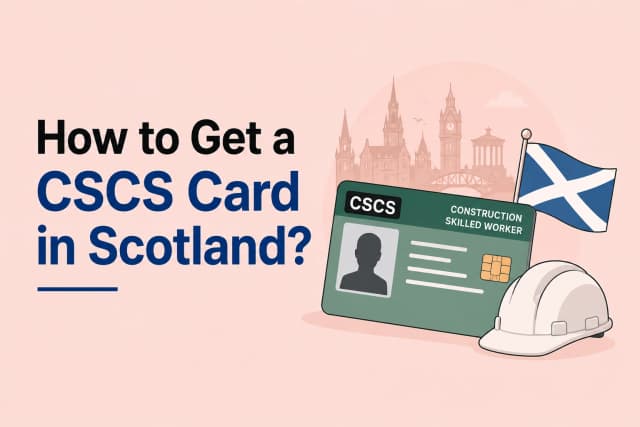
According to Indeed, you can make up to �21,000 per year, even as a labourer in Scotland. Earning a CSCS card can help you stand out and get a better job in the construction sector.In this blog post, I�ll guide you not only on how to get a CSCS card in Scotland, and we�ll also see the grant you can claim if you�re an employee of a CITB-registered employer. How to Get a CSCS Card in Scotland?Choose an appropriate CardThe first step in the process is to find out the CSCS Card you want to apply for. Since there are different CSCS cards, each approving of one's expertise in a specific role, this might make it hard for you to select a card.For instance, if you want to become a labourer in Scotland, the CSCS Green Card is what you should apply for.The CSCS Card Finder can help you find the right card � you add in the:� � �-� Role you want to pursue (Labourer, Architect, Surveyor, Bricklayer, etc.)� � �-� Qualification you've obtainedIt will give you a suitable card. .second-cta-block .main-heading { font-weight: bold; font-size: 22px; } .second-cta-block .book-now { background: #DF3D52; color: #FFFFFF !important; border-radius: 8px; } .second-cta-block .second-heading { font-size: 17px; } .second-cta-block .card { border: 0 !important; } .second-cta-block .card-body { border: 1px solid #909090; box-shadow: rgba(0, 0, 0, 0.16) 0px 1px 4px; border-top-right-radius: 100px; border-bottom-right-radius: 100px; background: #ECECEC; } .second-cta-block .image-wrapper { height: 134px; position: absolute; right: -100px; top: calc(50% - 67px); /* Center the image vertically */ } .second-cta-block .image-wrapper img { height: 100%; } .second-cta-block .trustpilot-widget { width: 256px; } .cta-heading-section { width: 75%; } @media screen and (max-width:991px) { .second-cta-block { padding-top: 100px; } .second-cta-block .card-body { border: 1px solid #909090; box-shadow: rgba(0, 0, 0, 0.16) 0px 1px 4px; border-radius: 19px; border-radius: 14px; background: #ECECEC; } .cta-heading-section { width: 100%; padding-top: 50px; } .second-cta-block .image-wrapper { height: 134px; right: 0; position: absolute; left: calc(50% - 108px); top: calc(50% - 203px); } } RQF LEVEL 1 COURSE for CSCS GREEN CARD Check the Course Rated Excellent on major review sites Pass the Required QualificationNow that you know which CSCS card you want to pursue, you must obtain a relevant qualification. With so many different options available, it can sometimes be challenging to find out which one is applicable in Scotland. So, I'll give you the list of approved qualifications coming straight from the official website.CSCS Green CardThis card is intended for labourers in the construction industry and is valid for 5 years. If you're looking for a short course and want to start right away, it's perfect. You could complete any of the following qualifications to obtain a CSCS Green Card in Scotland:i) An SCQF Level 4 Award in Health and Safety in a Construction Environmentii) An SCQF Level 5 REHIS Elementary Health and Safety CertificateCSCS Red CardThe CSCS Red Card is for those who are enrolled on construction courses in parallel and are interested in buying time until they pass the course. This card gives you temporary access to construction sites, and its validity ranges from 6 months to 4 and a half years.Trainee CardFor a trainee card, you must show proof that you're registered for an SVQ, and it must be in the last two years.Apprentice CardThe best part is that apprentice cards are issued free of charge to encourage more and more people to get this card. For the apprentice card, you need to show proof that you're doing an approved apprenticeship. Any of the following would count as proof:� � -� A letter or an email from the managing agency of your apprenticeship� � -� �A letter from your training provider� � -� Apprenticeship agreementExperienced Technical, Supervisor, or ManagerFor this card, you must be registered for a construction-related technical, supervisor, or management SVQ Level 3 or SVQ at SCQF Level 6 and higher.Experienced WorkerFor the Experienced Worker Card, you must be registered for a construction-related SVQ Level 2 or SVQ at SCQF Level 5 and higher.Provisional CardThe Provisional Card can be applied for if you're in a probationary period and haven't held a CSCS card before.CSCS Black CardThis card is for managers in the construction industry. You must have passed an SVQ Level 4, 5, 6, or 7. You also qualify for the black card if you hold an SVQ at SCQF Level 10 or 11 on construction management/technical-related qualification.CSCS Gold CardThe CSCS Gold Card approves that you're eligible for a supervisory role in your craft. For this card, you must be registered for an SVQ Level 3 or SVQ at SCQF Level 6.CSCS White CardTo get this highest level card, you must either be a member of CSCS approved professional bodies or hold construction-related HNDs, HNCs, CIOB Certificates, and certain NEBOSH diplomas and certificates.Pass the CITB Health, Safety, and Environment TestOnce you�re through the above steps, this will lead you to the CITB Test you should take. This test, famously known as the CSCS test, evaluates your theoretical understanding of health and safety principles that are expected from you to know in your role.Final Step � Apply for the CardThis brings us to the last step, which is to apply for the card itself.One prominent difference between obtaining a CSCS card in Scotland or elsewhere is the �Qualification.� If you're from Scotland, you must obtain Scottish Vocational Qualifications (SVQs).This also doesn't mean that you can't get a CSCS card in England, Wales, or Northern Ireland if you hold NVQs; CSCS issues cards to construction workers in the entire UK. For a better understanding of which NVQ or SVQ you should go for to obtain your desired CSCS card, you can refer to the following pages.CSCS Green CardCSCS Red CardCSCS Black CardCSCS White CardCSCS Gold CardTo apply for the CSCS card in Scotland, you need to create an account on CSCS portal and upload the following documents:1. Qualification certificate2. A number at the top of your passed CITB certificateAlso, you can follow this guide to get detailed instructions on how to get a CSCS card after you�re done with the earlier stages.How Much Funding Can You Claim for a CSCS Card in Scotland?To claim funding, you must be an employee of a CITB registered employer.Before you start the process, classify if it's a short or long course. If it takes more than a year, it's a long course, and if it takes less time, it's a short course.Find the table below to know the amount your employer will be able to claim and the accepted qualifications for the grant.�How much does the CSCS Card Cost?The cost of a CSCS card is very subjective, as it would obviously be less expensive to obtain a labourer card than to acquire a black card for managers. But, for a general understanding, the total cost would be equal to what you fill in the equation below:Total CSCS card cost = Qualification Cost + CITB Test Cost (�23.50) + Application Cost (�36)For a detailed insight, I encourage you to read this dedicated post on the CSCS card cost; it gives you a complete breakdown of the expenses associated with getting your CSCS card.Frequently Asked QuestionsIs CSCS recognised in Scotland?CSCS is a verification scheme that issues you a card after verifying your documents. These cards are valid across the UK, and thus, they are also recognised in Scotland.Do you need a CSCS card in Scotland?Having a CSCS card in Scotland is not a legal requirement, but it definitely increases your chances of securing better jobs in the construction industry.How do I get a CSCS card in Scotland?You must pass a relevant SVQ or construction-related degree, take a CSCS test, and apply for the CSCS card.ConclusionThis guide is all you need if you're from Scotland and interested in pursuing a CSCS card. You've covered everything from selecting the right qualification to applying for the card.Still, if something doesn't make much sense in this guide, you can reach out to us. We've been in the education industry for the past 13 years now, and we can absolutely help you smoothly sail through.

What Is The CPCS Scheme? A Guide to Construction Plant Competence
If you're curious about what this CPCS scheme is, how it works, and why it's crucial for the construction industry, you've come to the right place.You might also have heard CSCS scheme which I have covered in another blog, the CPCS is somehow similar to the CSCS but serves a different purpose.Whether you work in construction, want to operate machinery, or just care about safety and efficiency at work, I'll explain why the CPCS scheme is so important. Let's get started!What is CPCS?CPCS is a construction plant competence scheme that is developed by the Construction Industry Training Board (CITB) to reflect and showcase the competence of plant workers on the construction site. Or you can say that CPCS is a standard to show how skilled a plant worker is.The main work of the CPCS is to provide the CPCS cards to the labourers to ensure competency. The CPCS cards work as proof that the labour is skilled enough to work as a plant operator.This CSCS scheme card is widely recognised across the United Kingdom which ensures that the legal rules and standards are followed by the plant workers. And it doesn�t stop here, many employers in the construction industry now require CPCS cards during the recruitment process.What Is CPCS Certification?CITB has designed a number of CPCS certifications that proves the skill and competence of plant workers in the construction sector. Moreover, these certifications also help employers to find the appropriate workforce for the specific plant worker role.The CPCS certifications also help the workers to get better job opportunities within the construction sector and get priority over others.Some of the most popular CPCS certifications are:CPCS A02 - Crawler CraneCPCS A09 - Forward Tipping DumperCPCS A16 - Industrial Forklift TruckCPCS A31 - Ride-on RollerCPCS A40 - Slinger/SignallerCPCS A42 - CrusherCPCS A58 - Excavator 360CPCS A77 - Telescopic HandlerWhat Is The Difference Between CSCS And CPCS?CSCS is a construction skills certification scheme that is developed to provide skilled workers with legal CSCS cards. Those cards help the workers to find suitable jobs in the UK construction site. As CSCS is for construction jobs, CPCS on the other hand is designed for the plant workers on the construction site.CPCS focuses on providing competence and skills certification specifically to plant workers that are responsible for operating machinery such as cranes, lifters, etc. On the other hand, CSCS covers other sectors of construction other than plant operations.How to Get a CPCS Card?To obtain a CPCS card, you have to complete a number of important steps. These steps are somehow similar to the ones we have discussed for the CSCS cards in another blog.Here are the steps to obtain a CPCS card:Step 1: Decide Your CPCS Card FirstFirst of all, decide on your CPCS card according to your qualifications. As we have already discussed CPCS cards, you can check the eligibility requirements of different CPCS cards. For example, if you want a blue CPCS card, you must have a relevant NVQ or SVQ. Otherwise, you will not be able to apply.Step 2: Pass The CITB HS&E TestThe CITB health, safety & awareness test is also known as the CSCS test. You must pass this test in order to qualify for the next phase of getting the CPCS card. CITB HS&E test is related to health, safety, and environmental issues in the construction site. In order to work as a plant operator, it�s mandatory that you have the required safety knowledge. The validity of this test is 2 years and you must pass this before CPCS technical tests.Step 3: Pass The Theory Test After the successful completion of the CITB HS&E test, now you have to pass the theory test that evaluates your basic understanding of the skill and expertise to handle the plant machinery.Step 4: Pass The Practical TestAfter passing the CPCS theory test, there's a practical assessment for your technical expertise. It includes operating heavy equipment or machinery like excavators, cranes, etc. on a construction site under supervision.Step 5: Document SubmissionOnce you have passed all the required tests, then it�s time to submit your documents for the CPCS qualification. There is an option that you can submit your documents to CPCS directly. After submitting the legal documents, CPCS will verify your documents and will issue the CPCS card in 15 days.Step 6: Continue To Achieve Higher Rank CardIf you have got the red CPCS card which is a trained operator card and you want to upgrade it, you will have to go for a blue competent operator card. For that, you will need to achieve SVQ or NVQ qualification. This needs to be done within 2 years of getting a red CPCS card.Different Types Of CPCS Cards and Their SignificanceConstruction Plant Competence Scheme (CPCS) card is proof or evidence for those who work with the plant machinery on the construction site. These CPCS cards show that the workers have completed the necessary qualifications and have passed the required tests.Here we will discuss the three different types of CPCS cards:Red CPCS CardThe red CPCS card, known as the trainer operator card, is the first-level card. This card is ideal for beginners who are just starting their careers in plant operation. If you want to apply for this card, you will need some training in running plant machinery or site equipment.Moreover, this CPCS red card enables you to work in any field of the construction sector, while getting the relevant NVQ or other qualifications.How do I get a red CPCS card?After completing the onsite training, you will need to pass the:relevant CITB HS&E TestCPCS Theory TestCPCS Practical TestBlue CPCS CardThe blue CPCS card comes after the red card and shows further competency in your role. This card is known as a competent operator card and if you own this, you can work independently on plant machinery.As the red card expires after two years, it is essential to get the blue CPCS card to continue working. To get this card, it is necessary to complete the relevant NVQ, as NVQs are competence-based and are achieved in the workplace.How do I get a blue CPCS card?After getting the relevant NVQ, you will need the following:Provide proof of the NVQ Level 2Pass the relevant CITB HS&E testAchieve the CPCS theory testYou can book a Level 2 NVQ diploma in plant operations with us at just �549.99.Tester CardThe CPCS tester card is the most advanced type of card. It assesses the knowledge, understanding, and performance of those employees who are applying for red or blue cards. This card is for the most experienced plant operators who are working in CPCS test centres to supervise, deliver, and provide feedback on assessments.How do I get a CPCS tester card?First of all, it is mandatory for you to achieve a Record of Category Experience (RoE) from NOCN, which is the awarding body of CPCS cards.Further, you will need to:Hold advanced health and safety qualifications such as the CITB Site Managers Safety Training Scheme (SMSTS)Valid first aid certificatePass the MAP CITB testAchieve CPCS advanced theory testAchieved CPCS practical testPassed CPCS tester courseDo I Need a CPCS Card?If you�re currently working or want to work in the UK construction industry as a plant worker, then Yes, you need a CPCS card. This card shows your skills and qualifications to work as a plant operator. Another thing is that you don�t need to complete any CSCS training for a CPCS card. Any type of CPCS card you want to obtain requires specific qualifications related to that CPCS card.FAQsDo all plant workers need a CPCS card?Yes, all plant workers need a CPCS card because it is proof that many UK construction employers demand to recruit plant operators.Do I need a CPCS card if you have a CSCS?If you have a CSCS card but you want to work as a plant worker, then you�ll definitely need a CPCS card.How long is my CPCS card valid?If you have a red CPCS card, it is valid for 2 years. But for blue and tester cards, the validity is 5 years.Final Words!The CPCS (Construction Plant Competence Scheme) is a system that ensures the safety and skillfulness of workers in the plant sector of the construction industry. It requires workers to go through proper training and evaluation before operating construction machinery. This helps protect themselves and improves the efficiency of construction projects.As technology and safety standards progress, the CPCS scheme continues to be essential for professional growth and maintaining high standards in the construction field. By prioritising the CPCS scheme, the construction industry can foster a culture of safety, expertise, and progress, making construction sites safer and more efficient for workers and everyone involved.