Hurak

Tuba Tasneem

Tuba Tasneem
NULL

7 Skills to Become an Effective Coach Mentor

IntroductionBefore you can be a successful coach and mentor, you must develop a variety of abilities. They may not have occurred to you, even if some are obvious (like active listening). Learning and practising the required abilities can help you advance personally and enhance your practice.Each ability will be covered in this essay, focusing on effective listening. After that, we�ll discuss how to assess the effectiveness of your coaching or mentoring sessions and provide you with some sample assessment questions.Skills Needed to Be an Effective Mentor or CoachIt is becoming more and more common for people to get assistance through coaching and mentoring to advance their goals or objectives or gain new skills, information, and experience. The main distinction between the two is that while coaching is non-directive (i.e. the coach gives the coachee the space to come up with their conclusions and next steps, using techniques like questioning), mentoring is directive (i.e., the mentor does most of the talking during meetings and may instruct the mentee what to do).Despite the distinctions, both mentoring and coaching require a similar set of abilities to be successful. These abilities are listed below.Active ListeningIn order to comprehend the mentee�s perspective, beliefs, and values, as well as the challenges they confront and their goals, coaches and mentors must actively listen to their charges. Making eye contact and asking pertinent questions while putting your thoughts and worries aside are all part of effective listening. It also requires showing the speaker that you are paying full attention to what they are saying.Empathy and UnderstandingBeing less judgmental due to empathy and understanding is essential for developing relationships as a coach and mentor. It is crucial for coaches and mentors to be able to �place themselves in that person�s shoes,� or to detect an individual�s mental condition. This will assist you in developing appropriate solutions or recognising limiting beliefs or other impediments to their growth, some of which they may not be aware of. With time and effort, the capacity for empathy can be enhanced.CommunicationIn order to gently share the individual�s private ideas, feelings, or problems and to express intended meanings rather than being unclear or coming across incorrectly, coaches and mentors must be skilled communicators. This requires being able to foresee how the other person would understand your words and, if required, adapting what you were about to say.If you are a coach, you should constantly keep in mind to speak with people politely, offering ideas while also allowing them the chance to object or move the conversation elsewhere.Setting GoalsThis is especially important for coaches, who must work with the mentee to create specific, measurable, attainable, relevant, and time-based (SMART) goals and then analyse how their activities are in accordance with achieving those goals. You should assist the mentee in remaining goal-oriented at all times and in viewing challenges as opportunities for growth rather than setbacks. Utilizing company retreat venues uk can provide an ideal setting to focus on these goals and encourage team bonding.QuestioningBy asking the right questions, you can elicit someone�s thoughts and opinions, focus their attention on developing a fresh concept or solution, and give them the confidence to feel like a changemaker. In order to guide or facilitate the mentee�s problem-solving and thought processes rather than providing them with solutions, coaches often use the questioning technique.Giving FeedbackYou must be able to provide your mentee with accurate, detailed, and sincere feedback without being unduly critical or judgmental. Negative thoughts might demoralise the people you work with. Never blame the person; in these cases, the conversation will improve if you encourage them to talk about what happened and what they think they could do differently in the future as a lesson learned. Additionally, you should frequently provide constructive criticism by praising their efforts when they are successful, recognising their accomplishments, and highlighting their qualities.EnthusiasmEnthusiasm is a discipline that requires effort and purpose to maintain, but it eventually pays dividends. Being passionate about something makes others more likely to trust you, which makes it easier to get the best performance out of them.Skills of a ManagerManagers share many traits and abilities with coaches and mentors. Managers frequently serve as mentors or coaches for the team members they oversee. They help people navigate daily tasks and enhance their performance or professional development. Additionally, they might draw attention to people�s assets, encourage self-reflection, and give them more control over their jobs.Therefore, managers must practise the abilities we�ve covered. Since managers have a power relationship with the people they deal with and lack the same objectivity as external coaches and mentors, some areas of development may be more challenging for them.They have a stake in the person�s performance, which may cause them to provide suggestions before giving the person a chance to come up with their own, or it may cause them to have preconceived notions about the person and their performance. They should concentrate on being non-judgmental and asking open-ended questions to combat this.

NULL

Meeting Management Tips

AnalysisMeetings exist primarily to accomplish one goal: to complete a task. The personnel can be organised, plans can be made, and tasks can be planned effectively through meetings. However, meetings can occasionally be a waste of time, resources, and energy, especially if they are poorly planned and conducted.To make a meeting productive, make sure you follow the management tips:Have a Specific AimMeetings should only be scheduled if it has a specific goal. If not, you run the danger of making everyone�s time indecisive. You�ll probably emerge from the meeting in the same state you entered.If you frequently have meetings planned but have nothing concrete to talk about, call a halt to the meeting. Although staff meetings help foster effective communication, you need to strike a balance between this goal and time spent doing beneficial things.ParticipantsThis is not to say that you should be particular about who you invite. Instead, you should ask yourself, �Does the meeting need all of these people there?�People might be spending their time more effectively elsewhere if they weren�t attending meetings just for its sake.Set ObjectivesBefore the meeting, you should decide what results you hope to get from it. You should then designate these items as meeting objectives once the meeting has been scheduled.The specific topics you wish to cover at the meeting should emphasise your objectives, such as �Decide how we�re going to sell our new product.�Share an AgendaWriting and distributing an agenda before the meeting is crucial to efficient meeting management. This should contain the goals, so everyone attending the meeting knows what to expect.Having an agenda helps focus clearly and stay on topic. Additionally, you can inform attendees of any necessary preparation by providing an agenda.Realistic goals should be on your agenda; it makes no sense to have a long list of objectives if you only have 20 minutes to complete them.The appointment of a facilitator for the meeting may also be advantageous. This way, if the discussion veers off subject, they can remind everyone of the agenda and bring it back up.Be PreparedThis step comes after setting up and adhering to an agenda. Meetings should always be scheduled in advance, and all essential duties should be finished. This will not only help the meeting stay on schedule, but it will also demonstrate that you are responsible enough to prepare for it.Make sure everyone else has ample time to plan and prepare as well. To allow workers enough time to prepare, try to distribute the agenda two days before the meeting. Make careful to include in employee schedules when planning so that you can still give them enough time to prepare, such as if an employee has off the day before the meeting.Be CreativeAlthough having an agenda is crucial for keeping your meeting on schedule, it shouldn�t be so rigid that it prevents people from being creative or expressing their thoughts and opinions. Creativity should be present in a productive meeting.Be PunctualEffective meeting management includes being on time for meetings. If you arrive late, you can feel rushed and miss a crucial moment, which could impact the entire meeting. Being late also conveys a certain level of disrespect for everyone early.This step also includes wrapping up the meeting on schedule. Avoid rambling by talking about off-topic topics that aren�t on your agenda. It is a waste of time and resources, and it might make you think the meeting wasn�t very fruitful. Next time, offer yourself a more reasonable time frame if the meeting goes over because you didn�t have enough time to discuss your goals and agenda. To plan more effectively, you can also calculate meeting duration in advance, ensuring your meeting stays within the allocated time.Have a Question and Answer SessionEven though it frequently comes at the end of the meeting and doesn�t have much time to itself, this is just as crucial as the meeting itself.All meetings should include Q&A sessions, but it�s crucial if you�re dealing with outside clients or individuals who aren�t part of your team. By holding these sessions, you actively involve attendees in the discussion and force them to consider what was stated and whether they got it completely.People should be urged to ask inquiries. If you don�t mention asking questions, many people will frequently be reluctant to do so out of obligation.Asking participants questions in advance is a helpful suggestion. You should explain the situation and then inquire about any questions they may have. This not only guarantees that you cover the pertinent subject and issues at the meeting, but you can also check at the conclusion to see if you were able to address everyone�s questions and concerns.It�s crucial that you effectively and to the appropriate persons explain any following steps that are decided upon at the conclusion of the meeting. Everyone should be aware of what is expected of them after the meeting.You should also follow up with the people who attended your meetings. Since everyone has a unique perspective on events, it�s possible that two participants in the same meeting could have completely different views of what transpired. To ensure that everyone is on the same page, you should ask whether they understand, then send a follow-up document outlining everything discussed.

NULL

Importance of Digital Skills in the Workplace

AnalysisThe need for digital abilities in the workplace has never been higher, and learning these skills can significantly improve your life in a world that is becoming increasingly digital. Being proficient in a wide range of these abilities is essential for your career since an increasing number of individuals are working remotely, and 82% of all jobs in the UK identify digital skills as a criterion.While it�s simple to assume that digital literacy is sufficient for the workplace, a recent study found that 52% of workers lack critical digital skills. In this post, we�ll define digital skills, give examples, discuss why they�re essential in the workplace today, and advise on developing them.Digital Skills for the WorkplaceThe phrase �digital skills� might be challenging to define because it covers a wide range of competencies and skills according to corporate input. In a nutshell, it refers to any abilities required to function successfully in a world that is becoming more digital.According to UNESCO, having digital skills is being able to access and manage information using digital tools, communication programmes, and networks. Although they can be data and IT-focused, it�s crucial to remember that these talents span a wide range and include fundamental problem-solving and communication abilities. They make it possible for us to instantly and worldwide interact, communicate, and create content.While they might range from basic functions to more complex capabilities, all digital skills are highly transferable and are now considered essential to employability. Transferable skills, especially those in the digital sector, are rising in demand as digital technology and automation transform the jobs market.The Digital Skills GapDespite increasing technology use, there remains a sizable digital skills gap leading to many problems. Lack of digital skills prevents people from getting employment and advancing in their careers and has a detrimental effect on the UK economy�s general development and productivity.Furthermore, and maybe unexpectedly, this impacts people of all ages. Only 1 in 5 teenagers believe they possess the advanced digital abilities that employers demand.We must do more to ensure more people acquire the digital skills necessary for the workplace. When you consider that employers� expectations for digital abilities are continually evolving to keep up with technological breakthroughs, it becomes evident that more needs to be done.Essential Digital SkillsThe digital abilities you require will vary depending on the career path you choose, but a few fundamentals are becoming increasingly important in practically every position. Everyone should work to improve these abilities.Social mediaEmail and instantmessagingWord processingWeb-based researchData entry and handlingAdvanced Digital SkillsFurthermore, mastering more complex digital abilities could help you stand out in technological fields like marketing, design, programming, and data science. Employers will continue to require these more advanced technological abilities as 85 million jobs are anticipated to be eliminated and another 97 million created by 2025, many of which will be technical employment.User experience designCodingProgramming, web, and appWebsite Design and Website developmentSEO, SEM and content writingcreationData analysisImportance of Digital Skills for WorkTechnology today has a significant impact on both the economy and society as a whole. In order for businesses to remain competitive, they must keep up with the rapidly evolving digital landscape. As a result, there is a great need for abilities that weren�t even possible a few years ago. In order to remain employed, people must continually improve their skills.The benefit of Digital Skills for EmployersHaving a workforce with various digital skills has many advantages for your business. Adopting new technology in the workplace helps streamline working processes and frees up staff to concentrate on higher-value work that helps you and your employees achieve your goals by reducing time spent on repetitive tasks.Overall, the increase in productivity brought about by digital technology makes room for organisations to be more innovative and collaborative. As a result, a fun and an effective work atmosphere is created, which improves worker retention and recruitment. In addition, businesses can leverage the talents of�UGC creators�to further enhance their digital presence. These creators generate authentic and engaging content that resonates with audiences, driving innovation and fostering deeper brand collaboration.Given these multiple advantages, it should come as no surprise that businesses demand that the bulk of their staff possess the digital competencies necessary to embrace the usage of cutting-edge technology.The benefit of Digital Skills for EmployeesWhile digital skills are crucial for businesses, they also have significant advantages for employees. It may be immensely empowering to have the essential digital skills to move a firm forward. It also makes people feel more assured and safe in their jobs. Organizations can use digital marketing assessment to upskill their employees. Understanding the different types of digital marketing can further enhance this process, helping teams adopt strategies that align with current trends and leverage digital tools to drive business growth and employee development.�However, research suggests that having the correct digital skills can help workers lower the danger of their employment becoming automated by 59%. In the modern world, people who have historically performed professions are progressively being replaced by automation software and robotic process automation tools.Additionally, having a wide range of digital talents translates into a higher wage, with occupations needing digital skills typically paying 29% more than roles that do not. Therefore, acquiring digital skills for the workplace generally boosts one�s financial situation in addition to helping one�s employability, job security, and professional advancement.Furthermore, employees with digital skills can use various tools to simplify their tasks and boost efficiency. For example, using OCR based tools like picturetotext.io that extract text from image or or perform pdf data extraction, helps convert scanned documents into editable text quickly. Alongside this, file converters and cloud-based platforms are also widely used to streamline daily workflows and collaboration.The benefit of Digital Skills for StudentsDigital abilities could be the difference-maker for job seekers trying to stand out from the crowd of other qualified applicants. One of the best methods to improve your chances of getting hired for your preferred profession is to learn various digital skills required for the vast majority of job openings.Today, a lot of jobs are exclusively listed online. Job applications show your level of digital proficiency even before the interview stage, and companies are on the lookout for this. To assess your talents before an interview, many applications now include a range of online tests and forms. Gaining the necessary digital skills could help pass these entrance exams and continue to the next stage of the application process.Improve Essential Digital SkillsIt is obvious that possessing various digital abilities is necessary to succeed in today�s workplace, but how do you acquire and enhance these vital talents?Fortunately, several affordable and quick ways to broaden your knowledge of digital technologies exist. There are many chances to learn new digital skills and upskill oneself, whether online, through face-to-face training, or while learning on the job. To get started, employ these techniques:Digital Skills in the Modern CoworkplaceIn today�s professional landscape, many teams collaborate across hybrid setups that blend remote and shared offices. A modern�coworkplace�relies heavily on digital tools such as cloud storage,�visitor management software, and virtual communication platforms. Coworking management software and virtual communication platforms help organizations streamline bookings, manage memberships, track occupancy, and boost workplace efficiency. Developing strong digital skills ensures professionals can work efficiently, stay connected, and contribute effectively regardless of location.Improve your Digital PresenceSpending more time online and becoming familiar with the most often used features of the internet is one of the best methods to develop your digital abilities.Creating a social media profile can help you keep up with the most recent online trends, and email or instant messaging services can help you communicate better and work more effectively online.You can also strengthen your professional presence by learning the basics of email design, which allows you to create clean, visually appealing emails that improve engagement�especially useful for marketing, outreach, or personal branding.Additionally, exploring tools like Android video editor or a free video converter can enhance your multimedia skills, allowing you to easily convert and edit videos for various digital platforms. Using an online logo maker can also boost your creative skills, helping you design logos for personal projects, social media branding, or small businesses.Your digital skills will develop naturally the more time you spend in the digital world and the more at ease you�ll feel navigating it.Online Training CoursesOnline learning is a quick and convenient approach to acquiring and retaining information if you�re trying to pick up a new skill to help you advance in your career.Online training is becoming increasingly popular since it is thought to be a more efficient learning method than conventional face-to-face instruction. It�s not difficult to understand why 79% of learning and development professionals expect to spend more on e-learning than 3 years ago.With e-learning, you may learn more quickly and flexibly from any place using any device. According to a recent study, those who completed courses on their smartphones did so 45% faster than they would have otherwise without sacrificing the quality of their learning. The estimated additional productivity is 4,270 hours as a result. PT training has seen a surge in popularity with the rise of online learning, offering flexible options for advancing your career.Access Free Guides and ResourcesWhile it�s common to assume that gaining new knowledge and skills will cost money, many excellent free online resources can assist you in learning various digital skills without spending any money.Your employment prospects, employability, and ability to use contemporary technology can all be improved by acquiring digital skills. It�s crucial to have various fundamental digital skills in an increasingly digital environment, and it�s a good idea to expand your knowledge to more advanced ones to upskill yourself and close the digital skills gap.

NULL

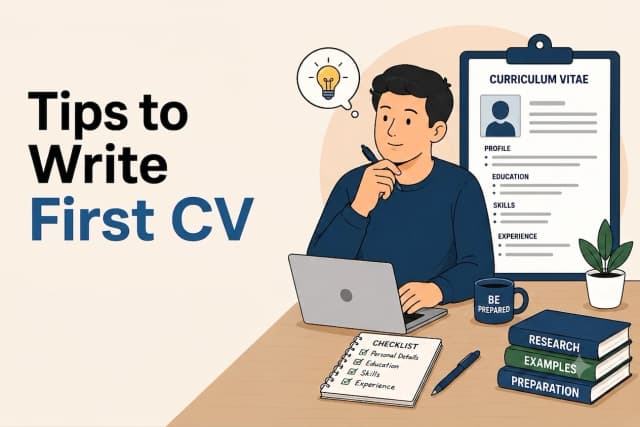
Tips to Write First CV

Your CV is an effective job-search tool regardless of where you are in your career, but as a recent graduate or school dropout, your initial CV must be well-planned and written. Ensuring your CV is meticulously crafted and structured is paramount, making a CV maker indispensable.An employer can get a quick overview of your abilities, traits, relevant work experience, and hobbies from your CV.In this post, we�ll give you practical advice on organising your CV, what information it should contain, and how to make sure it�s relevant to the required position.Importance of CVThe Latin curriculum vitae, or �course of life,� is shortened to �CV� in English. Your CV will serve as a map for your professional path as your career develops.�When crafting your first CV, consider seeking professional book writing services or professional ghostwriting services effectively showcase your qualifications and stand out from the competition,�Similarly, tools that humanize AI can help personalise content, making your application more engaging and tailored.Your resume will highlight the pertinent abilities and experiences you may apply to the new position. In today's competitive job market, leveraging advanced recruiting software can significantly amplify the impact of your resume.This is why resumes are crucial when applying for jobs and should always be included. Even when completing an online application form, you will typically have the option to attach your resume as a supporting document; you should always take advantage of this opportunity. With the introduction of AI recruitment tools such as cover letter checkers, recruiters now exhibit a preference for resumes that are meticulously completed and adhering to a structured format.Elements of a CVYour CV must provide a good first impression because recruiting experts estimate that recruiters examine a CV for five to ten seconds on average. It should demonstrate why you are a strong candidate for the position in question and, ideally, lead to your being chosen for an interview.Including the necessary information is crucial because a CV should only take up one or two pages of A4 paper.Personal InformationIt is a good idea to use the header feature to include your name, address, and contact information (email and phone number), since it saves space and makes the information simple to discover for the recruiter.Including additional personal information like age, marital status, or even a picture was once in vogue, but it is unnecessary. It is a waste of valuable space and could encourage prejudice.Personal StatementYou can quickly introduce yourself by including a personal statement or profile at the start of your CV.This should summarise your qualifications for the position, including a few sentences about you. While providing as much information as feasible, it must be concise.Every time you send your CV to a prospective employer, be sure to take the time to rewrite it. You can mention their business in the statement by customising it once more for their application. Consider this a chance to promote yourself.SkillsFor your first CV, adding a skills section is very helpful because it enables you to highlight your abilities, which might not necessarily be related to work experience.You will be able to identify the essential qualifications that the hiring managers are searching for by carefully reading the position�s job description and person specification.As you concentrate on three crucial areas: foundations, principles, and practice, effective coaching and mentoring can help you improve your communication abilities. In the same way, when preparing written applications like cover letters or CVs, using tools that shorten my essay can be valuable for condensing information while maintaining clarity and impact. Using a grammarly ai checker can further refine your CV by correcting tone and grammar, ensuring clarity and professionalism before submission to employers.The following are some examples of general skills that could be highlighted and discussed:Communication skills.IT skills.Leadership skills.Problem-solving skills.Organisational skills.Interpersonal skills.Collaborative skills.Limiting the number of skills you highlight to four or five is wise. This can take the shape of a brief list with bullet points. For each, compose a brief sentence demonstrating your proficiency in that area, like �I have substantial IT skills, which I further enhanced by building and maintaining my website�.Keep in mind that your hobbies and voluntary work will demonstrate specific skills. Despite not being related to former employment, these transferable talents may be helpful in the open position.Consider your transferable abilities carefully. Participating in organised sports might have acquired teamwork abilities, punctuality skills, or resilience. Alternatively, making YouTube videos in your free time could demonstrate your proficiency in IT, public speaking, or communication.If you are drafting a CV after taking a career sabbatical, taking transferrable talents into account is equally crucial. Consider your activities since leaving your previous position and the skills you have learned and routinely used. For instance, if you were providing child care during this time, you likely used a variety of abilities that may be listed on your resume.Education and Training DetailsInclude a section outlining any certifications you have obtained, listed in reverse chronological order, with the most recent first.Mention the high school, college, or university you attended, your educational background, and the grade you earned. If you are still awaiting the results, you might indicate �grade pending� or, if appropriate, offer expected grades.You might include any relevant academic courses you have taken if you are a recent graduate.You could also list any other courses you have taken in this section. Taking proactive steps to acquire some industry-relevant training might demonstrate drive and dedication if you are seeking a job in a competitive market.For instance, you might think about finishing a paediatric first aid course if you�re searching for work in a nursery.Work ExperienceYour employment history is usually listed in reverse order in the work experience section. The following information for each entry:The name of the company/institution you were employed.Your position title.Your employment dates there.A brief rundown of the tasks you completed.This section will probably be brief if you�re looking for your first job, but you should nonetheless list any examples of paid weekend or holiday work, work experience, or volunteer work.Hobbies and InterestsIf your passions and hobbies are applicable to the position and strengthen your application, you should include a section on them.Remember that you want to find things that will support your abilities. These might consist of the following:Sports.Art.Blogging or vlogging.Volunteering.Music.Drama.Travelling.Avoid using general terms that don�t truly convey anything about you to the employer. �Socialising with friends� is too general, but �completing escape rooms� could be a sign of initiative, teamwork, and problem-solving skills (as well as giving employers valuable insight into your personality).Finally, review your CV thoroughly (a few times, then once more!). Verify the grammar and spelling. You must proofread for clarity, catch mistakes, and ensure formatting uniformity.A second set of eyes is often helpful, so you may ask someone else to review it.�

NULL
Nov 8, 2022
Security

Event Stewards Stewarding at Spectator Events

IntroductionThe requirement for security is great as the events sector begins to thrive again. Frequently, when someone works at an event or venue, everyone immediately thinks of the security guard position. The function of an event steward is sometimes disregarded, but if you�ve ever attended a football game, concert, festival, or other public events, you�ve probably come across stewards and seen the crucial work they do. But what does a steward do during a gathering? What exactly do they do? Ultimately, they are there to protect you and ensure that your experience is safe and pleasurable.�Event StewardsEvent Stewards are skilled team members who are crucial to the smooth operation of an event and the safety of all attendees. Stewards can perform a wide range of duties and have many distinct responsibilities. Stewarding at Spectator Events includes being a comforting, approachable presence; controlling who is allowed entry to the event; and taking on the duty of handling any anti-social behaviour. They can also conduct any necessary searches, although legally speaking, they must be qualified to do so, such as having a Level 2 Certificate in Spectator Safety. Additionally, to conduct searches, they must be employed directly by the stadium or arena where the event occurs. To ensure that an event proceeds as planned while ensuring the health and safety of the audience, event stewards play a crucial role in managing crowd management. They perform their duties at gatherings like sporting events, music festivals, protests, vehicle rallies, and important transportation hubs.Role of a StewardStewarding at Spectator Events means a great deal of responsibility for keeping an eye out for any dangers that might endanger everyone attending a particular event. As an event steward, you have many duties before, during, and after an event. One of them is to avoid the location being too crowded. This is crucial since crowded gatherings are frequently the source of harmful accidents, and experienced stewards can stop this from happening. To lead people out during an emergency evacuation, they must also be aware of the locations of the fire exits and other escape routes.Additionally, they can conduct ticket entry checks and traffic/pedestrian management (crossing points, pedestrian pathways) to guarantee that automobiles and pedestrians can enter and exit the area in a secure, orderly manner. To learn more about the role and responsibilities of an event steward, enrol in a stewarding course today. .banner-blue { border-radius: 10px; overflow: hidden; border: 2px solid #ccc; box-shadow: 0 4px 8px rgba(0, 0, 0, 0.2); background-color: #fdf9ee; } .book-now { color: white; background-color: #DF3D52; border: none; padding: 15px 60px; border-radius: 5px; cursor: pointer; font-size: 20px; text-decoration: none; } .book-now:hover { /*text-decoration: none;*/ color: white; background-color: #c33f50; } Get your Legal SIA Licence by signing up for our SIA Security courses Security Courses Book Now Rated Excellent on major review sites Importance of StewardsThe presence of stewards has several advantages, and it is now necessary when planning events. Any type of event planning is never simple or easy; it can be stressful and involve complications. An event steward makes it possible to assign various jobs to qualified individuals who can subsequently complete them, making everything operate more smoothly. When planning an event, it is crucial to conduct a risk assessment since it enables you to look for any potential safety hazards. This is also an excellent technique to estimate the number of stewards required for this. The following is a helpful generalisation for selecting an adequate number of stewards: At least one steward is required for every ten attendees, per location, for groups of 1 to 100. The number of stewards needed will also be determined by the access and egress plan, which should be carefully established. You may require a certain number of stewards to check tickets and guide the public as they enter, but once the majority have arrived, their tasks may shift to other aspects of the event or getting the venue or site ready for everyone to safely leave.Another significant benefit of stewarding is that it makes the event feel safer, increasing attendees� enjoyment. They provide reassurance to attendees and security for the audience and the venue. Stewarding at spectator events should be done professionally as the stewards are frequently attendees� initial point of contact. It is crucial to act professionally so that people know they have a reliable person they can turn to if they need assistance with anything. Like with many events, there is always a chance that someone would go to cause trouble and not for the proper reasons. Any problem like this can be immediately resolved by a steward stepping in.Preparation for an EventPreparation is one of the most vital components, regardless of the event�s size. Event stewards should always be well-prepared because an equipment check is one of the most important tasks they perform in advance. They must make sure everything is there and functional. They need to know they can do their jobs well and to a high standard because of this. Radio and battery checks are also conducted to ensure that all communication is crystal-clear and simple to receive. Before the event, time is mostly employed to identify potential issues so they can be resolved as soon as possible.An event would struggle to go as smoothly without a steward. Therefore, there is no straightforward response to the question, �What is a steward�s duty at an event?� because they participate in various aspects of events. They facilitate smooth operations, provide guests with a safe environment, and aid in keeping people safe. They reassure workers and attendees that anything could be handled professionally if the worst were to happen.

NULL
Nov 8, 2022
Security

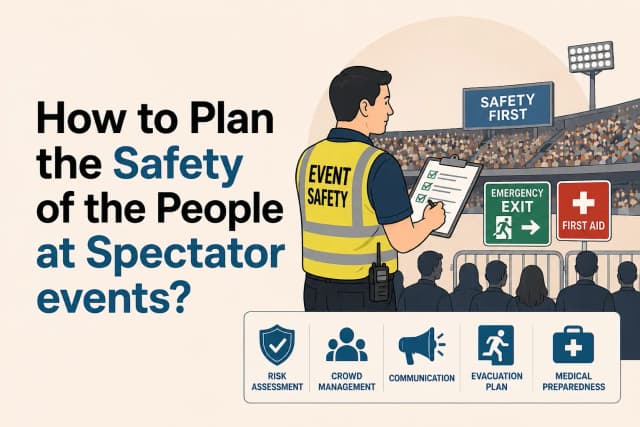
How to Plan the Safety of the People at Spectator events?

IntroductionManaging a crowd and spectators can be demanding and time-consuming. A single incident can swiftly turn a crowd that initially appears calm into turmoil. Event stewards must ensure that they are ready to handle it. Because crowds can be so unpredictable, it needs to be carefully managed.This management is your responsibility as the event steward. Whether it�s a sporting event, music festival, or fair, event stewards have a legal responsibility to protect the audiences� safety as much as is reasonably practical. Depending on the scope of the event, event stewards may be able to assign some tasks related to crowd control to staff members or outside vendors. Still, as an event steward, you are ultimately responsible for maintaining public safety.Pre-Event PlanningEvent Organisers should consider crowd safety even before selecting a location for their event. In selecting the safest, most suitable venue for your event, take into account the following aspects in the early phases of planning:1. Expected TurnoutForecast the number of attendees you expect by considering variables like advance ticket sales, attendance at past events, and the proposed level of exposure. Always be prepared to host more guests than you had planned.2. Types of VisitorsWhen making planning choices, consider the expected demographics of the spectators. For instance, will the majority of the audience be older folks who could require specific accommodations?3. Transportation System Analyse the transportation system in the vicinity of the chosen venue to see if it can accommodate the anticipated number of spectators.4. Venue SuitabilityTake note of the venue�s maximum capacity and compare it to that number to see if your event can accommodate it. Are there adequate restrooms, first aid stations, entrances, and exits?5. Excess SpectatorsCreate a plan of action for handling a packed venue to prevent a catastrophe. Avoid being taken by surprise by an unanticipatedly large and possibly tense crowd.6. Previous InformationUtilise your understanding of prior occurrences by drawing lessons from them. Consider adding extra security for a gathering with a history of the disorder.Planning for an EventLong before the event itself, crowd and spectator safety should be managed. Event stewards can reduce the risks, the earlier they plan and identify them. Avoid planning just general event preparation and then thinking about crowd and spectator safety management; instead, plan them simultaneously.For branding your event, use an online poster maker to create a poster. Crafting captivating visuals becomes effortless, saving time and effort.Assess Event�s RiskOnce a location has been selected, thoroughly consider the objectives of the event and look for any potential risks that could endanger the staff, volunteers, attendees, or the general public.According to UK legislation, you must do a risk assessment to determine what safety measures you should take. You can obtain comprehensive instructions on conducting a risk assessment by enrolling in a stewarding course. .banner-blue { border-radius: 10px; overflow: hidden; border: 2px solid #ccc; box-shadow: 0 4px 8px rgba(0, 0, 0, 0.2); background-color: #fdf9ee; } .book-now { color: white; background-color: #DF3D52; border: none; padding: 15px 60px; border-radius: 5px; cursor: pointer; font-size: 20px; text-decoration: none; } .book-now:hover { /*text-decoration: none;*/ color: white; background-color: #c33f50; } Get your Legal SIA Licence by signing up for our SIA Security courses Security Courses Book Now Rated Excellent on major review sites Crowd HazardsThere are too many crowd safety issues for event planners to cover here fully. Instead, use the following example of a crowd-specific risk to begin identifying potential risks for your event:Crashing into other individualsCrashing against stationary objects like barricadesSurging, swinging, or rushingTrampling underfootAggressive behaviour, especially amongst groups of opposing supportersRisky behaviour, such as scaling items, sprinting down steep inclines or hurling objectsIndividuals becoming entrapped, such as wheelchair users in a vast gatheringDrunk and disorderly bystandersVenue HazardsSlipping or tripping due to dim lighting or poorly maintained floorsmoving vehicles sharing a pedestrian�s pathstructural collapse, such as the falling of a fence or barrierobstructions that slow down trafficmalfunction of equipment, such as turnstiles; andPoorly designed lines impede crowd movement and cause crossflows as people cut through the crowd to get to other locations.Early Planning is Successful PlanningTo ensure an event�s success and become an event steward, enrol in a Spectator Safety course as soon as feasible. Our stewarding course is taught by experienced instructors who have a wealth of information and tools to teach you about monitoring spectators and dealing with crowd problems.

NULL
Nov 8, 2022
Security

Crowd Safety During Emergencies

IntroductionAn essential factor to consider in any crowd safety plan is how to evacuate spectators from events safely and effectively. It will undoubtedly save lives and ensure everyone is kept as safe as possible in emergencies.Preparations During an EmergencyEvery venue will have emergency lights, signage, and preparations to send guests to the appropriate emergency exit. The distribution and crowding of people inside the arena, stadium, or green field site may make some of these exits inaccessible during catastrophes due to safety issues brought on by the situation itself, incident management of threats from outside the venue, or the emergency itself.The crowd�s density will determine people�s typical movement during such emergencies. Therefore, if everyone takes the same exit route or takes a route without being aware of the potential of convergence up ahead, they may wind up contributing to that convergence and reducing or slowing it to the point where the exit flow fails.Designing evacuation contingency plans that tell people how quickly and in which direction to move, based on real-time information that can adjust to the distribution of the population in any given circumstance, can be demonstrated to be a crucial aspect of the safety plan for these reasons.Crowd SafetyCrowd safety and the actions of event organisers, safety management teams, and emergency services have never been more in the spotlight thanks to the Hillsborough Inquest verdict that the 96 victims in 1989 were unlawfully killed, as well as the German Courts� decision that the 2010 Love Parade tragedy, in which 21 people died.Building design, crowd psychology, the competence of crowd safety planners and management to ensure this can be tasked safely, supported by appropriately trained and competent safety stewarding staff to implement the evacuation, will be the main factors that will contribute to the ability of people to evacuate an open space or building safely. .banner-blue { border-radius: 10px; overflow: hidden; border: 2px solid #ccc; box-shadow: 0 4px 8px rgba(0, 0, 0, 0.2); background-color: #fdf9ee; } .book-now { color: white; background-color: #DF3D52; border: none; padding: 15px 60px; border-radius: 5px; cursor: pointer; font-size: 20px; text-decoration: none; } .book-now:hover { /*text-decoration: none;*/ color: white; background-color: #c33f50; } Get your Legal SIA Licence by signing up for our SIA Security courses Security Courses Book Now Rated Excellent on major review sites Crowd Behaviour TheoriesMany crowd behaviour theories were brought into crowd science over the 20th century. These include the well-known beliefs of Gustave Le Bon (1908), whose best-selling book �The Crowd�, written in 1895, was the first to identify perceived unfavourable characteristics of crowds. In the anonymity of the crowd, he claimed, civilised behaviour was replaced by primeval savagery, making mob behaviour unhealthy and aberrant. One of crowd science�s most influential early hypotheses was his (1908) �Group Mind Theory�. He said that when a person joins a group anonymously, they lose their sense of identity and accountability for their activities.These people believe that being in groups gives them a sense of strength and invincibility; this �contagion� causes people to degrade and turn to their animalistic impulses. Many of these crowd behaviour theories are no longer viable, and many are even viewed as dangerous to rely on (The Cabinet Office and Emergency Planning College, 2009).According to Anthony R. Mawson�s Social Attachment Model (Mawson AR 2005), being around familiar people and places has a calming effect and lowers the �flight� reaction, which can lead to stampeding and pushing. He claimed that social rules of behaviour do not fall apart that often.According to John Turner�s self-categorisation theory (Turner J 1987), catastrophes and emergencies can foster a sense of a shared identity or �we-ness�. As individuals flee a common threat, orderly, charitable, and cooperative behaviours would emerge.Crowd Behaviour ExamplesNumerous global catastrophes have occurred, and inquiry and analysis have revealed how this might be the case.2983 people died in the Twin Towers collapse in 2001. Later studies showed that even when people were aware of the threat, it could take minutes or even hours for them to leave a building. More than a general panic, this inaction contributed to the numerous fatalities. Before deciding to flee, people sought information to analyse (Fahy & Proulx, 2002). According to reports, several individuals left Tower 1 immediately, but many more continued with their �normal� activities. In 2001, individuals took about 45 minutes to leave the 90th floor.The July 7th London bombings were the subject of research, which revealed that people�s emotional responses to the explosion caused them to experience individual dread and suffering (Drury, Reicher, Scholfield, Langston, and Cocking 2007). However, during the evacuations, individuals behaved in a calm, orderly manner, and Londoners showed a sense of camaraderie by putting the needs of others above their own. No signs of fear could be seen, and despite the smoke-filled subway trains and platforms, there seemed to be a shared social identity, common aspirations, and solidarity to help others with the idea that others would do the same (Drury, 2016).Therefore, it would seem that people can retain social cohesion, resist panic, and show a high level of resilience when faced with difficulty and confusion.Spectator Safety CourseTo ensure an event�s success and how to prevent an emergency during an event, enrol in a Spectator Safety course.�Our stewarding course is taught by experienced instructors who have a wealth of information and tools to teach you about monitoring spectators and dealing with crowd problems.

NULL
Nov 8, 2022
Security

What Security Guards Can and Cannot Do?

IntroductionIt�s interesting to know what security guards can and cannot do, whether you�re thinking about working in security or are simply a member of the public.You will know if security guards can touch, search, or detain you after reading this article, whether you are out clubbing or shopping. So continue reading to gain a better understanding of your rights and the security sector.Security officers have less authority than police officers. Security personnel are typically more like regular citizens. They are no different from other members of the public in terms of rights.Every security guard must identify themselves by wearing their badge and licence visible to the public at all times on their uniform. You should alert the company the security guard works for if you notice them without a badge. If you misplace your badge as a security guard, you must immediately notify the SIA, but you may continue to work until a new one is delivered. If the SIA learns that someone is working without a badge, they have the right to revoke their licence or even take legal action against them for licence violations.What Security Guards Can Do?Can Arrest a CitizenAny public member would be within a security guard�s rights to arrest if someone was committing an offence or if a crime had already been committed and they had good reason to believe that someone was guilty. Security guards have no more authority in this sense than the general public, albeit they are permitted to make citizen arrests under certain circumstances. Security personnel are more trained in the physical actions required to arrest since they are in a position where they are more likely to use force. Only police officers have the authority to intensify a physical arrest.Can Detain a CitizenA security guard can detain you but must have a valid justification. They make a citizen�s arrest when they detain you, and Section 24A of the Police and Criminal Evidence Act outlines the procedures they must follow.They either observe a crime or have solid evidence to support their suspicions.To stop someone from hurting oneself or other people.To prevent someone from harming property.Stop someone from leaving the area before a police officer arrives to take over.Can Touch YouSecurity guards are only allowed to touch you while holding you in custody.Can Request a Physical SearchSecurity personnel have the right to ask to physically check you and any items you have on you before allowing you to enter a place. Additionally, they have the right to demand a physical inspection whenever you enter or leave a store for whatever reason, especially if they have cause to believe you have stolen something. This is perfectly legal.Only if you give your permission can a security guard search you, your bag, or your vehicle. They aren�t allowed to search you if you object. If you enter a club and ask them not to search your bag, they will likely reject your admittance and send you on your way.Again, if you decline the bag search after being stopped by a security guard who believes you are hiding stolen items in your bag, the guard may not search. If you continue to object, they will hold you until a police officer shows up so they can perform a legitimate and forced search.A security guard may only search someone�s possessions, such as a bag if the area has been left unattended and the guard is looking for a possible bomb threat. The security guard may inspect your belongings to identify you or locate any prescriptions that might be useful for your health emergency. When you are unconscious, they can inspect your backpack as well.Get your Legal SIA Licence by signing up for our SIA Security coursesSecurity CoursesBook NowRated Excellenton major review sitesWhat Security Guards Cannot Do?Cannot Use an Excessive Amount of ForceSecurity officers, concierge security, and mobile patrols are prohibited from using excessive force when effecting a citizen's arrest. Excessive use of force would make the arrest of the civilian illegal, which would harm the security guards and their employer's reputation, making proper incident reporting, witness statements, de-escalation reviews, and tools such as body worn camera footage increasingly important. Guards should not use more force than is necessary to detain an arrested person; physical force should only be used if the suspect resists. Additionally, restraint should only be applied while waiting for the police to arrive and take control of the issue.Cannot Carry a WeaponSecurity officers aren�t authorised to carry guns because they have the same legal rights as everyone else. They are not allowed to carry weapons on their person as a deterrent or to use them, whether it be pepper spray, batons, or a gun. Front-of-house security personnel are more likely to emphasise negotiation techniques than physical force.Since it is illegal to carry weapons in the UK, no one is authorised to carry weapons like guns, batons, tasers, or pepper spray, including security personnel. A set of handcuffs is the only thing a security guard possesses. These are not weapons; they are a tool for keeping a person when the security guard makes a citizen�s arrest, and they are only used until the police show up. Guards will be taught how to use handcuffs effectively and safely, although anyone in public is technically allowed to carry them. Handcuffs are allowed for citizen arrests.

NULL

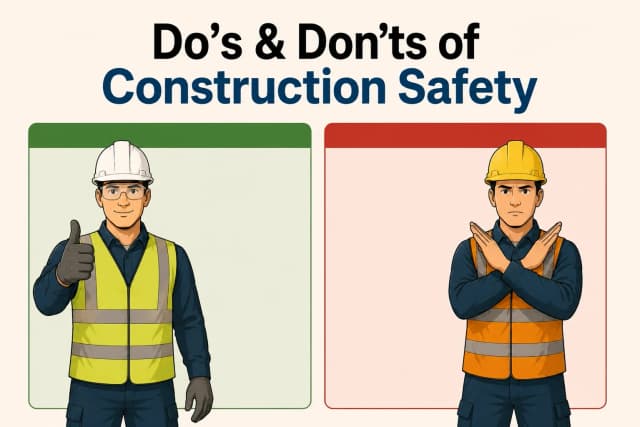
Do's & Don'ts of Construction Safety

One of the most dangerous workplaces in the world is the construction site, but it is also one of the most neglected. In addition to the high number of accidents and injuries that occur there, these situations could endanger the lives of those concerned. For this reason, construction workers should be more cautious than those in any other profession.�We�ll go into the do�s and don�ts in construction to decrease workplace accidents and ensure your safety and, more importantly, the lives of your team to assist you in avoiding the unpleasant risks that might arise on-site. Construction sites will no longer be frightening if these rules are carefully followed.DO's1. Wear Safety Equipment At All TimesNo matter how high or low a worker�s platform is, there will always be a chance of rubble or other things falling on them. Workers could suffer an injury or pass away if anything fell on their heads. To protect your head from any debris that might fall from above, you should, at the very least, wear a hard hat the entire shift. Wearing gloves and high-visibility clothing, like any other safety equipment, protects your hands and improves your ability to see while you are in a potentially dangerous environment. Safety glasses are advised to protect your eyes from dust or sparks, and boots are encouraged owing to their endurance.2. Learn Site SafetyAlthough most of a construction worker�s abilities can be gained on the site, it is preferable to acquire safety knowledge before entering the site. The majority of the contractors in the UK require the labourers to have a CSCS Labourer Card, which is a testament that the worker has qualifications to work on a site. To apply for a CSCS Labourer Card, the workers need to complete the CSCS Green Card (Labourers Card) Course, also known as the CSCS Labourer Card Course, through which they will learn safety regulations and health-related topics like manual handling, hazardous substances, welfare facilities, etc. Experienced personnel should also enrol in the CSCS Labourer Card Course once every five years to increase/refresh their understanding of building standards for safety. These training sessions will cover anything from basic safety precautions to techniques that could save lives, like how to use a ladder safely. The main objective is to ensure that everyone is thoroughly trained. The employees ought to be aware of the safety precautions that must be taken in the event of an occurrence after these training sessions. .second-cta-block .main-heading { font-weight: bold; font-size: 22px; } .second-cta-block .book-now { background: #DF3D52; color: #FFFFFF !important; border-radius: 8px; } .second-cta-block .second-heading { font-size: 17px; } .second-cta-block .card { border: 0 !important; } .second-cta-block .card-body { border: 1px solid #909090; box-shadow: rgba(0, 0, 0, 0.16) 0px 1px 4px; border-top-right-radius: 100px; border-bottom-right-radius: 100px; background: #ECECEC; } .second-cta-block .image-wrapper { height: 134px; position: absolute; right: -100px; top: calc(50% - 67px); /* Center the image vertically */ } .second-cta-block .image-wrapper img { height: 100%; } .second-cta-block .trustpilot-widget { width: 256px; } .cta-heading-section { width: 75%; } @media screen and (max-width:991px) { .second-cta-block { padding-top: 100px; } .second-cta-block .card-body { border: 1px solid #909090; box-shadow: rgba(0, 0, 0, 0.16) 0px 1px 4px; border-radius: 19px; border-radius: 14px; background: #ECECEC; } .cta-heading-section { width: 100%; padding-top: 50px; } .second-cta-block .image-wrapper { height: 134px; right: 0; position: absolute; left: calc(50% - 108px); top: calc(50% - 203px); } } RQF LEVEL 1 COURSE for CSCS GREEN CARD Check the Course Rated Excellent on major review sites 3. Keep An Eye on Your Surroundings At All TimesAnyone entering a building site should always keep an eye out for potential dangers because there are nearly always many activities occurring at once. It would be best if you always kept an eye out for them wherever you travel because doing so will prevent catastrophic injuries. Examples include:Pits.Construction equipment.Beams moving about the region.Other risky parts of an incomplete building.Additionally, you must never talk on the phone or interact with others while operating machinery that needs close attention.4. Stay Close to The ForemanTo work effectively, supervisors should always ensure the safety of their construction crews. The foreman�s responsibility is to direct the personnel performing duties across the site. A foreman�s knowledge of construction safety places them in a leadership position that cannot be disregarded. Even if a safety issue isn�t immediately obvious, always pay attention to what they say about what is safe and what isn�t.5. Inform the Workers About Site HazardsEvery worker must be properly informed and aware of the potential risks before entering any construction job site, regardless of their position or degree of expertise. Unskilled or ignorant workers may pose the greatest risks to any company since they may unintentionally endanger those around them. The best method to avoid injuries or accidents is probably to fully comprehend the dangers around you and to maintain a constant level of attention.Essential safety training is required in workplaces where accidents and fatalities are more likely; doing so will help you avoid terrible events that will harm your reputation and finances. Even though training sessions are held all year long, construction workers would enforce safety regulations more effectively if they applied and practised the skills they learned there. Without the proper training, employees risk severe or even fatal injuries.6. Use Proper EquipmentYou need to provide your employees with the appropriate tools and a suitable workspace for the task at hand if you want to foster a culture that prioritises construction safety. Construction site safety is impossible without the right tools because there is always a danger of getting hurt when using the incorrect ones. With the wrong equipment, construction workers are sure to make serious, even fatal, mistakes. In addition to ensuring that every piece of equipment on the job site is appropriate for the task at hand, construction companies also need to ensure that all equipment is kept in good working order.7. Take a Break When NeededWhile putting in a lot of effort should always be viewed as rewarding, it�s okay to take a break occasionally. Taking a break before returning to work helps employees maintain their vitality. Make sure breaks don�t go any longer than they have to.DON�T1. Wear Anything Unsuitable on a Construction SiteCasual attire won�t keep workers safe while at work; baggy pants or skirts are more likely to cause injury than work pants, and steel-toed boots will always provide more protection against heavy objects than trendy running shoes.2. Wandering Into Unsafe AreasIt�s not always safe to enter a building site just because it�s large and has numerous places. Significant liabilities may result for the contractor and other parties. The dangerous spots should be suitably designated with cones and signage to deter workers or anyone from entering risky areas.3. Use Equipment You Are Not Familiar WithSome employees are better than others at using specific pieces of equipment. Although it could appear simple initially, employees shouldn�t utilise any new tools without supervision. Commercial real estate work is expensive enough as it is, and untrained workers run the risk of harming or destroying site property.

Teach the World Online

Create an online video course, reach students across the globe and earn money

Teach With Hurak