

Hurak

Tuba Tasneem

Tuba Tasneem
NULL

Health and Safety Officer: Key Roles and Responsibilities

Promoting health and safety in the workplace is crucial, given the predicted 38.8 million working days lost due to work-related illness in 2019�20.Health and safety officers assist their business in ensuring the workplace is safe and secure for their employees by working to prevent accidents, injuries, and any illnesses related to the workplace. This position is focused on controlling risks in addition to the obligation of the business and employees to protect health and safety at work.In this post, we look at how to become a health and safety officer and offer advice on the duties and obligations required, as well as suggestions to get you started. We also consider which laws should be followed while implementing policies and procedures so that you may make judgments that will ensure everyone�s safety.With our approved Health and Safety training courses, you can learn about common workplace dangers and find out how to keep everyone safe. These programmes are meant to provide you the knowledge you need to identify potential risks in your company.Health and Safety OfficerAs a health and safety officer, a qualified individual oversees and controls the organisation�s adherence to health and safety regulations. By ensuring that accident prevention and the proper health and safety procedures are followed at all times, you continuously promote safety awareness as a health and safety officer.Any organisation that wants to avoid avoidable accidents or injuries must maintain constant monitoring. Health and safety officers must be knowledgeable about the Health & Safety at Work Act of 1974 and other pertinent health and safety laws. They should know their general responsibilities, applicable laws and codes of conduct, enforcement methods, ways to access and disclose information, and requirements.A Health and Safety Officer plays a crucial role in mitigating construction claims by implementing proactive safety measures and ensuring strict adherence to regulatory guidelines. Their responsibilities include conducting thorough site inspections, identifying potential hazards, and fostering a culture of safety to minimize the risk of incidents that could lead to construction claims.They will be responsible for maintaining safety data, developing new practices, and bolstering current regulations in this capacity. Health and safety officers are crucial to keep workers safe and promote a more effective and productive workplace.Becoming familiar with current legislation may ensure a consistently safe workplace environment. Being a health and safety officer is a fulfilling career, whether you work in an office, school or even on a construction site.As a health and safety officer, you can focus on a particular subject, like first aid or fire safety, or you might decide to offer advice on all safety-related matters. Regardless of your path, you will be accountable for helping your business uphold a high health and safety standard and ensure that employees� welfare and well-being are always protected.Health and Safety Officer: Roles and ResponsibilitiesThe primary duty of a health and safety officer is to ensure everyone�s safety at all times. To do this, they will be responsible for a variety of tasks. Regarding safeguarding employees employed by the company and anybody else its operations might impact, there are specific obligations that the organisation must respect (e.g. members of the public). To assist their employer in maintaining the continued efficacy of the control measures put in place by the competent person, officers should be aware of their tasks and obligations (who may be the employer, the health and safety officer, or someone else).Health and safety officers frequently concentrate on examining workplace locations to guarantee adherence to pertinent legislation. It is part of their responsibility to get familiar with typical workplace dangers and to know how to deal with them if they become risks. In complex healthcare environments, this operational safety function is often overseen at a strategic level by a�Medical Directorship, which holds ultimate responsibility for clinical governance and patient safety protocols. Making decisions on creating and promoting successful policies can be aided by this foundational knowledge.Generally speaking, health and safety officers may be in charge of:Monitoring and evaluating dangerous or harmful situations.Drafting health and safety regulations that are specific to the tasks at hand.Putting health and safety measures into action.Doing risk analyses.Checking the electrical apparatus.Examining previous mishaps to determine what went wrong and how to avoid it.Keeping in touch with employees who cannot work due to illness or injury.Distributing pertinent information about preventing accidents.Assisting staff and setting up training as required.Communicating about provisions, such as first aid supplies, with the first aider and/or designated person.Taking current health and safety training to stay knowledgeable.Officers in charge of health and safety are in charge of implementing plans that follow the plan, do, check, and act method.PlanDoCheckActNo matter where you work, by following these four measures, you can guarantee that health and safety are always maintained efficiently.Your primary duty as a health and safety officer is to maintain everyone�s health and safety. However, keep in mind that it is the employer�s responsibility to establish this work environment, and it is your responsibility to assist them.Every employee has a right to work in a setting where risks to their health and safety are appropriately managed, and they will be in good physical and mental health. Workers have a responsibility to protect their health and safety as well as the health and safety of others, even though it is the health and safety officer�s role to assist in maintaining these measures. They must always follow all directions and their training and collaborate with everyone they work with, including their employers. They must speak with their health and safety officer immediately if they have any specific questions or concerns about health and safety at work. By taking these steps, you can guarantee that the workplace is always safe and healthy.Your health and safety officer duties may change depending on the setting you choose to work in. For instance, compared to individuals who work in education, healthcare, or an office, a health and safety officer on a construction site will have different duties.Health and Safety as a CareerAccidents do occur, regardless of the field you choose to work in or the workplace environment. As a health and safety officer, you will have the chance to collaborate with staff members to reduce risks and foster a pleasant work environment. In light of this, if you enjoy helping people, working as a health and safety officer could be immensely rewarding.Not only do you have the opportunity to save lives, but you also have the freedom to work in various industries for organisations of all shapes and sizes and travel the globe. You may benefit while fostering a strong culture of health and safety in your company if you have the necessary knowledge and abilities. If so, you must be familiar with the pertinent rules and regulations of the nation where the business is located.For instance, encouraging good health and safety in a school is significant to many individuals, including students, instructors, governors, and parents. A health and safety officer�s responsibility is to serve as the centre of the school�s health and safety management plans.A health and safety officer has a lot of duties to do. All environments can become safer, more productive places to work by promoting employee well-being and controlling workplace risks. Whether you want to work as an internal team member, on your own, or for a more prominent organisation, a health and safety officer is vital. Anyone with the necessary skills and skill set can work effectively as a health and safety officer.

NULL

Differences Between Risk Control and Hazard Control

Identifying threats is one of the first tasks you must take when conducting a risk assessment. You can then evaluate the hazards after this. But how do hazards and risks differ from one another?Since the terms, risks and hazards are frequently used interchangeably, you are not alone in wondering what the distinction is.The two terms are synonymous. There is no risk if there is no hazard. But they differ, and comprehending those variations is crucial to risk analysis. Let�s examine the distinctions between hazards and risks and their relationships. What is a Hazard?Anything that has the potential to be harmful is a hazard. A risk can result in loss, harm, death, or other adverse outcomes.There are risks in almost every workplace, family, and setting. A material, piece of equipment, activity, working approach, or process could all be hazards. We are legally required to identify dangers at work when performing risk assessments.Let�s first define a risk before we examine the risk connected to this hazard. A forklift truck, for instance, could be a risk. Both individuals who use it and those who work close to it could be harmed by it.What is a Risk?A risk is a possibility that the hazard will cause harm to someone. A risk evaluates the likelihood and severity of a potential injury.The risk is evaluated based on the possibility of harm occurring and the severity of the injury. When these two criteria are taken into consideration, a risk may be large or low.The likelihood and severity are calculated to determine the risk level. When looking at how a risk assessment was conducted, you will frequently encounter a risk matrix, such as this:The degree of harm could be anything from minor, short-term damage to serious, permanently disabling injuries or death. The risk of harm from the danger can be anywhere between very rare to quite likely.Implementing Risk ControlGenerally speaking, there are six risk-controlling actions you can take:EliminateSubstituteIsolateEngineering controlsAdministrative controlsPersonal protective equipment (PPE)EliminationThe eradication of a hazard is not always possible, even though it will always be the best course of action. The risk of someone being exposed to a hazard is automatically eliminated if hazards can be removed entirely. An illustration of this would be the risk of lead poisoning that existed in the past for people working at gas stations and other occupations that required frequent contact with petroleum. Two initiatives�the self-service gas pump and the removal of lead from petroleum�have eliminated that risk.Substitution of the Hazard with Lesser RiskWhile replacing the risk may not eliminate all of the dangers connected to a given process or activity and may even introduce new risks, doing so should nevertheless lessen the overall risk of injury or adverse health impacts. For instance, painting a house�s gable end would need you to work at the top of a ladder while someone else supported the ladder below you. Scaffolding might be used in place of a ladder. While the sturdier platform wouldn�t remove the risk of falling, it would make working conditions much safer.Isolation of the HazardWhen isolating a hazard, this can be done by limiting access to plant and/or equipment, or in the case of poisonous or explosive materials, by putting them away in a safe container and doing so under stringent supervision. While installing noisy equipment in an inaccessible enclosure or room isolates the hazard from people, a fume cabinet can isolate the risk from people nearby if you�re utilising specific chemicals (s). The appropriate and secure storing of fireworks during a display is a prime illustration of this.Engineering ControlsThe term �engineering� here can be slightly misleading as we are not discussing mechanical or electrical engineering. What is meant by the use of the word �engineering� is as an alternative to the words� devising�, �designing� or �redesigning� a process to place a barrier between the person(s) and a hazard or removing the hazard entirely from the person�s vicinity, such as machinery guarding, proximity guarding, extraction systems or removing the operator to a remote location away from the hazard.Administrative ControlsWhen discussing administrative controls, we refer to how things are carried out and how individuals collaborate to finish a task. To reduce any risk of injury and/or adverse health impacts, administrative controls include implementing standard operating procedures, safe work practices, and/or providing adequate and sufficient training, teaching, or information (s).Personal Protective EquipmentGloves, glasses, earmuffs, aprons, safety shoes, and dust masks are a few examples of personal protection equipment (PPE), all intended to reduce exposure to specific risks. PPE is typically employed in conjunction with one or more of the other control measures discussed above and is typically considered the last line of defence. It is well known that single-use dust masks cannot consistently produce and maintain an effective seal around the nose and mouth, which can cause a harmful false sense of security and, as a result, an increased risk. This is an example of the ineffectiveness of this control strategy. When this is the case, a dust extraction system with fitting air respirators may be preferred, especially if utilising chemicals containing isocyanate poses a risk of severe health impacts even at extremely low exposure levels.Difference Between Hazard and RiskA risk can take many forms because danger may be harmful in various ways. For our example of a hazard, we employed a forklift. The operation of a forklift truck has the potential to cause harm in several ways, including:Contact with pedestriansOverturningContact with other vehicles or machinesDropping the loadUnauthorised useBy putting management practises in place, the risk can be reduced. Keep in mind that likelihood and severity determine the danger. To ensure that even if an employee was exposed, the amount would be so little that the consequences would be minimal, the severity may be decreased, for instance, by only permitting a very small amount of the material to be obtained. By establishing ventilation and exclusion zones, mandating the use of personal respiratory equipment, and enforcing these measures, the chance of dangerous exposure could also be decreased.To ensure that something with the potential to cause harm (the hazard) cannot actually cause harm or that the harm is minimised, a combination of control measures can drastically lower the risk level (the risk). A work may frequently be labelled as high risk when it is actually high hazard. A task or activity need not be high risk just because it entails risks. Hazardous work can be made safe if each risk is managed so that the activity may be completed without incident. The risk is still present, but it is under control.At Hurak, we specialise in offering online courses that cover a wide range of workplace health and safety topics. Feel free to contact us if you have any questions or want more information on any of these.

hurakLogo
Nov 8, 2022
Construction

Roles and Responsibilities of a Safety Officer in Construction

Few other sectors have a variety of risk factors that are present in the construction industry. Workers must operate heavy machinery and vehicles, work at heights, conduct routine manual labour tasks, and deal with several hazards at work.While all businesses in the UK are required by law to ensure their workers� health and safety, managers, head contractors, and supervisors must take extra care. Employers can ensure that there is always a qualified person on-site with the knowledge, experience, and abilities required to manage health and safety issues by designating a health and safety officer.Safety officers are essential to maintaining the security of construction sites for workers and visitors. They seek to identify, manage, and reduce hazards that may arise on-site and ensure that all health and safety guidelines are being adhered to.The functions and responsibilities of health and safety officers will be discussed in more detail in this article. Additionally, we�ll examine current health and safety challenges and trends in the building sector and offer connections and other helpful resources for anyone interested in learning how to work as a health and safety officer in the construction industry.Roles of a Safety Officer in ConstructionEven though each workplace is unique, all construction sites have several functions and responsibilities for health and safety officers.These responsibilities include:Risk Assessments and Site InspectionsOn a construction site, the health and safety officer should conduct routine inspections and assessments to recognise and assess potential dangers. Then, they must seek to reduce these hazards and implement health and safety policies and practices that safeguard employees.Compliance MonitoringAccording to health and safety authorities, supervisors and employees must follow all applicable health and safety laws, rules, and procedures. Additionally, a health and safety officer needs to ensure that any supplies or equipment providers are according to the law.Accidents & Incident InvestigationThe health and safety officer must carry out a comprehensive investigation after every accident or near-miss incident. The inquiry aims to determine what caused the incident or accident and find evidence of equipment malfunctions, legal violations, or procedural mistakes. The health and safety officer may need to speak with witnesses and, if feasible, the victim or victims throughout the interview process.The officer should write a report after the investigation is finished and, if necessary, submit it to the appropriate authorities. Health and safety practices should be improved using the report�s data to prevent future mishaps or accidents.Record Keeping and ReportingKeeping thorough records of all risk assessments, site inspections, investigations, and compliance infractions is one of a safety officer�s key responsibilities on a construction site. The health and safety officer must generate and submit reports as necessary to authorities, including the recently established Building Safety Regulator (BSR).Organising Health & Safety TrainingThe health and safety officer should make arrangements for staff at all levels to acquire the necessary, approved health and safety training to safeguard workers� health and safety and maintain compliance with rules.Health and safety officers must ensure they keep up with all relevant standards and governmental laws due to the wide variety of jobs that are constantly done on any construction site. Health and safety officers should frequently take refresher training courses and ensure they are aware of any changes to pertinent legislation to maintain their expertise.Growing Concerns for Safety in ConstructionOne of the largest industries in the UK economy is construction. According to recent official statistics, 3.1 million workers, or 9% of the entire UK workforce, are employed in construction-related jobs. With a 6%+ contribution to the UK�s gross domestic product (GDP), the building sector is another important economic driver.The construction business is one of the most hazardous to work in and one of the largest. According to the most recent data from the Health and Safety Executive (HSE), there were just under 40 fatal injuries to construction employees, 61,000 non-fatal injuries, and 74,00 health issues related to their jobs.Common Hazards in ConstructionThe majority of fatal injuries occurred were as a result of height falls. Slips, trips, and falls were the main contributors to non-fatal injuries. Health and safety officials in the construction sector continue to prioritise ensuring that every worker has a solid and secure platform on which to carry out their tasks.The following are the most typical risks construction workers encounter:Falling from a great heightStumbling and slippingBeing hit by or pinned beneath moving itemsSyndrome of hand-arm vibrationAccidents involving materials and manual labourTunnelling trenchesDiseases caused by asbestosElectricity risksMaterials and fibres in the airSafety Trends in ConstructionHealth and safety officials increasingly rely on modern technology to reduce dangers in the construction sector and make job sites safer for employees. Wearable devices that track a worker�s blood pressure, pulse rate, and oxygen levels to prevent weariness or warn managers of mishaps are among the upcoming safety trends in the construction sector.Additionally, sensors built into wearable technology can alert employees when they are too close to machinery or in danger of falling. Geo-location tracking can give managers access to real-time information about specific employees� whereabouts and quicker accident response times.Artificial intelligence (AI) software can now give video-based real-time object recognition to identify potential threats on-site. Drones and automated robots can monitor construction sites and inform health and safety officials of any emerging dangers or incidents.On websites, e-Checklists are also growing in popularity. These make record-keeping easier, guarantee best practices are followed, and enable on-the-job training.Construction Safety Officer TrainingA degree is not required to work as a health and safety officer. To ensure you can do the work well, you will need experience, knowledge, and training. There are several methods to advance your skill set if you are a health and safety officer or are thinking about becoming one.Many climb the ladder to the position over time, developing the necessary abilities while working in the field. Training programmes like IOSH Safety, Health & Environment for Construction Site Managers or some of the more in-depth courses provided by the National Examination Board in Occupational Safety and Health (NEBOSH) can help to assist this further.There are also shorter courses available to aid in developing your understanding of the systematic risks and duties you will need to do as a health and safety course.Anyone working in construction should take the following online health and safety training courses that Hurak provides:Health and Safety Training for ManagersManual Handling Training CourseAsbestos Awareness TrainingFire Marshal Training

NULL
Nov 8, 2022
Construction

Benefits of an SSSTS Training

Who is SSSTS training for?The SSSTS training is delivered online over two days and includes case studies and assessment activities. It is intended for all supervisors, team leaders, and anybody else in a supervisory capacity on a construction site.Delegates will learn about the most recent and current health and safety measures to protect personnel on construction and civil engineering sites, regardless of whether they have just started in a supervisory role or have a basic level of awareness.By the end of the course, students will have a thorough understanding of the difficulties in managing construction sites, as well as practical knowledge about safeguarding workers there, the most recent health and safety regulations, recognising hazards and how to reduce risk, and putting welfare and safety best practises into practice.What will I learn in the SSSTS course?To receive an SSSTS certificate, participants must attend both days of the course and pass a test that consists of multiple-choice and written questions. The following topics will be covered in the course:A supervisor's job description and dutiesThe UK's judicial systemmethods for risk assessment1974's Health and Safety at Work ActOccupational health, including developing a stronger health programme.Work at heights: evaluation and safety precautionsRegulations for Construction (Design and Management) from 2015Presentation abilitiesThe Reporting of Injuries, Diseases Regulations 2013SSSTS Refresher CourseAn SSSTS certificate will be given upon completion of the course and is valid for 5 years, provided a pass rate of 80% has been attained on the exam. To ensure that participants stay current with the most recent rules and legislation, you must take a one-day SSSTS refresher course every 5 years to renew your certificate. You must do this before your current certificate expires.Please visit our website to reserve a spot or for more information about this course.Why Should I Enrol in an SSSTS Course?You could benefit greatly from a Site Safety Supervisors Training Scheme (SSSTS) training. You will have the chance to obtain health and safety knowledge essential for a supervisor role by taking a course like this.1.� Short and Flexible CoursesThis type, of course, can be finished quite fast, making it the perfect choice for those with busy schedules. Additionally, flexible date options enable you to enrol in your course at the appropriate time. If an evening or weekend course makes more sense for you, you can choose that.Because they believe they don't have enough time, people frequently postpone this training. If you have previously engaged in this behaviour, you should consider when you would be able to enrol in an SSSTS course and how long it might take.2. Take a Class Anywhere, AnytimeYou have the option of enrolling in an online SSSTS course. You should be able to choose a course that suits you because these are provided all around the country. Additionally, there is a lot of flexibility regarding class timings because so many possibilities are available.It can be difficult to attend a course like this if you have to travel far. However, obstacles like these won't be there if you enrol in an SSSTS course. You'll be able to choose the ideal location close to you for your class and will be able to complete the course.3. Specialised CoursesThe SSSTS course is extremely specialised and created to give you the crucial knowledge you will need. The risks that may be present on the job site, toolbox lectures, and several health issues will all be covered.These courses are tailored exclusively for supervisors. You will be able to take a simplified course and pick up essential knowledge. Not only may finishing a course like this open up new employment prospects for you, but it can also offer you the information you need to perform better at work.4. Accredited CourseYou could be apprehensive about the calibre of the course you plan to enrol in. If you're concerned about this, you should know that the SSSTS training offered by Hurak is CITB-accredited. Since the courses are regulated, you can be sure they will all meet a particular level of quality.What are the benefits of the SSSTS course?In addition to learning new skills and advancing their current ones, participants will complete an industry-recognised qualification in the construction and civil engineering industries, ensuring they have the knowledge and skills necessary to manage a site safely and successfully. The advantages of enrolling in an online SSSTS course include:Industry-recognised qualification: Individuals who have earned their SSSTS certification may attest that they possess the necessary knowledge and abilities to promote health, safety, and welfare best practices on any construction or civil engineering site.Career Advancement - acquiring and advancing to a career in a supervisory function and upgrading to a more senior management role is made much easier with an SSSTS qualification. Indeed, certain employers may need an SSSTS certificate for managerial or higher positions.Builds knowledge and skills - ideal for those advancing into supervisory roles because an SSSTS course will increase their knowledge and range of abilities.Develops a better understanding - improves knowledge of the environmental, health, welfare, and safety regulations for operating a construction or civil engineering site in the UK.The CITB SSSTS training courses offered by Hurak can be taken online. As an alternative, we may design an SSSTS training programme that is unique to the needs of your business.

NULL
Nov 8, 2022
Hospitality

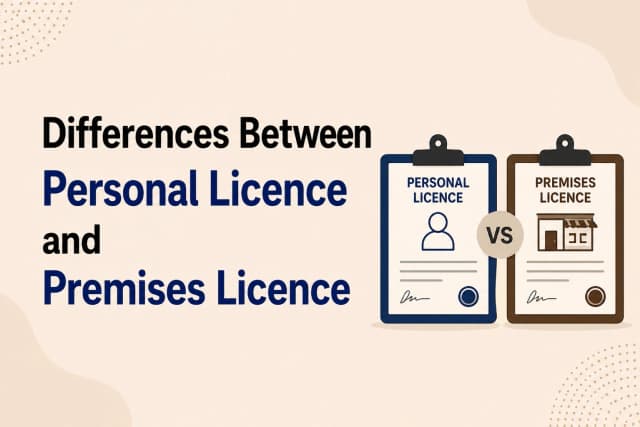
Differences Between Personal Licence and Premises Licence

Knowing the distinction between a personal licence and a premises licence is crucial for anyone who holds a personal licence. You can sell alcohol if you have a personal licence, but only a business owner can do so if they have a premises licence.We will go over the distinctions between a personal licence and a premises licence and what each covers in this blog post. The advantages of holding each sort of licence will also be discussed.An individual is given a personal licence, also known as an alcohol personal licence, that enables them to approve the sale of alcoholic beverages from licenced locations. Alcohol sales are among the activities that can be conducted on premises with a licence.An individual who owns the property, occupies it, or has been given permission to do so, such as a tenant, is given a premises licence. People over 18 must apply, and the space must be used for commercial purposes. While premises licences are specific to one location, personal licence holders can work in any licenced establishment in England and Wales.What is a Personal Licence?A personal licence is a licence which permits you to sell alcohol on licensed premises. It is renewed once every ten years. It will be revoked if you do something that puts your licence in danger. Each licenced premises must have one personal licence holder.What are the benefits of an Alcohol Personal Licence?The benefits of having a Personal Licence are:You can work in licensed premises for the supply of alcohol in the UK, except in Scotland. To sell alcohol in Scotland, you need to get a Scottish Personal Licence.It conveys that you are a responsible person who is knowledgeable about the sale of alcohol.It also demonstrates your commitment to working in the hospitality industry, giving you a career boost.You can authorise the sale of alcohol from licensed premises, which can benefit businesses.What is the cost of a Personal Licence?A Personal Licence costs �37 and must be paid to your local municipality. When getting your standard DBS (Disclosure and Barring Services) check, you could additionally have to pay additional fees (around �25). Your licence is valid indefinitely.To learn more about the Personal Licensing Act and the relevant agencies, Visit Gov.UK.Who Should Hold a Personal Licence?One personal licence holder in charge of selling alcohol must be present in every establishment. There must be a designated premises supervisor if there is only one person. However, more than one person with a personal licence may work at a single location. For instance, it is crucial to consider the benefit of putting assistant managers through the personal licence requirement if the business has many of them. This will make it possible to divide up the responsibility of selling alcohol. Additionally, it will look favourably upon any licence applications or reviews. However, you are not required to engage other personal licence holders other than the appointed premises supervisor.How to apply for a Personal Licence?When requesting a Personal Licence, you must:Be over the age of 18,Possess a legal form of identification, andEarn a credential in APLH Personal Licence Course (e.g. the Level 2 Award for Personal Licence Holders)Possess a fundamental Designated Premises Supervisor DBS check or local licencing authority check (obtained within the last three months)Fill out a personal licence application form, pay the required price, and deliver it to your local council.Here is further information on how to apply for a personal licence. .banner-blue { border-radius: 10px; overflow: hidden; border: 2px solid #ccc; box-shadow: 0 4px 8px rgba(0, 0, 0, 0.2); background-color: #fdf9ee; } .book-now { color: white; background-color: #DF3D52; border: none; padding: 15px 60px; border-radius: 5px; cursor: pointer; font-size: 20px; text-decoration: none; } .book-now:hover { /*text-decoration: none;*/ color: white; background-color: #c33f50; } Get your Legal Personal Licence by signing up for our APLH courses Personal Licence Courses Book Now Rated Excellent on major review sites What is a Premises Licence?Premises where entertainment and other activities, such as the sale of alcohol, take place according to the Licensing Act of 2003 must possess a licence. The premises licence is valid for the existence of the company that provides regulated entertainment and/or alcohol.What are the benefits of a Premises Licence?Possessing a premises licence has numerous advantages, including:A club premises certificate provided by a premises licence enables companies to sell alcohol and host activities that require a licence.It shows that the location is managed by trustworthy people who are informed about the sale of alcohol.Club premises certificates can help businesses stand out from the competition by demonstrating their dedication to following the law.A premises licence holder can also increase a company�s appeal to customers by demonstrating that they take their obligations seriously.What are the licenceable activities covered by a premises licence?Licensable activities that fall under the scope of a premises licence areThe retail sale of alcohol,The provision of supervised entertainmentThe serving of late-night refreshmentsWhat is the cost of a Premises Licence?Depending on the kind of premises and the activities conducted there, a Premises Licence can range in price. For instance, venues for music and dancing will generally cost more than venues for the exclusive sale of alcoholic beverages. The rateable value of the premises also affects the price of a premises licence.Who can apply for a premises licence?The following can apply for a premises licence:Any person or individuals who are 18 years of age or older who intend to operate a business involving the use of the premises for licensable activities,businesses or partnerships,Organisations like hospitals, charities, schools, and village hall committees.What is a Complete Premises Licence Application?The following documents have been submitted with the completed application for a premises licence:the licence fee based on the rateable business value of the property (www.voa.gov.uk);the operating schedule;a plan of the property; and,If alcohol sales are intended, a form of consent signed by the person the applicant proposes as the designated premises supervisor (DPS).How to apply for a Premises Licence?For a Premises Licence, you must:Be over 18 years old,Possess a legitimate kind of identification, disclose your operational timetable, and comprehend your licencing goalsPossess a location used for business reasonsFill out a premises licence application form, attach the requisite fee, and deliver it to your local government or approved premises supervisor.We hope this explanation of the distinctions between a Personal Licence and a Premises Licence, as well as the requirements and fees related to each, has been helpful. Please get in touch with us if you have any more inquiries.

NULL
Nov 8, 2022
Hospitality

Bartending Licence Requirements In The UK

Introduction�For hundreds of years, pub culture has played a significant role in the U.K. society, with cities teeming with everything from independent gastropubs and trendy bar chains to little towns with pubs that can barely hold fifteen patrons. The laws governing the consumption and sale of alcohol have been altered over time, most notably in 2005, to fight perceived �binge drinking� to take into account changes in how society regards alcohol, or �booze,� as the Brits call it. Many restaurants now stay open until the wee hours, with some not even closing, replacing the traditional �eleven p.m. last orders� with the striking of the bell behind the bar and subsequent �closing time�.Premises LicenceUnder the previous Licencing Act of 1964, pubs and clubs in the United Kingdom had to possess a Justice Licence in order to serve alcohol to patrons inside the establishment. Everything was changed by the Licencing Act of 2003, which went into effect in 2005. Now, to serve alcohol or conduct �licensable activities�, such as selling food between eleven p.m. and five a.m., you need a �Premises Licence.� A premises licence is also required for many entertainment activities, such as staging a play, hosting a wrestling match, or hosting a dance or live music event, even if they are being done for charitable reasons.A Designated Premises Supervisor (DPS) must be appointed, or the applicant must have completed the necessary training to have a Personal Licence (described below). The Premises Licence, which must be prominently displayed inside the institution in question, shall list this DPS by name. There is no time limit on these premises licences. But renewal is frequently subject to an annual price, ranging from �100 to �2,000 every year, depending on what the local council determines to be the �fee band� (i.e., the worth) of the property where alcohol is being sold.You may be asked to grant the police, including members of their licencing department or council members, access to your premises at any time to inspect your licence and related documents. The penalties for violating licencing laws can be severe: not producing your licence when asked for will result in a maximum fine of �1,000; engaging in activities on your property that are not permitted by your licence will result in a substantial fine, a jail sentence of up to six months, or both. .banner-blue { border-radius: 10px; overflow: hidden; border: 2px solid #ccc; box-shadow: 0 4px 8px rgba(0, 0, 0, 0.2); background-color: #fdf9ee; } .book-now { color: white; background-color: #DF3D52; border: none; padding: 15px 60px; border-radius: 5px; cursor: pointer; font-size: 20px; text-decoration: none; } .book-now:hover { /*text-decoration: none;*/ color: white; background-color: #c33f50; } Get your Legal Personal Licence by signing up for our APLH courses Personal Licence Courses Book Now Rated Excellent on major review sites Personal LicenceA personal licence permits the owner to sell alcoholic beverages from designated locations. Once it gets its premises licence, it is required to have at least one employee who is licenced personally working. This indicates that the personal licence holder (PLH) authorises sale or supply of alcohol. No matter how many employees are under them, the PLH is entirely in charge of selling alcohol in a location (most, if not all, of whom will have no qualifications or licence). You can work and sell booze anywhere with a licence, including casinos, supermarkets, sports facilities, and amusement parks, if you have a PLH qualification. For one of these licences, you must be eighteen or older.You must take the APLH (Award for Personal Licence Holders) course, a multiple-choice exam with a pass level of 70% administered by local authorities. If you pass, thorough background checks are done to investigate criminal offences. You will receive the licence once this is finished and it is evident you have no unfinished convictions (for instance, you are no longer performing community service or are not out on bail for an offence). The local police force will receive notification of your application from the licencing body and will have the opportunity to object to you receiving a Personal Licence if it turns out that you have any convictions left on your record. If this happens, you can present your argument with the licencing authorities at a hearing.A Personal Licence is valid for ten years in England and Wales. To maintain the licence, the licence holder must succeed in a refresher course after five years.The authorities treat anyone who doesn�t follow the law quite harshly. For instance, you need to submit an application to the licencing body for the region where you typically live. It is illegal to fail to notify them of any change in your personal information, such as moving out of the area. Additionally, you must inform the court that you have a personal licence at your first court appearance if you are accused of any other crime while designated as a PLH; failing to do so is, once again, a crime. A conviction could result in suspension or possibly the loss of your personal licence.SupervisorsAccording to the U.K. Licencing Act 2003, every licenced location must have a Designated Premises Supervisor (DPS) who is listed on the premises licence and who owns a current Personal Licence. It�s possible that this isn�t the owner of the company or property but rather a manager or supervisor that the owner has hired to handle the day-to-day management of the pub, bar, club, etc. The sale and service of alcohol is prohibited at a licenced business if it lacks a DPS or a personal licence that is still in effect. It�s crucial to remember that when a fully licenced establishment has a designated premises supervisor (DPS) who owns a Personal Licence, the DPS is not obliged to be present when alcohol is served.The Designated Premises Supervisors (DPS) of licenced properties are also periodically reviewed by the licencing authority, who can revoke the DPS�s licence at any time. Every candidate for a DPS position must pass a rigorous screening process. The police have the right to oppose if they have any concerns about a candidate�s behaviour in the past or present or their criminal history. The licencing authority considers these issues to decide whether to approve or deny the DPS application.ConclusionA premises must have a current premises licence to identify the designated premises supervisor (DPS) (not necessarily the owner), who must also hold a personal licence to sell or serve alcohol or host events like live music. However, the DPS does not need to be constantly present as long as one employee on duty has a Personal Licence.

NULL
Nov 8, 2022
Security

The Importance of Safeguarding in Education

IntroductionMaking sure those in your charge are safe inside and outside your institution should always be your first responsibility if you work in education. You have a moral and legal obligation to respond to any indications that someone may be experiencing abuse at home or in their society.Everyone in the organisation must design and follow rigorous safeguarding policies to guarantee everything is being done to protect individuals at risk. Today�s column explores the significance of safeguarding, particularly in education.What is safeguarding?Even though everyone involved in the education industry should know the word, you might not know what safeguarding entails. Simply expressed, safeguarding refers to the actions taken to protect the health, happiness, and human rights of those entrusted to your care. Safeguarding is typically used in environments with a duty of care for children, adolescents, or vulnerable adults, such as in the education, health, and social care sectors.Why is safeguarding important?Safeguarding is crucial for defending vulnerable people from injury, abuse, and neglect. Failure to uphold your safeguarding obligations may cause someone�s suffering to continue. Effective safeguarding is essential to identify the warning signs of abuse and notify the appropriate authorities in time to assist victims.Safeguarding is essential in schools because the teaching staff has unique access to information about how kids grow, act, and interact with others. So, they are more likely to detect physical or psychological abuse. They can also use their special position to inform kids about the risks they face inside and outside the classroom and how to receive help.What is safeguarding policy?A company�s safeguarding strategy outlines how it intends to safeguard individuals� welfare in its care. It should outline the organisation�s plans for safeguarding children, adolescents, and vulnerable adults against danger and abuse inside and outside its facilities.Education organisations must have a written safeguarding policy statement as part of their duties. The organisation�s safeguarding policy should be outlined in this statement and its commitment to safeguarding and strategies for keeping persons under its care safe.You might want to refer to the official Ofsted safeguarding policy and inspectors� instructions as a resource. These materials set forth the criteria for evaluating safeguarding in early childhood education and skill-building settings across the nation.Safeguarding is essential in schools because the teaching staff has unique access to information about how kids grow, act, and interact with others. So, they are more likely to detect physical or psychological abuse. They can also use their special position to inform kids about the risks they face inside and outside the classroom and how to receive help.What are the six principles of safeguarding?Six safeguarding principles are outlined in The Care Act 2014, the primary safeguarding law that applies to NHS bodies. Although this statute solely pertains to NHS institutions, these concepts are applicable everywhere, especially in the field of education.PersonalisationThe assumption of person-led decisions and informed consent are all aspects of empowerment.PreventionIt is preferable to act now before harm is done.ProportionalityIs the ability to respond in a way that is both reasonable and least invasive, given the risk at hand.Protectionaid and advocacy for those who are most in need.PartnershipServices that work with their communities to find local solutions. Communities can help prevent, identify, and report neglect and abuse.AccountabilityAccountability and openness in providing safety measuresWhat is safeguarding children?Any educational organisation in charge of children must have a defined safeguarding procedure. A key component of the overall safeguarding process is child protection, which aims to protect children in your care from danger, abuse, or exploitation.These four categories describe child safety:Defending kids from maltreatment and cruelty.Avoiding harm to children�s growth or health.Ensuring that children receive safe and efficient care as they grow.Taking measures to ensure the best outcomes for all children and young people.Who is responsible for safeguarding children?Everyone who interacts with children has a duty to keep them safe. To do this, they must be aware of the warning signs of abuse and follow the procedures for reporting their concerns. Working Together to Safeguard Children, government guidance outlines how everyone must be responsible, communicative, and alert to safeguard children from harm.Local governments and social care teams are responsible for conducting investigations once concerns have been raised. The criteria for a wide range of authorities, organisations, and people who have a duty of care for children are outlined in Sections 10 and 11 of the Children Act of 2004.What is contextual safeguarding?Understanding and responding to children�s or young people�s experiences of damage outside their families is a key component of the contextual safeguarding method. It acknowledges young people�s connections with their neighbourhoods, educational institutions, and online networks that can result in abuse, injury, or exploitation.Individuals with safeguarding obligations, such as those working in the education sector, must recognise the need to act when appropriate because many parents have little to no influence on these connections outside the family home.What is the safeguarding of vulnerable adults?At times, it may be vital to protect adults and children. These people are referred to as �vulnerable adults.�A vulnerable adult is a person who is over 18 and who is either unable to care for oneself or who, due to their circumstances, is very susceptible to exploitation or damage. Some elements that may contribute to the classification of people as vulnerable include:physical or mental impairmentsAdvantage of povertyexperiencing traumaRacial, religious, or political exclusionrejection from their families or communitiesBut everything is covered in this list. No, employees must be aware of any person in their care who may be vulnerable to exploitation or abuse. They must make sure that any warning indications put forward by these people are seen and taken seriously.Safeguard trainingThis blog cannot cover every aspect of safeguarding because it is a vast subject. You must receive formal training to gain a solid understanding of safeguarding practice. When it comes to training, ESS offers a few different choices for individuals who are interested in learning more about protecting adults.The three-month Level 2 course, NCFE CACHE Understanding Safeguarding and Prevent, focuses on the fundamentals of Prevent Duty and safeguarding, particularly internet safety. This course offers the theoretical understanding required for protecting adults. This might involve employment in hospitals, adult education programmes, community centres, and jails.We heartily suggest the free online courses offered by the Education & Training Foundation for individuals seeking yearly updates to maintain their safeguarding knowledge and credentials. Depending on your job situation, we recommend their Safeguarding in FE and Training and Safeguarding & Safer Recruitment in FE courses.

NULL

Creativity and Innovation In Business Education: Why it Matters

World Creativity and Innovation Day.On April 21st, we celebrate World Creativity and Innovation Day. This is a day to reflect on the importance of creativity and innovation in our lives and business. Even Steve Jobs once said, "Innovation distinguishes between a leader and a follower.", and he was right. World Creativity and Innovation Day were established to encourage people all over the globe to think outside the box, be proactive, and take risks. All of which are qualities that online educators need to have.Creativity and Innovation: IndividualMany people think innovation is all about technology and gadgets, but that's not true; any individual can innovate by putting in an effort to be better today than they were yesterday. In simple terms, innovation is finding a new way to do something, whether big or small. It doesn't matter how small it is. It could be as simple as coming up with a new way to organize your bookshelves or reinventing how you make your bed in the morning. If it makes your life easier, it is innovation, and creativity is the path you choose to accomplish your innovation. Innovation also influences how people think and make decisions across different fields, including finance, where certain assets are favored by institutional buyers for their stability and long-term value.Individuals can be creative in so many ways; it could be through art, music, writing, or even coming up with a new way to do something. However, not everyone is creative, and that's okay because innovation does not require creativity. It only requires an open mind and the willingness to try new things.Creativity and Innovation: BusinessIn business, innovation is key to success. It's what sets businesses apart from their competitors. A constantly innovating business is always ahead of the curve and can adapt to change quickly. Innovation can take many forms in business; it could be a new product, a new service, or a new way of doing things. It doesn't matter what it is, as long as it is something that adds value to the customer. Being creative is equally essential because it allows us to grow your businesses. It makes a business unique and allows it to stand out from its competitors.Creativity and Innovation: Online EducationIn online education, creativity and innovation set us apart from traditional brick-and-mortar schools. Online education allows us to reach more students in different parts of the world and provide them with a flexible and tailored education. We can also use technology to create a more engaging and interactive learning experience for our students.Why are creativity and innovation essential in online education? Here are three reasons:It helps us stand out from the competition - With so many online institutes to choose from, we must offer something unique that sets us apart from the rest. By being creative and innovative in our approach to online education, we can attract more students and build a successful business.It helps us better serve our students - Online education is all about providing students with a flexible and convenient way to learn. By being creative and innovative, we can develop new ways to deliver content and make learning more fun and engaging for our students.It helps us stay ahead of the curve - Technology is constantly changing and evolving, and online education needs to change. By being creative and innovative, we can keep up with the latest trends and ensure our students get the best possible education.Importance of fostering a culture of creativity and innovation in today's online education industry. Here are just a few reasons why:Creative thinkers can develop new ideas and solve problems in innovative ways.Innovation leads to progress, and progress leads to better products and services for students.A creative environment encourages risk-taking, which is essential for growth and learning.Creativity and innovation help us stay competitive in an ever-changing world economy.So, on this World Creativity and Innovation Day, let's take a moment to reflect on how vital creativity and innovation are in our lives and businesses. And let's pledge to be more creative and innovative today than yesterday. Let's get started! What are you waiting for?

NULL

Importance of Continuous Learning

The world in which we live is ever-evolving. The speed at which technology is developing has improved our ability to communicate with people around the globe and given us instant access to information. This has an impact on all aspects of our life, but especially on the workplace.Continuing your education to increase your knowledge and skills is the only way to stay current. Investing in yourself can advance in your profession or switch industries while expanding your knowledge and abilities. Additionally, it has been demonstrated that ongoing education improves your self-esteem, sense of value, and morale.We will define continuous learning, explain how it could help you, and give various examples in this article.Continuous LearningContinuous learning, often known as "upskilling," is the process of consistently picking up new skills and knowledge over time. As a result, grow professionally and personally, get access to new opportunities, and realise your full potential.Another word for this idea is "lifelong learning," which is similar but typically relates to personal growth rather than development for the workplace.Everyone learns differently; thus, continuous and lifelong learning can take many forms. You can expand your skill set beyond your current employment function by taking evening classes at your nearby university, bitesize learning, or online courses. These learning paths can also include building financial knowledge, such as understanding the differences between swing trading and day trading, which helps support informed personal and professional decision-making.�Advantages of Continuous LearningContinuous learning has a variety of advantages, including:Gaining ConfidenceYou will feel more prepared to take on challenges or new possibilities if you know you have added abilities to advance in your job.Career DevelopmentDeveloping new talents can help you advance your career or take your position beyond what it is now. Continuous learning demonstrates your dedication to working hard, improving yourself, and remaining relevant in your field, which increases your value to your current company and your marketability to potential employers if you're looking for work. Exploring some of the best apps for self improvement can be a great way to stay on track with your goals and build consistent, meaningful habits.�Updates Qualifications and CertificationsIn order to get or renew certificates or specific qualifications for your career, you might need to undergo frequent training; continuous learning can help you stay on track and current.Changes PerspectiveYour opinions and stances may alter as you gain knowledge. You can gain a deeper awareness of potential difficulties through continuous learning and find solutions to concerns you previously did not see.Boosts ProductivityBeing content and confident increases productivity, which is also advantageous for employers. This may affect the organisation's performance and how long people stay with it.Inspires OthersIf you set an example by demonstrating the value of learning, you may motivate those around you to continue their skill development. This could ultimately enhance the environment where you work.Continuous and Lifelong LearningBoth formal and informal strategies can be used to promote continuous or lifelong learning. Online learning, workshops, and conferences held outside the classroom are also formal education.Additionally, you could engage in self-directed learning by reading up on a subject, listening to podcasts, or viewing instructional videos. You can also learn through a blog or social media group related to your hobbies, or your employer might provide coaching and mentorship programmes.Each of the many methods has benefits and drawbacks of its own. It's crucial to pick a format that suits you to maximise its benefits.Continuous or lifetime learning offers many advantages, including improving employment opportunities, keeping you current in your field, and boosting your sense of worth and contentment. We hope this post has motivated you to start learning more so you may invest in yourself and stay current in a constantly changing world.

Teach the World Online

Create an online video course, reach students across the globe and earn money

Teach With Hurak