
Being a teaching assistant is a challenging yet rewarding role. It doesn�t necessarily require any specific qualifications but increases one's chances of getting a job. Obtaining teaching assistant qualifications will help one learn more, develop one's skill set, and get better opportunities.This blog gives you an overview of various teaching assistant qualifications.Which Qualifications Do I Need to Become a Teaching Assistant?There is no standard requirement in the UK to become a TA, as each institute decides these requirements on its own. Some institutions can accept your job application without relevant qualifications. However, the teaching assistant role is very competitive, and candidates with nationally recognised teaching assistant qualifications are more likely to get the job.Who are Teaching Assistant Qualifications Aimed at?Teaching assistant qualifications are designed for individuals looking to begin their careers as teaching assistants or already serving in this role. These qualifications help them refresh their knowledge and develop their careers further.Most Popular Teaching Assistant QualificationsIf you want to begin a career as a teaching assistant, you will only require fundamental literacy skills, usually GCSE or equivalent (National 4 or 5 qualifications in Scotland) in maths or English. You must also have experience working with kids.Even though having a degree isn't mandatory to be a teaching assistant, it can significantly impact your resume. It shows that a candidate is competent and has gained the skills to get this role.The following qualifications help learners to understand the knowledge and skills required to work in this role. However, obtaining these qualifications is optional.Level 2 and Level 3 QualificationsThe Level 2 and Level 3 teaching assistant qualifications are suitable for individuals wishing to begin their career as a teaching assistant or new to this field. However, it requires you to either be already working in this role or have a practical placement in a school environment.Level 2 and Level 3 ApprenticeshipHere�s another pathway to getting training to be a teaching assistant: opt for a Levels 2 or 3 intermediate or advanced apprenticeship. During this training, you will work in an institute and will receive a salary.The Level 2 Award in Support Work in SchoolsThe Level 2 Award in Support Work in Schools is an entry-level teaching assistant qualification that you can enrol in with no prior experience. It covers the fundamental topics related to supporting children in a school.Level 3 Award in Supporting Teaching and Learning in SchoolsThe Level 3 Award in Supporting Teaching and Learning in Schools can also be completed without a school placement. It is a more advanced qualification than the Level 2 award. This higher-level teaching assistant qualification will give you more recognition by employers. However, it takes longer to complete.Level 4 Certificate in Higher Level Teaching AssistantThe Level 4 Certificate in Higher Level Teaching Assistant is one of the advanced level teaching assistant qualifications. To enrol on this qualification, you must demonstrate your experience in a teaching assistant role. If you wish to get appointed to more advanced roles, this qualification helps you to develop certain skills and knowledge to make you eligible for those roles.Skills Required to be a Teaching AssistantYou must have:a positive approach to working with childrenstrong regard for children's well-beingrespect for diversitycommunication and interpersonal skillsreading, writing and numeracy skillsexcellent teamwork skills for working with otherscreative abilitypatiencea flexible approach to workorganisational skillsa professional attitude to workSpeaking the local language fluently may be advantageous when working with students who are learning English as a second language (EAL). First aid, Makaton, and British Sign Language proficiency are a few other useful skills.Work ExperiencePrior experience will be helpful when trying to get a job as a teaching assistant. Work experience could include positions in:childcare and educational environmentsnurseriessports-related activitiessummer programmesworking as a youth tutorEven though few formal programmes are available for job experience, many schools accept inquiries for volunteer work. Make direct contact with them and tell them about your professional goals and the causes you would like to support, such as after-school clubs, IT, or literacy.If you're unsure, check with employers. Degrees in education, youth work, and childhood studies that include practical placements should be considered experience. Participating in your university's student ambassador role might provide additional beneficial experiences.Career Prospects After Completing Teaching Assistant QualificationsYou can advance through the grades as a teaching assistant, starting at entry level and ending at HLTA. Gaining experience, obtaining the necessary certifications, and receiving training will help you advance.You'll assume more responsibilities as you go. You will be responsible for lesson preparation, creating support materials, and giving unsupervised instruction at the HLTA level. It's possible that you'll also have to help out other TAs.You can also coordinate activities in specialised curricular learning or assistance areas, such as SEN, literacy, or IT.

What is a Teaching Assistant?As the name suggests, a teaching assistant provides assistance to teachers. A teaching assistant works closely with a teacher in planning lessons, setting up classrooms for lessons, and assisting students with their learning. Being a teaching assistant is a challenging but rewarding role. This role is ideal for individuals with a passion for helping children.The Roles and Responsibilities of Teaching AssistantsTeaching assistants play diversified roles, and their responsibilities depend on the schools they are working at. The roles and responsibilities of a teaching assistant may include:Preparing the classroom before lessonsHelping teachers manage the classAssisting teachers in planning activities for learningCarrying out administrative tasksTaking care of learning equipment before or after lessonsHelping students in listening and readingProviding help to students requiring additional supportMonitoring group activitiesHelping with co curricular activitiesSome teaching assistants work directly with students, while others work in small groups to support students. Teaching assistants. Many schools prefer skills-based hiring teaching assistants with specific areas of expertise, such as music, creative arts, special educational needs (SEN), etc.When a teacher is absent due to illness or undergoing training, classes are typically supervised by knowledgeable and highly skilled teaching assistants. Higher level teaching assistants (HLTAs) can also occasionally lead a lesson in the presence of a qualified teacher,Day-to-Day TasksA teaching assistant helps in:preparing lesson materialssetting up classrooms for learningensuring students have understood lessonsoverviewing the overall progress of the studentslooking after childrenleading classes in the presence of a teacherQualities & Skills Required to Be a Teaching AssistantIn today�s classrooms, technology plays a central role, with many schools relying on Macs and other devices for learning and administration. A teaching assistant should therefore be comfortable handling basic digital tasks, including installing or uninstalling programs, to keep devices running smoothly and ready for student use. If you want to become a teacher assistant, you must have:Ability to develop good relationships with children.Good communication skillsActive listening skillsPatience and skills to stay calm in every situationFlexibility to adapt to working on different activitiesPolite behaviourSkills to provide the best conditions for learningAbility to use a computer, laptop, or tablet.The above mentioned skills are not technical skills to become a teaching assistant. However, anybody wishing to become a teaching assistant must possess these qualities and skills to carry out day-to-day tasks effectively.How to Become a Teaching AssistantBecoming a teaching assistant does not require any specific qualifications. However, acquiring the right teaching qualifications will add value to your resume and position you as a stronger applicant. They will also provide the fundamental knowledge and skills to help you in the work.Following are the ways to become a teaching assistant:a college coursean apprenticeshipvolunteeringapplying directly�Qualifications�Entry requirementsA College Course-� Level 2 or 3 Certificate in Supporting Teaching and Learning in Schools- Level 3 Diploma in Childcare and Education- T Level in Education and Early Years- 2 or more GCSEs at grades 9 to 3 (A* to D), or equivalent, for a level 2 course- 4 or 5 GCSEs at grades 9 to 4 (A* to C), or equivalent, for a level 3 course- 4 or 5 GCSEs at grades 9 to 4 (A* to C), or equivalent, including English and maths for a T levelAn Apprenticeship- Teaching Assistant Level 3 Advanced Apprenticeship- 5 GCSEs at Grades 9 to 4 (A* to C), or equivalent, including English and mathsVolunteering- One possible way to gain experience is volunteering at a nearby school or community organisation. Sometimes, volunteering results in paid employment or the opportunity to achieve a certification.- No entry requirementsApplying Directly- Schools, local authorities, and academy trusts all accept direct applications for jobs.�- You will have an advantage if you have training in youth work, playwork, childcare, or nurseries.- The entry requirements for each school vary but generally speaking you'll need GCSEs in math and English from grades 9 to 4 (A* to C).�- You�ll also need to demonstrate your ability to collaborate effectively with parents, teachers and kids.�What Qualifications Do You Need for a Teaching Assistant in the UK?GCSEs (or equivalent)Typically, schools will require candidates to have a minimum of Grade C/4 or above in English and Mathematics, although some may also require qualifications in other subjects.Level 2 or Level 3 Teaching Assistant QualificationMany schools prefer candidates to have completed a relevant qualification such as a Level 2 or Level 3 Certificate or Diploma in Supporting Teaching and Learning in Schools. These qualifications provide training and knowledge in areas such as child development, safeguarding, and supporting learning activities.ExperienceWhile not always essential, having relevant experience working with children or in an educational setting can strengthen your application. This could include volunteering, placements, or previous employment in schools or childcare settings.Career Path and ProgressionOnce you begin working as a teaching assistant, it's crucial to keep improving your skills. For that, you must take advanced qualifications, which enhance your knowledge and skills at work and help your career grow.Advanced QualificationsLevel 3 Diploma in Specialist Support for Teaching and Learning in Schools (RQF)Level 3 Certificate in Supporting Teaching and Learning in Schools (RQF)Level 3 Award in Supporting Teaching and Learning in Schools (RQF)Continued LearningYou must continue learning if you want to progress in your career. Completing new courses will help you learn the latest teaching practices and methodologies. When choosing a new course for enhanced learning, you should consider courses in specialised areas, such as special needs education.Workshops and SeminarsYou must also participate in seminars and workshops related to education and teaching. These seminars are often led by highly recognised and experienced professional who share their experiences. You get an opportunity to learn about the latest trends and research in the field. Apart from learning, you also interact with them and develop good public relations.What is the Difference Between a Teacher and a Teaching Assistant?Teachers and teaching assistants play important roles in the education system but have distinct responsibilities and qualifications. Here are the key differences between the two roles:�TeacherTeaching AssistantResponsibilitiesPlanning and delivering lessonsAssessing student progressCreating a positive learning environmentManaging the overall classroom dynamics.�Instructing students in specific subjects or areas of study.Supporting teachers in the classroom�Providing additional assistance to studentsHelping with administrative tasks and preparing materialsOffering one-on-one or small-group support.�Assist with behaviour management and classroom organisation.QualificationsTypically a bachelor's degree in education or a related subject.Teacher training programs such as a Postgraduate Certificate in Education (PGCE).Qualified Teacher Status (QTS).Holding degrees is not a requirement.Qualifications such as a Level 2 or Level 3 Certificate or Diploma in Supporting Teaching and Learning in Schools.Scope of WorkTeachers have primary responsibility for:planning and delivering lessons,assessing student progress,managing the classroomensuring that curriculum objectives are met,�and making decisions related to teaching methods.Teaching assistants have primary responsibility for:working under the guidance and direction of teachers,providing support in various aspects of classroom activities and student learning,�providing additional explanations,helping students with assignments,and reinforcing learning concepts introduced by the teacher.How Much Does a Teaching Assistant EarnThe salaries of teaching assistants in the UK depend on the levels, duties, roles, and where you work. Salaries for different levels are as follows:The Level 1 Teaching Assistant earns around �18,300 per year.The Level 2 Teaching Assistant earns around �18,880 to �19,000 per year.The Level 3 Teaching Assistant earns around �19,260 to �25,000.These salaries are for full-time, permanent Teaching Assistants. If TAs are working part-time, term-time only, or casual contracts, their salaries can be a lot less.A teaching assistant's salary in the UK varies widely, as there's no national pay scale. Most schools adhere to local government pay scale for support staff, but this differs based on school type. Local authority guidelines don't bind Independent institutions.Educational recruitment agencies might offer higher rates, especially for graduates, but job security isn't guaranteed.Teaching Assistant CoursesHere are some very popular qualifications for becoming a teaching assistant:Level 2 Certificate in Supporting Teaching and Learning in Schools (RQF)Level 2 Award in Support Work in Schools (RQF)Level 3 Diploma in Specialist Support for Teaching and Learning in Schools (RQF)Level 3 Certificate in Supporting Teaching and Learning in Schools (RQF)Level 3 Award in Supporting Teaching and Learning in Schools (RQF)Level 4 Certificate in Higher Level Teaching Assistant (HLTA) (RQF)FAQsCan I be a teaching assistant with no experience?Yes, you can be a teaching assistant without any experience. Many faculties and institutions hire candidates who are open to learning and show dedication. Some institutions also offer on-the-job training to fresh candidates so they can learn while working. You can also work as a volunteer to get some experience.How long does it take to become a teaching assistant?Typically, you can become a teaching assistant by achieving relevant qualifications, which can take several months to a year. After that, it depends on the availability of jobs in your area. Getting experience through part-time work or volunteering can improve your chances of finding employment more quickly.What is another name for a teaching assistant?There are several other names for a teaching assistant such as teacher's aide (TA), education assistant (EA), or team teacher (TT).What is a SEN teaching assistant?A SEN (Special Educational Needs) teaching assistant is a professional who provides support to students with special educational needs or disabilities in the classroom. Their role involves assisting these students with their learning, providing additional support and guidance as needed, and helping them to access the curriculum.

The Level 3 AET qualification is the first step to begin a teaching career. It�s an introductory course that will help you develop industry basics. After completing this qualification, you can move on to more advanced qualifications. In this blog, I�ll discuss what you can do with an AET qualification and how it will help you in your career in education.What Can I Do with an AET Qualification?An AET qualification is helpful in the following ways.Start Working as a Teacher or TrainerOnce you complete the Level 3 AET qualification, you may start teaching right away because it is a nationally recognised teaching certification. With an AET certificate, you may work as a teacher in many different industries without having to pursue further education.Boost Your Employer's Training Programme to the MaximumIt's likely that your organisation offers some kind of training, even if it's limited to staff updates and inductions only. As people responsible for teaching in these areas are typically busy managers with tough tasks, teaching tends to be a bit neglected.Teach in Adult Education SettingsThe Level 3 AET makes you eligible to work in an adult education section. You can teach in adult education institutions, colleges, corporate training institutions, vocational training centres, and more.Facilitate Workshops and Training ProgrammesWith the AET qualification, you deliver training programmes, workshops, or seminars. These activities require preparing training materials, delivering presentations during workshops, and other similar activities.Become a Freelance Trainer or ConsultantThe AET makes you eligible to become an independent trainer or consultant. This position offers more flexibility than a regular job. Many companies prefer trainers on a contractual basis to train their employees. You can gain more experience by working with clients from different industries.Train Employees in Corporate SettingsThese days many organisations understand the value of regular training of their employees. With the AET qualification, you can begin working as a corporate trainer. Once you complete the AET, you become equipped with the skills required for delivering training sessions. This will help in offering effective training to corporate employees.Progress to Further Education and Training QualificationsOnce you complete your AET qualification, you can progress to higher-level qualifications like CET and DET. These qualifications will make you eligible for more advanced teaching roles.What Job Can I Get with a Level 3 AET (Award in Education and Training)?After completing the Level 3 AET (Award in Education and Training), you become eligible for many jobs in the education sector. Some of the most common roles include:Adult Education Teacher/InstructorTraining CoordinatorCorporate TrainerCommunity Education OfficerFreelance Trainer/ConsultantAssessor/Tutor for Vocational QualificationsEducation AdministratorOther Courses to Take After Completing an AET QualificationAs the Level 3 Award in Education and Training is the first qualification in the education and training sector, you can proceed with further high-level qualifications.The Level 4 CET / CTLLS QualificationThe Level 4 Certificate in Education and Training (CET) is appropriate for those with some teaching or training experience and who wish to expand their knowledge and skill set. It�s an advanced qualification that provides in-depth knowledge related to education and training. You will learn teaching methodologies, curriculum design, assessment strategies, and educational theories.The Level 5 DET / DTLLS QualificationThe Level 5 Diploma in Education and Training (DET) or formerly called DTLLS is a higher-level qualification suitable for experienced educators who are looking to enhance their teaching practice further. It�s for educators with significant teaching or training experience. You will learn advanced teaching theories, pedagogical approaches, curriculum development, and assessment strategies.What Sectors Can I Work in with a Level 3 Award in Education and Training?With an AET qualification, you can teach in various sectors, includingSecondary EducationSpecial Needs EducationPrimary and Nursery EducationHm ForcesCare HomesLaboratory TechniciansSecurity IndustryHealth IndustryBeauty IndustryLibrarians

Getting the Level 3 Award in Education and Training (AET) can help educators grow and improve their professional capacities in several ways. Those who obtain this certification will thoroughly understand teaching methodologies, efficient instructional strategies, and assessment techniques. In this blog, I�ll discuss the top 7 benefits of getting the Level 3 Award in Education and Training qualification.Benefits of the Level 3 AET QualificationHere are the top seven benefits of the Level 3 AET qualification.Enhanced Teaching SkillsObtaining the Level 3 AET certification aids educators in developing their teaching skills. With this certificate, teachers can impact their students' learning results and deliver effective instruction.Teachers with a Level 3 AET qualification will thoroughly understand instructional strategies, teaching methodologies, and assessment techniques. This certification can enhance educators' lesson design, delivery, and evaluation skills, enabling them to provide their students with exciting and productive learning opportunities.They also learn about various learning capacities, styles, and requirements to better adapt their teaching strategies to various students' demands.Career Advancement OpportunitiesA Level 3 AET certification provides access to training and educational options for job progression. Teachers can apply for jobs as adult education tutors, lecturers in higher education, teaching assistants, and vocational trainers. In addition to providing chances for professional growth and advancement in teaching, this qualification enhances teachers' credibility.The Level 3 AET qualification can help obtain higher-level teaching positions or specialised certifications in specific subject areas. As they gain experience and expertise, teachers might move into leadership positions such as department heads, curriculum coordinators, or educational consultants.Increased Confidence and ProfessionalismTeachers who complete the Level 3 AET certificate are equipped with the professionalism and self-assurance needed to succeed in their teaching professions. With this certification, educators gain a better grasp of teaching theories, strategies, and best practices, which boosts their confidence in their abilities to organise and present lessons that engage students.Furthermore, professionalism in relationships with stakeholders, colleagues, and students in the educational context is emphasised by the Level 3 AET qualification. The emphasis on professionalism includes reflective practice, ethical behaviour, and communication skills, all supporting teachers' self-assurance in their professional skills and overall efficacy in the classroom.Flexibility and AdaptabilityThe Level 3 AET prepares educators to meet students' diverse needs in today�s learning environment. With this qualification, they learn practical teaching techniques, methodologies, and styles that help them accommodate various learning environments.The qualification also equips learners with teaching skills in different environments, including traditional classrooms, online settings, or vocational training programs.In this qualification, educators learn to be more flexible in teaching methods to meet the evolving educational trends and curriculum. With flexibility and adaptability, educators can deliver content more effectively during their lessons in the classroom.Recognition and AccreditationEducators are recognized and accredited with Level 3 AET. This demonstrates that the educator has completed the training programme and is capable of meeting educational institution standards.This qualification proves the educators� skills and expertise to potential employers. It shows they are proficient in their field, which increases their professional credibility and leads to better career opportunities.Improved Classroom ManagementAfter completing this qualification, educators become eligible to manage classrooms effectively. They learn skills and strategies that help them maintain discipline in the class and make learning more effective for their students.Moreover, they learn to manage student behaviour and adverse situations calmly. This helps them minimise disruptions during class and make the most of their teaching sessions. Educators who have achieved Level 3 AET successfully develop a healthy learning environment for students who feel motivated to learn.Increased Versatility as an EducatorThe Level 3 AET qualification trains educators in various teaching methodologies and approaches. With this qualification, educators become more prepared to meet the diverse needs of students. Educators become eligible to deal with students from different backgrounds, capabilities and learning preferences. As a result, these educators show more versatility while teaching, which makes students comfortable in the learning environment.Wrapping Up:In this blog, I�ve shared the 7 benefits educators can get by achieving the Level 3 AET qualification. Undoubtedly, AET is a rewarding qualification that is the stepping stone in the teaching career. Getting this qualification is suitable for you if you want to begin your career in education.

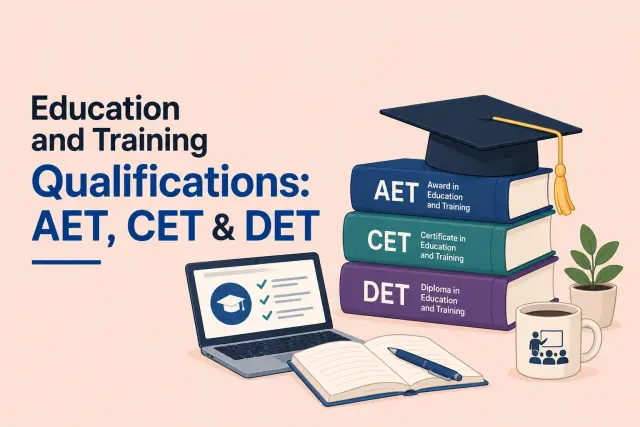
What Are Education and Training Qualifications?Education and Training Qualifications refer to certifications designed to provide individuals with the necessary skills and knowledge to become effective educators and trainers. These qualifications are commonly sought after by those aspiring to work in the teaching, training, and education sectors. These qualifications are commonly recognised in the UK, particularly in further education and training. They provide individuals with the necessary skills and knowledge to excel in teaching and training roles and can lead to various career opportunities in education.The 3 Education and Training qualifications are:Level 3 Award in Education and Training (AET)Level 4 Certificate in Education and Training (CET)Level 5 Diploma in Education and Training (DET)Overview of AET, CET, and DET QualificationsThe Level 3 AET or PTLLS QualificationThe Level 3 Award in Education and Training (AET) / Preparing to Teach in the Lifelong Learning Sector (PTLLS) Qualification suits individuals new to teaching or training roles. It introduces teaching and learning and covers topics such as planning and delivering inclusive teaching sessions, assessing learners, and understanding roles and responsibilities in education and training. Level 3 AET / PTLLS is typically the entry-level qualification for teaching and training positions in the UK.The Level 4 CET or CTLLS QualificationThe Level 4 Certificate in Education and Training (CET) / Certificate in Teaching in the Lifelong Learning Sector (CTLLS) Qualification is suitable for individuals with some teaching or training experience and wanting to develop their skills and knowledge further. It covers topics such as understanding the principles of assessment, using resources for education and training, and understanding the relationships between teachers and other professionals in education and training settings.The Level 5 DET or DTLLS QualificationThe Level 5 Diploma in Education and Training (DET) / Diploma in Teaching in the Lifelong Learning Sector (DTLLS) Qualification is suitable for individuals with significant teaching or training experience and wanting to enhance their expertise further. It covers advanced topics such as researching, planning, and delivering complex teaching sessions, assessing and supporting learners in education and training, and evaluating their practice in education and training.CTLLS, PTLLS, DTLLS, AET, CET, or DET � Which Ones Are Still Active?Currently, the active qualifications areAET (Level 3 Award in Education and Training)CET (Level 4 Certificate in Education and Training)DET (Level 5 Diploma in Education and Training)These qualifications (AET, CET, DET) remain active because they are designed to meet the evolving needs of the UK education and training sectors. They provide individuals with essential skills and knowledge to excel in teaching and training roles. Additionally, they align with current educational policies and frameworks, ensuring that educators and trainers are equipped to meet the demands of contemporary learning environments.Why CTLLS, PTLLS, and DTLLS Are Not Active Anymore?CTLLS, PTLLS, and DTLLS are no longer active because they have been replaced by updated qualifications that better align with current educational standards and frameworks. The newer qualifications, AET (replacing PTLLS), CET (replacing CTLLS), and DET (replacing DTLLS), reflect changes in educational practices, policies, and the evolving needs of the education and training sectors. By phasing out the older qualifications and introducing updated ones, regulatory bodies ensure that educators and trainers receive training that is relevant, up-to-date, and aligned with industry standards.PTLLS (Preparing to Teach in the Lifelong Learning Sector): PTLLS was replaced by the Level 3 Award in Education and Training (AET). AET serves as the new entry-level qualification for teaching and training roles. PTLLS is no longer available.CTLLS (Certificate in Teaching in the Lifelong Learning Sector): CTLLS has been replaced by the Level 4 Certificate in Education and Training (CET). CET is the updated qualification for individuals with some teaching or training experience who want to develop their skills further. CTLLS is no longer available.DTLLS (Diploma in Teaching in the Lifelong Learning Sector): DTLLS has been replaced by the Level 5 Diploma in Education and Training (DET). DET is the advanced qualification for individuals with significant teaching or training experience who want to enhance their expertise. DTLLS is no longer available.Understanding AET (Award in Education and Training)The Award in Education and Training (AET) is a foundational qualification for individuals aiming to enter or enhance their teaching skills. It provides a comprehensive understanding of teaching roles, responsibilities, and boundaries, along with effective lesson planning, delivery, and assessment techniques.For a more detailed guide on the Level 3 AET (formerly known as PTLLS) qualification and its significance, read our blog "The Level 3 AET / PTLLS Qualification Guide: All You Need to Know"Understanding CET (Certificate in Education and Training)The Certificate in Education and Training (CET) is an advanced qualification designed to deepen their knowledge and expertise in education and training. CET builds upon the foundational concepts covered in the AET and offers a more comprehensive understanding of teaching methodologies, curriculum design, assessment strategies, and educational theories.For further insights into the CET qualification and its benefits, read my blog, "The Level 4 CET / CTLLS Qualification Guide: All You Need to Know"Understanding DET (Diploma in Education and Training)The Diploma in Education and Training (DET) is a higher-level qualification aimed at experienced educators seeking to enhance their teaching practice further and advance their careers in education and training. DET provides a comprehensive understanding of advanced teaching theories, pedagogical approaches, curriculum development, and assessment strategies.For more information on DET qualification and its significance, read my blog, "The Level 5 DET / DTLLS Qualification Guide: All You Need to Know"Comparing AET, CET, and DET�ScopeDepthCareer ProspectsOpportunitiesAETAET is an entry-level qualification that provides an introduction to teaching and training.It covers fundamental topics such as planning and delivering inclusive teaching sessions, assessing learners, and understanding roles and responsibilities in education and training.AET can open doors to entry-level teaching or training positions in various sectors, such as further education, adult education, workplace training, and community education.Opportunities may include roles like teaching assistant, trainer in vocational settings, or community education instructor.CETCET is suitable for individuals with some teaching or training experience who want to develop their skills and knowledge further.It covers more advanced topics than AET, such as understanding the principles of assessment, using resources for education and training, and understanding relationships between teachers and other professionals.CET can lead to more advanced teaching or training positions and opportunities for career progression.Individuals with CET may pursue roles such as qualified teachers in further education colleges, training provider coordinators, or instructional designers.DETDET is designed for individuals with significant teaching or training experience who seek to enhance their expertise.It offers the most comprehensive coverage among the three qualifications, including researching, planning, and delivering complex teaching sessions, assessing and supporting learners, and evaluating one's own practice in education and training.DET offers the highest level of qualification and can lead to advanced leadership and management roles in education and training.Career opportunities may include roles like head of department in further education, curriculum developer, educational consultant, or senior trainer in corporate settings.Choosing the Right Education & Training Qualification: AET, CET, or DET? Choosing the right education and training qualification among AET, CET, or DET depends on several factors, including your career goals, experience level, and desired level of responsibility. Here's a guide to help you decide:AET (Level 3 Award in Education and Training)Ideal for: Individuals new to teaching or training roles and need a foundational understanding of educational principles.Consider if: You're looking to start a career in teaching or training and need an entry-level qualification to qualify for basic teaching positions.Advantages: Provides essential knowledge and skills for entry-level teaching or training roles. It's a good starting point for those with little to no experience in education.Limitations: Scope is limited compared to higher-level qualifications, which may restrict career advancement without further study.CET (Level 4 Certificate in Education and Training)Ideal for: Individuals with some teaching or training experience who want to develop their skills further and potentially take on more responsibility in educational settings.Consider if: You have some experience in teaching or training and want to deepen your understanding of educational principles and practices.Advantages: Offers a more in-depth exploration of teaching and training topics compared to AET. Can qualify you for more advanced teaching or training positions.Limitations: May not be sufficient for certain leadership or management roles in education, which may require higher qualifications like DET.DET (Level 5 Diploma in Education and Training)Ideal for: Individuals with significant teaching or training experience who aspire to leadership and management roles in education or training.Consider if: You have substantial experience in teaching or training and seek advanced knowledge and skills for leadership positions.Advantages: Provides extensive training in educational leadership, management, and advanced teaching techniques. Qualifies you for senior roles in education and training.Limitations: Requires significant teaching or training experience as a prerequisite and involves a higher level of study, which may be challenging for some individuals.Consider your long-term career goals, your current level of experience, and the responsibility you aspire to in the education and training sector. Additionally, research specific job requirements and industry standards to ensure your chosen qualification aligns with your career aspirations. If unsure, seeking guidance from educational institutions or career counsellors is advisable to make an informed decision.

The CITB test, commonly referred to as the CSCS Health and Safety Test, is mandatory for aspiring construction workers. The test evaluates the candidate�s understanding of health and safety practices to ensure they are capable of working in the construction industry.CITB is the industry training board that is responsible for handling CITB tests. This board deals with the construction sector in England, Scotland, and Wales.Different Types of CITB TestsThere are three types of CITB Health, Safety and Environment tests you can choose from:CITB Health, Safety and Environment Test for Operatives: This test is designed for workers who perform general construction tasks on-site, such as labourers, bricklayers, carpenters, and painters. It is applicable to a wide range of trades in the UK, thus is the most popular of these CITB safety tests.CITB Health, Safety and Environment Test for Specialists: This type of CITB test is for individuals holding supervisory roles and overseeing the work of others.CITB Health, Safety and Environment Test for Managers and Professionals (MAP): This test is specifically targeted at individuals in managerial and professional positions within the construction industry, including project managers, site managers, and surveyors.CITB Test Format and DurationThe CITB Health and Safety test is a multiple-choice test. The duration of the test varies depending on the specific test you are taking. Generally, the test duration is 45 minutes. The pass mark for this test is 90%.How to Book Your CITB TestStep-by-Step Guide to Booking the CITB TestBooking the CITB test is a straightforward process. Follow these steps to book your test and secure your test date:Visit the official CITB website.Create an account or log in to your existing account.Provide the necessary personal details.Select the type of CITB test you wish to book (e.g. CITB Operative Test, CITB Supervisor Test, CITB Managers and Professionals Test).Choose your preferred test centre location.Select a convenient date and time for your test from the available options.Review your booking details and confirm your reservation.Pay the applicable test fee using the provided payment methods.Upon successful payment, you will receive a confirmation email with the details of your test booking.�Still unsure on how to book the CITB test? At Hurak, we can book your test on your behalf.Choosing the Preferred Test CenterDuring the booking process, you have the flexibility to select a test centre that is most convenient for you. Consider factors such as location, accessibility, and availability of test dates.Paying the Applicable FeesEach type of CITB test has an associated fee that must be paid during the booking process. The fee varies depending on the test you are taking, but generally, booking your test directly with CITB costs �23.50. Before booking your test, ensure you have the necessary payment information and methods when booking. Keep in mind that test fees are non-refundable, so it's crucial to be confident in your preparedness before finalising the booking.How to Prepare for the CITB Test1. Explore CSCS Health and Safety Revision MaterialBefore taking the CITB test, it's essential to familiarise yourself with the CSCS revision material.2. Get Hurak�s Online Resources for CITB Test PreparationThere are many online resources including CSCS mock tests and videos that are available to help you prepare for the CITB test. Our mock tests closely resemble the actual test format. Utilise these online resources to supplement your revision and gain confidence in your understanding of health and safety principles.3. Enrol on CITB Training CoursesFor a more structured approach to CITB test preparation, consider enrolling on CITB training courses. By opting for these courses, you can develop knowledge required to work safely on a site. .second-cta-block .main-heading { font-weight: bold; font-size: 22px; } .second-cta-block .book-now { background: #DF3D52; color: #FFFFFF !important; border-radius: 8px; } .second-cta-block .second-heading { font-size: 17px; } .second-cta-block .card { border: 0 !important; } .second-cta-block .card-body { border: 1px solid #909090; box-shadow: rgba(0, 0, 0, 0.16) 0px 1px 4px; border-top-right-radius: 100px; border-bottom-right-radius: 100px; background: #ECECEC; } .second-cta-block .image-wrapper { height: 134px; position: absolute; right: -100px; top: calc(50% - 67px); /* Center the image vertically */ } .second-cta-block .image-wrapper img { height: 100%; } .second-cta-block .trustpilot-widget { width: 256px; } .cta-heading-section { width: 75%; } @media screen and (max-width:991px) { .second-cta-block { padding-top: 100px; } .second-cta-block .card-body { border: 1px solid #909090; box-shadow: rgba(0, 0, 0, 0.16) 0px 1px 4px; border-radius: 19px; border-radius: 14px; background: #ECECEC; } .cta-heading-section { width: 100%; padding-top: 50px; } .second-cta-block .image-wrapper { height: 134px; right: 0; position: absolute; left: calc(50% - 108px); top: calc(50% - 203px); } } RQF LEVEL 1 COURSE for CSCS GREEN CARD Check the Course Rated Excellent on major review sites 4. Develop Effective Time Management StrategiesEffective time management is crucial when preparing for anytest. Allocate dedicated study time in your schedule, ensuring you have sufficient opportunity to review the material thoroughly.Is The CSCS Test and CITB Test The Same?The CSCS test and CITB test are often used interchangeably to refer to the same examination. However, CSCS (Construction Skills Certification Scheme) and CITB (Construction Industry Training Board) are different entities within the construction industry in the UK.CSCS is a certification scheme that provides proof of an individual's skills, qualifications, and health and safety competence as a construction operative. It issues different types of CSCS cards, which serve as evidence of an individual's eligibility to work on construction sites. On the other hand, CITB is an industry training board that focuses on the training and development of the construction workforce. div.wpforms-container-full .wpforms-form label.wpforms-error{ display: none; } /* The Modal (background) */ .ebook-modal { display: none; /* Hidden by default */ position: fixed; /* Stay in place */ z-index: 1; /* Sit on top */ padding-top: 100px; /* Location of the box */ left: 0; top: 0; width: 100%; /* Full width */ height: 100%; /* Full height */ overflow: auto; /* Enable scroll if needed */ background-color: rgb(0,0,0); /* Fallback color */ background-color: rgba(0,0,0,0.4); /* Black w/ opacity */ } div.wpforms-container-full .wpforms-form input[type=submit], div.wpforms-container-full .wpforms-form button[type=submit], div.wpforms-container-full .wpforms-form .wpforms-page-button { border: 1px solid #ddd; font-size: 1em; font-family: inherit; padding: 9px 31px; background: #0f7c90; color: white; /* display: flex; */ /* width: 100%; */ position: absolute; bottom: -418px; right: -150px; /* margin: auto; */ justify-content: center; align-items: center; } /* Modal Content */ .ebook-modal-content { display: flex; flex-direction: column; justify-content: space-between; align-items: baseline; background-color: #fefefe; margin: auto; padding: 31px; border: 1px solid #888; width: 30%; position: relative; } /* The Close Button */ .ebookModal-close { color: #aaaaaa; float: right; font-size: 20px; font-weight: bold; cursor: pointer; position: absolute; right: 21px; top: 10px; } .ebookModal-close:hover, .ebookModal-close:focus { color: #000; text-decoration: none; cursor: pointer; } div.wpforms-container-full { margin: 0px auto 20px;!important } .ebookModal-header{ color:#0f7c90;font-size:30px;margin:0 30px } @media (max-width:576.888px){ .ebook-modal-content { width: 90%; } } @media (max-width:768.888px){ .ebook-modal-content { width: 70%; } .ebookModal-header{ font-size:20px!important; margin:0 } } @media (min-width:768.888px){ .ebook-modal-content { width: 50%; } } @media (max-width:1024.888px){ div.wpforms-container-full .wpforms-form input[type=submit], div.wpforms-container-full .wpforms-form button[type=submit], div.wpforms-container-full .wpforms-form .wpforms-page-button { width: 100%; position: static; } .ebookModal-header{ margin:0; font-size: 25px; } } @media (max-width:1280.888px){ .ebookModal-header{ margin:0; font-size: 30px; } } @media (min-width:992px){ .wpforms-submit-spinner{ max-width: 100%!important; position: absolute!important; top:250px!important; left:150px!important; transform: translate(-50%,-50%)!important; } @media (min-width:1280.888px){ div.wpforms-container-full .wpforms-form input[type=submit], div.wpforms-container-full .wpforms-form button[type=submit], div.wpforms-container-full .wpforms-form .wpforms-page-button { border: 1px solid #ddd; font-size: 1em; font-family: inherit; padding: 9px 31px; background: #0f7c90; color: white; /* display: flex; */ /* width: 100%; */ position: absolute; bottom: -380px; right: -150px; /* margin: auto; */ justify-content: center; align-items: center; } } Download our CITB Operatives and Specialists Test Prep Book for free! × [wpforms id="14869" title="false"] #myImg{ cursor: pointer; } CSCS Training CoursesUpon finishing the Green CSCS Card Course or the Level 1 Health and Safety in a Construction Environment, you can apply for the CSCS Green Card.This card will qualify you for employment on construction sites in various entry-level roles, such as bricklayer, carpenter, or plumber.CSCS courses are important for anyone in the construction industry, whether you are a labourer, tradesperson, or manager. The card demonstrates that you possess the required training and qualifications for your specific role on-siteFrequently Asked Questions (FAQs)How many questions are in the CSCS supervisor test?All CSCS tests including CSCS supervisor test consist of 50 multiple-choice questions. To pass the tests it's typically required to answer at least 45 out of the 50 questions correctly, achieving a pass mark of 90%.Can I book the CITB test online?Yes, the CITB test can be booked online through the official CITB website or you can have us book the test for you. The online booking process is convenient and allows you to choose your preferred test centre, date, and time according to your availability.Are there any exemptions from taking the CITB test?Exemptions from the CITB test may be granted in certain cases. For example, individuals who hold certain recognised qualifications, such as a construction-related degree, may be exempt from taking the test. Exemptions are subject to specific criteria, and it's advisable to contact CITB at 0344 994 4777, lines are open from 8am to 6pm Monday to Friday, excluding Bank Holidays. Refer to their website for the most up-to-date information on eligibility and exemption requirements.What happens if I fail the CITB test?If you fail the CITB test, you can retake the test. However, it's essential to thoroughly review the relevant study material and identify areas that require further improvement before attempting the test again. Take advantage of additional revision resources, practice tests, and training courses to enhance your knowledge and increase your chances of success in subsequent attempts, each will cost you �23.50. You can sit the CITB test again 24 hours after receiving your results.Can I retake the CITB test if I don't pass on my first attempt?If you do not pass the CITB test on your first attempt, you�re eligible to retake the test. However, there may be a waiting period before you can rebook the test, depending on the test centre's availability.How to apply for a CSCS card after passing the test?After passing your CSCS test, you can apply for a CSCS card by visiting the official CSCS website and completing the online application, or by calling the CSCS contact centre. Ensure you have your test results and necessary qualifications ready. Pay the required fee; more details are available on our CSCS card cost page. For a comprehensive guide, check out our article on how to get a CSCS card.ConclusionFrom understanding the test format and content, to exploring study resources and preparation strategies, you are now equipped with the knowledge and tools to excel in your exam. Remember, the CITB test serves as a crucial step in demonstrating your competence in health and safety within the construction industry.

With CSCS cards gaining a lot of popularity in the UK�s construction industry,�it�s important to have an up-to-date CSCS card. Whether you already have a�CSCS card�or are just starting out in the industry, it�s important to understand the CSCS card renewal process.In this comprehensive guide, I�ll cover the different aspects you need to know about renewing your CSCS card. Whether you�re approaching your renewal date or simply want to stay informed, read on to learn everything you need to know about the CSCS card renewal.Why Renewing Your CSCS Card is Important?Renewing your CSCS card is important for several reasons:To avoid restrictions on accessing the site or facing prohibitions on commencing new employment.To get up-to-date knowledge of the construction industry�s latest techniques, regulations, and health and safety procedures.To demonstrate a commitment to professional development and ongoing learning for enhanced career prospects.CSCS Card Renewal ProcessThere are three ways to apply for your card renewal. Let�s explore them in detail.Online Renewal ProcessThe first and most convenient option to renew your CSCS card is via the online application process. This process is divided into five steps.Step 1: Creating a CSCS Online AccountIf you don�t have an account on the CSCS website yet, go to�CSCS official website�and select the option �Individual� to create one.Fill out your personal details including name, email ID, etc. and accept the CSCS terms and conditions.Click the �Register� button to complete your account setup.You will receive a verification email from CSCS Online. Click the link in the email to verify your email address.*Note: If you already have an account, you can skip step 1 and proceed to step 2.Step 2: Applying for a CSCS CardLogin to your CSCS online account and click on the �Apply for a card� button to start your application.Indicate whether you�ve taken the�CITB HS&E test, and that 24 hours have passed since you completed it.From the drop-down menu, select the option to update, renew or replace your current card.Enter your occupation and qualification details, and upload a copy of your qualification certificate.Please verify that you have taken the Health, Safety and Environment test in the past two years.You will need to indicate which type of CITB HS&E test you passed.Provide your testing ID and postcode for validation purposes. If�your test does not validate, you may still continue with your application, and CSCS will verify it manually.Step 3: Adding Your Personal DetailsEnter your personal details. You have to input data only the fields that will not autocomplete.You can also enter your National Insurance Number.Add the address where you want to receive your card.Step 4: Preview Your ApplicationIn the preview, double-check the details you�ve entered to avoid any delays in your application.Accept the Terms & Conditions.Step 5: Pay for Your ApplicationAdd in your debit/credit card detailsThe CSCS card renewal cost of all CSCS card types is �36Postal Renewal ProcessConstruction Skills Certification Scheme (CSCS) no longer accepts postal applications for the CSCS card renewal. This means workers cannot renew their CSCS card by completing a paper application form and sending it to CSCS through the mail.Workers can renew their CSCS cards through the CSCS online service or by attending a card renewal event in person. This change is part of CSCS's ongoing efforts to modernise and streamline its services.In-Person Renewal ProcessThe in-person renewal process of the CSCS card is a convenient option for workers who prefer to renew their cards face-to-face. It involves attending a card renewal event at a designated location and completing the necessary paperwork in person.What Documents Do I Need to Submit for the In-Person Card Renewal Process?To renew your CSCS card in person, you must submit:an expired CSCS carda recent passport-sized photographa valid form of identification, such as a passport or driver's licence.the application fee using a credit/debit card or casha renewal application form, which includes personal and professional details, such as name, address, occupation, and previous CSCS card details.a signed declaration of your current health and safety status.Once the renewal application is completed and payment is made, the new CSCS card will be issued on the spot.Where Are the In-person Renewal Events Held?In-person card renewal events are held at various locations across the UK. This option makes it easier for workers to attend and renew their cards without having to travel far. The events are usually scheduled in advance. Workers can find information related to the dates and locations of upcoming events on the CSCS website.CSCS Card Types and Renewal RequirementsAs there are different types of CSCS cards, each have their own requirements for renewal. Let�s look at the requirements of each one of them.CSCS Green CardTo renew your CSCS Green Card, you must obtain a Level 1 Award in Health and Safety in a Construction Environment (L1HSCE) qualification. Also, you must pass the CITB Health, Safety and Environment test for Operatives. The Level 1 HSCE is valid for life, so you won�t have to do this course again. While the CITB test expires after 2 years, and you will have to retake it before renewing your card.At Hurak Learning, we simplify the process of reserving your CITB test by handling the booking on your behalf, Book Now! Before you attempt a CITB test, it�s advisable to take the CSCS mock test for practice.Once your certificate and health and safety test are sorted, you can create an account following the guidelines mentioned above, or you can submit an online renewal application form, or call CSCS on 0344 994 4777 (8 am to 6 pm, Monday to Friday) to proceed. .second-cta-block .main-heading { font-weight: bold; font-size: 22px; } .second-cta-block .book-now { background: #DF3D52; color: #FFFFFF !important; border-radius: 8px; } .second-cta-block .second-heading { font-size: 17px; } .second-cta-block .card { border: 0 !important; } .second-cta-block .card-body { border: 1px solid #909090; box-shadow: rgba(0, 0, 0, 0.16) 0px 1px 4px; border-top-right-radius: 100px; border-bottom-right-radius: 100px; background: #ECECEC; } .second-cta-block .image-wrapper { height: 134px; position: absolute; right: -100px; top: calc(50% - 67px); /* Center the image vertically */ } .second-cta-block .image-wrapper img { height: 100%; } .second-cta-block .trustpilot-widget { width: 256px; } .cta-heading-section { width: 75%; } @media screen and (max-width:991px) { .second-cta-block { padding-top: 100px; } .second-cta-block .card-body { border: 1px solid #909090; box-shadow: rgba(0, 0, 0, 0.16) 0px 1px 4px; border-radius: 19px; border-radius: 14px; background: #ECECEC; } .cta-heading-section { width: 100%; padding-top: 50px; } .second-cta-block .image-wrapper { height: 134px; right: 0; position: absolute; left: calc(50% - 108px); top: calc(50% - 203px); } } RQF LEVEL 1 COURSE for CSCS GREEN CARD Check the Course Rated Excellent on major review sites CSCS Red CardYour CSCS Red Card cannot be renewed if you have been working as an experienced worker or trainee while completing your qualification or apprenticeship. This is because the expiry date of the card coincides with the end of your training period. As you have acquired new skills, you can now apply for the relevant card that matches your level of expertise.CSCS Blue CardTo renew your CSCS Blue Card, you need to submit evidence of your NVQ/ SVQ Level 2. Alternatively, you can show a completed, recognised apprenticeship in the industry. You will need to renew your CSCS Blue Card every five years.While holding a CSCS Blue Card instead of renewing it, you can apply for a Gold Card. For that, you must have an NVQ Level 3 certificate and a valid CITB test for operatives or specialists.CSCS Gold CardThe CSCS Gold Card is for supervisors and those with advanced craft skills. It requires a Level 3, 4, or 5 NVQ or higher qualification. CSCS Gold Card renewals will require evidence of ongoing professional development and up-to-date knowledge and skills in your field. Your CSCS Gold Card needs to be renewed every 5 years.CSCS Black CardThe CSCS Black Card has its own requirements. You must have an NVQ Level 5, 6 or 7 and pass a CITB test for managers. You must renew the CSCS Black Card every five years.Required Documents for Renewing your CSCS CardYou�re required to provide several documents to renew your CSCS card. As there are different CSCS cards, they have their specific requirements. But generally, the following documents are required:Completed CSCS Card Renewal Application Form: First, you must fill out the online application form provide all the necessary details.Current CSCS Card: You must provide a scanned copy of your existing CSCS card that you�re applying for its renewal.Proof of Identity: You must provide a scanned copy of any proof of your identity such as a national identity card, passport, or driving licence.Proof of Qualifications: You must submit evidence of your completed qualifications that are required for the specific CSCS card type you�re applying for. Evidence can be in the form of a scanned copy of your qualification certificate.CITB Health and Safety Test: You must show evidence of your passed CITB Health and Safety Test relevant to the CSCS card you�re applying for. Forverification you will need to provide your CITB test ID number.Present Employment/Workplace Details: You must submit your current employment details including business and contact details for your company.A Passport-Size Photo: You must provide a passport-size photo. You may also be required to provide a signature on the reverse side, in some cases.Payment: You�re required to pay the CSCS card renewal fee of �36.00It�s important to note that the specific requirements for a CSCS card renewal may differ depending on the type of card you hold and your circumstances. It�s recommended to check the CSCS website for the most up-to-date information and requirements.How Much is a CSCS Card Renewal?The renewal fee of your Green, Blue, Gold, or Black CSCS card depends on the time you�re applying for it.Applying for a CSCS card renewal�within 6 months of the expiry date�will cost you �58.50 (�36 for the card & �23.50 for the test).Applying for a CSCS card renewal�after 6 months (max.) of the expiry date�will cost you��58.50 (�36 for the card and �23.50 for the test).Tips for a Smooth Renewal of your CSCS CardHere are some tips for a smooth CSCS card renewal process:Plan AheadDon�t go down to the wire to renew your CSCS card to avoid any consequences. It�s advisable to begin your CSCS card renewal process at least 2-3 months before the card expires. Doing so will give you enough time to complete any certification requirements or necessary training.Review Renewal RequirementsAnother important tip is to carefully review the specific renewal requirements for your�CSCS card type. Before submitting your renewal application, you must ensure you have met all of the necessary criteria.Prepare Well for the CITB TestAs the CITB HS&E test expires after two years, you must retake it before renewing your CSCS card. Prepare well to pass this test in the first attempt to avoid paying again for it. To prepare, you must take our free CSCS mock test and make unlimited attempts until you succeed.Keep Records Up-to-DateYour renewal application requires your qualification and training records, so it�s recommended to always keep all your records up-to-date, even before your card expires. Doing so will make it easier to provide the necessary documentation during the renewal process. Otherwise, if you miss out on any of the requirements, it will take a lot of time to get things in order or to complete any missing training.Complete Required TrainingIf your training qualification has expired before your card does, you should not delay updating it. You must complete your training qualification before the CSCS card renewal deadline.Stay Up-to-Date on Health and Safety TrainingMake sure that your health and safety training is up-to-date and that you are aware of any changes to regulations or requirements in your industry.Submit Your Application on TimeSubmit your renewal application as early as possible and make sure that all the required documentation is included. Late or incomplete applications may result in a delay in renewing your CSCS card and that could put you in trouble.By following these tips, you can ensure a smooth and hassle-free CSCS card renewal process. div.wpforms-container-full .wpforms-form label.wpforms-error{ display: none; } /* The Modal (background) */ .ebook-modal { display: none; /* Hidden by default */ position: fixed; /* Stay in place */ z-index: 1; /* Sit on top */ padding-top: 100px; /* Location of the box */ left: 0; top: 0; width: 100%; /* Full width */ height: 100%; /* Full height */ overflow: auto; /* Enable scroll if needed */ background-color: rgb(0,0,0); /* Fallback color */ background-color: rgba(0,0,0,0.4); /* Black w/ opacity */ } div.wpforms-container-full .wpforms-form input[type=submit], div.wpforms-container-full .wpforms-form button[type=submit], div.wpforms-container-full .wpforms-form .wpforms-page-button { border: 1px solid #ddd; font-size: 1em; font-family: inherit; padding: 9px 31px; background: #0f7c90; color: white; /* display: flex; */ /* width: 100%; */ position: absolute; bottom: -418px; right: -150px; /* margin: auto; */ justify-content: center; align-items: center; } /* Modal Content */ .ebook-modal-content { display: flex; flex-direction: column; justify-content: space-between; align-items: baseline; background-color: #fefefe; margin: auto; padding: 31px; border: 1px solid #888; width: 30%; position: relative; } /* The Close Button */ .ebookModal-close { color: #aaaaaa; float: right; font-size: 20px; font-weight: bold; cursor: pointer; position: absolute; right: 21px; top: 10px; } .ebookModal-close:hover, .ebookModal-close:focus { color: #000; text-decoration: none; cursor: pointer; } div.wpforms-container-full { margin: 0px auto 20px;!important } .ebookModal-header{ color:#0f7c90;font-size:30px;margin:0 30px } @media (max-width:576.888px){ .ebook-modal-content { width: 90%; } } @media (max-width:768.888px){ .ebook-modal-content { width: 70%; } .ebookModal-header{ font-size:20px!important; margin:0 } } @media (min-width:768.888px){ .ebook-modal-content { width: 50%; } } @media (max-width:1024.888px){ div.wpforms-container-full .wpforms-form input[type=submit], div.wpforms-container-full .wpforms-form button[type=submit], div.wpforms-container-full .wpforms-form .wpforms-page-button { width: 100%; position: static; } .ebookModal-header{ margin:0; font-size: 25px; } } @media (max-width:1280.888px){ .ebookModal-header{ margin:0; font-size: 30px; } } @media (min-width:992px){ .wpforms-submit-spinner{ max-width: 100%!important; position: absolute!important; top:250px!important; left:150px!important; transform: translate(-50%,-50%)!important; } @media (min-width:1280.888px){ div.wpforms-container-full .wpforms-form input[type=submit], div.wpforms-container-full .wpforms-form button[type=submit], div.wpforms-container-full .wpforms-form .wpforms-page-button { border: 1px solid #ddd; font-size: 1em; font-family: inherit; padding: 9px 31px; background: #0f7c90; color: white; /* display: flex; */ /* width: 100%; */ position: absolute; bottom: -380px; right: -150px; /* margin: auto; */ justify-content: center; align-items: center; } } Download our Managers and Professionals Test Prep Book for free! × [wpforms id="15262" title="false"] #myImg{ cursor: pointer; } Frequently Asked Questions (FAQs)When should I start the CSCS card renewal process?It�s recommended to begin the CSCS card renewal process at least 2-3 months before your CSCS card expires. During that time, you can complete any necessary training or certification requirements and successfully submit your card renewal application before its expiration date.How long does it take to renew a CSCS card?It depends on the type of CSCS card you�re renewing and the processing time you choose. Standard processing time is usually 20 working days, but expedited options are also available for an additional fee.Can I continue to work while my CSCS card renewal application is being processed?Yes, you can continue to work while your CSCS card renewal application is being processed but your current CSCS card must be valid. However, you may need to temporarily stop working if you have an expired card until your renewal application is approved and you have received your new card.What happens if my CSCS card renewal application is rejected?In that case, you will be informed why it was rejected. You can then take the necessary steps to address any issues and resubmit your CSCS card renewal application.Can I appeal a decision if my CSCS card renewal application is rejected?Yes, you can do that. You will need to follow the appeals process outlined by CSCS and provide any additional information or documentation that supports your case.What should I do if my CSCS card has already expired?If your CSCS card has already expired, you must immediately apply for a renewal as soon as possible. You may need to complete additional training or certification requirements before your renewal application can be approved.How often do I need to renew my CSCS card?The renewal period for CSCS cards varies depending on the type of card you hold. Most�CSCS card types are valid for 5 years�and require renewal. Some specialist cards may have different renewal periods. It is important to check the expiry date on your card and plan for its renewal accordingly.SummaryRenewing your CSCS card is a straightforward process, but it's essential to get it right to avoid any delays or issues.The first step is to identify the type of card you need and gather all the necessary documents, such as proof of qualifications and ID.Next, you can either apply online or by post, depending on your preference. The renewal fee varies depending on the type of card, so make sure to check the latest pricing information.Finally, ensure that you allow enough time for your application to be processed and your new card to be issued before your old one expires.By following these simple steps, you can renew your CSCS card with ease and continue working on-site without any interruptions.

What is the Award in Education and Training (AET)/PTLLS?The Level 3 Award in Education and Training (AET), previously called PTLLS, is a foundation level qualification suitable for those wishing to begin their careers in teaching roles in the UK�s lifelong education and skills sector.With this qualification, learners with no prior experience can teach courses up to Level 3 anywhere in the UK. AET is recognised by public and private sectors in the United Kingdom and is the first step towards a rewarding teaching career.With the Level 3 AET, you can teach in various contexts, especially in adult education, community, work-based or skills sector.What is a PTLLS qualification?PTLLS stands for 'Preparing to Teach in the Lifelong Learning Sector'. The PTLLS teaching qualification has been replaced by the Level 3 Award in Education and Training (AET). The PTLLS and AET are quite similar, but AET has some updates in its structure and criteriaPTLLS qualification was suitable for anyone regardless of any specific subject and level. It was designed for anyone who wanted to begin a career in teaching or already had experience but looking for a formal qualification.What Happened to the PTLLS?Due to the regular updates in the education and training sector, fresh content needed to be added to the PTLLS qualification. With the additions, the PTLLS is now transformed into the Level 3 Award in Education and Training (AET).Although AET is still called PTLLS by some people, it�s no longer offered.The Level 3 AET/PTLLS Qualification Training CourseThe Level 3 AET Training is a foundation level course suitable for those wishing to undertake teaching roles in the lifelong education and skills sector. It covers teaching fundamentals in the UK�s 16+ post-compulsory adult education. Learners will gain the foundational knowledge for planning, delivering, and assessing learning.�RequirementsThere are no strict requirements for the Level 3 AET training course. Learner must:Be aged 19 and above.have a good understanding of the English language.Who is it for?The Level 3 AET course is for individuals wishing to begin their career in a teaching role in the United Kingdom. The Level 3 AET training course is suitable for individuals planning to teach within the private training industry and educational institutes.DurationThe Level 3 Award in Education and Training (AET) offers online and in-person training that requires approximately 48 guided learning hours (GLH), including independent and classroom training. Typically, learners can cover this course in 3 to 6 months.AET Course FeeAt Hurak, the Level 3 Award in Education and Training (AET) is offered at �189.99.Course ContentThe Level 3 AET/PTLLS course has six units.Unit 1: Understand the roles, relationships, and responsibilities in the Education and Training sectorUnit 2: Understand the use of inclusive learning and teaching approaches in education and trainingUnit 3: Understand the practices and principles of assessmentWhat Can I Teach with the Level 3 AET Qualification?With the PTLLS or Level 3 Award in Education and Training (AET), you can start teaching in post-16 education and training. With this qualification, you become eligible to teach in a wide range of settings, including adult and community education, voluntary sector organisations, colleges, private training providers, and more.The Level 3 Award in Education and Training (AET) qualification allows you to teach courses in various contexts and disciplines. Hurak has been successfully delivering the Level 3 AET course to candidates from the following sectors:ConstructionPublic healthTraffic managementMedicine and medical devicesSecurityLocal governmentHealth and social careHair and beautyChemical engineeringRailwaysCateringElectrical installationSocial workMetalworkForestryCare homesEmergency ServicesGrounds maintenanceWhich Qualifications Do I Need for Teacher Training?If you want a career in teaching in the UK�s lifelong learning sector, you can opt for the following courses based on your knowledge and experience.Foundation Level Qualification The Level 3 Award in Education and Training (AET) is a foundation level qualification suitable for learners with no work experience in teaching.Advance Level Qualification The Level 4 Certificate in Education and Training (CET) is an advanced qualification suitable for experienced instructors.Qualification for Qualified Teacher Learning and Skills (QTLS) StatusThe Level 5 Diploma in Education and Training (DET) is required to achieve Qualified Teacher Learning and Skills (QTLS) Status.What�s Next?After completing the aet Level 3 Award in Education and Training or PTLLS qualification, you must go for the Level 4 CET. The AET and CET qualifications will make you eligible to progress to the Level 5 DET qualification. Once you complete the Level 5 DET, you can apply for QTLS to become a fully qualified teacher.Take Your Education and Training Course with HurakYou can begin your teaching career in the lifelong learning sector by enrolling on the following courses Hurak offers.Check out our education and training courses below.Level 3 Award in Education and Training (AET or PTLLS)Level 4 Certificate in Education and Training (CET or CTLLS)Level 5 Diploma in Education and Training (DET)Benefits of the AET or PTLLS CourseStart a Career in the Lifelong Learning SectorWith the AET course, you can begin your career in the lifelong learning sector. This course will make you eligible to start working as a trainer in diverse educational settings.Versatile Options for TeachingYou can teach in various educational contexts with the AET qualification. You can teach in colleges, schools, vocational training institutions, adult education centres, and more.Practical TrainingThe Level 3 AET course provides learners with hands-on practical training to help them plan, deliver, and assess lessons.Sets Foundation for the Education OpportunitiesThe AET course sets the foundation and empowers learners to pursue advanced teaching qualifications and widen their career prospects in the education field.FAQsWhat job can I get with a level 3 award in education and training?With a level 3 award in education and training, you can work as a teacher/trainer/tutor in the further education and skills sector, teaching vocational or academic subjects in various industries and settings.What can I teach with a PTLLS qualification?With the PTLLS or AET, you can teach in post-16 education and training. PTLLS makes you eligible to teach in a wide range of settings. You may teach in colleges, private training providers, adult and community education, voluntary sector organisations, and more.What does PTLLS stand for?PTLLS stands for 'Preparing to Teach in the Lifelong Learning Sector'. The PTLLS teaching qualification is now replaced by the Level 3 Award in Education and Training (AET).What is PTLLS level 3 equivalent to?The PTLLS qualification is equivalent to Level 3 on the Regulated Qualifications Framework (RQF) in the United Kingdom.What has replaced PTLLS?After the PTLLS qualification was updated with new content, the Level 3 Award in Education and Training (AET) took the place of PTLLS. It�s because of the industry's constant updates in education and training.How long does PTLLS qualification last?You must complete 48 hours of guided learning. However, we anticipate you will work on this award for 120 hours, including research and writing assignments. You can choose how you want to spend these hours. You can finish the course in a few weeks or over a full year.�Wrapping UpIn this AET / PTLLS qualification guide, I�ve discussed the Level 3 Award in Education and Training (AET) qualification, previously called PTLLS. This qualification will help you enhance your knowledge and skills to start your career in the lifelong learning sector.

What is the Diploma in Education and Training (DET)?The Level 5 Diploma in Education and Training (DET), previously called DTLLS, is a nationally recognised advanced-level teaching qualification for the post-16 education sector. The DET qualification will make you eligible to apply for QTLS (Qualified Teacher Learning and Skills) status.It is the most advanced Education and Training qualification, suitable for those wishing to take the next step in their teaching careers in the UK�s lifelong education and skills sector. The DET training course will equip you with advanced knowledge and skills to successfully plan schemes of work, deliver learning sessions, and develop learning and teaching strategies.After completing the Level 5 DET, you can teach in various contexts, especially in adult education, community, work-based or skills sector.What is a DTLLS qualification?DTLLS stands for 'Diploma in Teaching in the Lifelong Learning Sector'. The DTLLS qualification has been replaced by the Level 5 'Diploma in Education and Training (DET). DTLLS was previously the teacher training qualification for teaching in Further Education (FE).DTLLS was the highest of the teaching qualifications and phased out with the Diploma in Education and Training (DET) qualification at QCF Level 5.Is It Mandatory To Complete the Level 3 AET And the Level 4 CET Before Enrolling On the Level 5 DET Course?While it is commonly perceived that getting the Level 3 and Level 4 education and training awards is necessary before enrolling on the Level 5 DET course, it's important to note that these qualifications are not mandatory.You can still enrol on the Level 5 DET course without completing Levels 3 and 4 with the relevant academic skills. You must:have the relevant academic skills to write assignments at degree levelhave experience in a teaching rolecommit to the 100 hours of teaching practiceWhat Can I Teach with the Level 5 DET Qualification?With the DTLLS or Level 5 Diploma in Education and Training (DET) qualification, you can teach in post-16 education and training. The DET qualification allows you to teach courses in various contexts and disciplines.With the Level 5 DET qualification, you can teach in various settings, including private training providers, voluntary sector organisations, colleges, adult and community education, and more.Getting Qualified Teacher Learning and Skills (QTLS) StatusYou must complete the Level 5 Diploma in Education and Training (DET) qualification to achieve Qualified Teacher Learning and Skills (QTLS) Status.If you�re new to this sector and have no prior qualification and experience, it�s recommended to take the Level 3 Award in Education and Training and Level 4 Certificate in Education and Training. However, taking these qualifications is optional and not mandatory for QTLS status.The Level 5 DET course requires approximately 1,200 hours of study time and can typically be completed in 8-12 months. You can take this course online and complete it at your own pace. However, you must demonstrate a minimum of 100 hours of teaching practice.What is a Level 5 Diploma in Education and Training Equivalent to?The Level 5 DET qualification is equivalent to the Certificate of Education (CertEd). It is also considered an alternative to the Postgraduate Certificate in Education. After completing the Level 5 Diploma in Education and Training (DET), you can apply for QTLS status.What Can I Do with a Level 5 Diploma in Education and Training?You can pursue several career paths in the education industry with a Level 5 DET qualification, including:Positions as teachers at adult education facilities, postsecondary institutions, or private training providers.Providing workshops and courses and training and development positions in corporate environments.Roles in programmes coordination or curriculum development, among other leadership and management roles in education.Advancement into higher education, like getting a master's or bachelor's degree in education or a similar discipline.Opportunities in educational settings for consulting or freelancing work.Additional specialisation obtained by way of training courses or certifications.What�s Next?Once you complete the Level 5 Diploma in Education and Training (DET) course, you can apply for Qualified Teacher Learning and Skills (QTLS) status.Take Your Education and Training Course with HurakHurak offers the Level 3, 4, and 5 Education and Training Awards that make you eligible to start a rewarding career in the lifelong learning sector. Check out our education and training courses below.Level 3 Award in Education and Training (AET or PTLLS)Level 4 Certificate in Education and Training (CET or CTLLS)Benefits of the DET / DTLLS CourseQualified Teacher Learning and Skills (QTLS) StatusAfter completing the Diploma in Education and Training (DET), you become eligible for the Qualified Teacher Learning and Skills (QTLS) status.Career AdvancementWith the Level 5 DET/DTLLS qualification, you can take your teaching career to an advanced level.Enhanced Teaching SkillsAs the Level 5 DET is an advanced level teaching qualification, it equips learners with advanced teaching techniques and strategies. It helps you become a more qualified and effective educator.Better Job OpportunitiesWith DET, you can explore a wider range of teaching positions that pay well. You can teach in schools, colleges, vocational training institutions, adult education centres, and more.Contribution to SocietyTeaching is one of the most respected professions and plays a crucial role in shaping the future. With DET, you become a part of this profession and make a positive impact on society as a whole.�
Create an online video course, reach students across the globe and earn money