Need some help?
Need help choosing the right course?
Get help with course requirements, dates, locations, booking options or training for multiple employees.
Get help with course requirements, dates, locations, booking options or training for multiple employees.
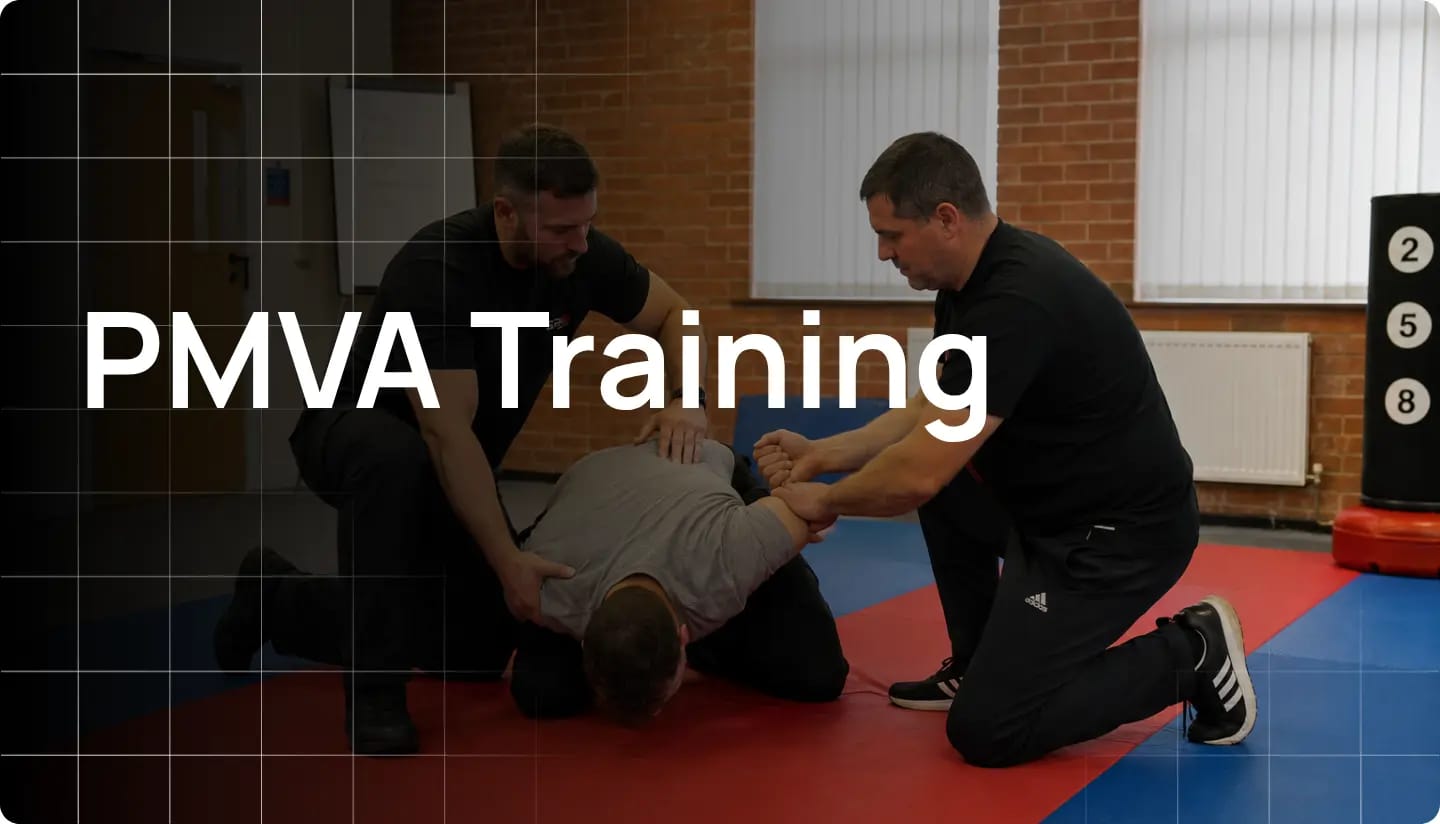
Support regulatory compliance through RRN-aligned PMVA Training. Gain essential skills in de-escalation tactics, breakaway moves, and safe physical intervention. Book today to receive a 1-year recognised certification upon successful completion.


PMVA stands for Prevention and Management of Violence and Aggression. The training helps professionals develop the knowledge and practical skills needed to prevent, de-escalate and safely manage situations involving violence and aggression, with training aligned with RRN guidelines. It is suitable for roles where staff may encounter challenging behaviour or situations requiring an appropriate physical response.
The course combines essential theory with trainer-led practical training, giving learners the opportunity to develop and practise relevant skills under supervision. Content can include communication, risk assessment, de-escalation, breakaway techniques and physical intervention, depending on the training level selected.
PMVA training is available across three levels, with Level 1 focusing on prevention and de-escalation, Level 2 adding breakaway and safe holding skills, and Level 3 covering more comprehensive physical intervention. Successful learners receive a certificate valid for 1 year.
| Level | Duration | Delivery Principle |
|---|---|---|
| Level 1 (low-risk) | 1 day | Classroom theory with no physical intervention |
| Level 2 (medium-risk) | 2 days | Classroom theory combined with practical breakaway and personal safety skills |
| Level 3 (high-risk) | 3–5 days | Advanced theory with practical, team-based physical intervention training |
PMVA training is suitable for professionals whose roles may involve managing violence, aggression or challenging behaviour, including:
PMVA training covers the knowledge and practical skills needed to prevent, manage and respond to violence and aggression. Learners develop an understanding of challenging behaviour, de-escalation, personal safety, physical intervention, legal responsibilities and post-incident procedures.
Understanding Violence and Aggression
Learn about common causes, triggers and warning signs of violence and challenging behaviour, including escalation and potential risks.
Prevention and De-escalation
Develop communication and de-escalation skills, including active listening, early intervention, situational awareness and dynamic risk assessment.
Breakaway and Disengagement
Learn safe ways to disengage from unwanted physical contact, including responding to common grabs and physical threats while maintaining personal safety.
Physical Intervention and Restraint
Develop practical PMVA techniques for appropriate physical intervention, including safe holding, managing movement, team approaches and understanding restraint-related risks.
Learners must be 18 or over and reasonably fit and healthy to participate in the practical training. You may complete a short health questionnaire before the course to confirm suitability for the practical activities. No previous PMVA qualification is generally required.
PMVA Training is delivered over 3-5 days, combining classroom-based learning with practical training. Learners develop their knowledge and practical skills through trainer-led instruction and supervised activities.
📌 Please note: Course duration may vary depending on the PMVA training level selected. Learners should choose the level that matches their training requirements.
The PMVA course includes both written theory and practical assessments. Learners must successfully complete both parts, demonstrating their understanding of the course content and their ability to perform the required practical skills safely. The practical assessment allows learners to demonstrate the techniques covered during supervised training.
On successful completion of the required training and assessment, learners receive a PMVA training certificate valid for 1 year. To maintain their knowledge and practical skills, learners should complete refresher training when their certificate expires, in line with the course requirements and workplace policy.
The cost of PMVA training can vary depending on the training level, delivery method and course requirements. For the most accurate price, learners should check the current course price when selecting their preferred PMVA training option. For group or tailored training requirements, contact 0333 344 1293 for a tailored quote.
PMVA training can complement your existing skills and support roles where managing violence, aggression or challenging behaviour is part of the job. Depending on your qualifications and experience, you may find it relevant to roles in healthcare, mental health, social care, residential care, education and other frontline settings.
You can also build your skills with related training such as Conflict Management Training, Safeguarding Training, First Aid Training and Mental Health Training, depending on your role and career goals. These additional courses can help broaden your workplace skills alongside PMVA training.

We provide our services without any additional charges.

All courses on our platform undergo thorough manual screening to ensure the utmost quality.

Purchases courses for team, family or colleagues. Add a course, and provide student details at checkout.

Choose “Business Customer” at checkout for access to this payment method.

session
Hear from our past customers
Learn to recognise common causes, triggers and warning signs associated with violence and challenging behaviour. The training also covers escalation, situational awareness and identifying potential risks.
Develop communication and de-escalation skills to help prevent situations from escalating. This includes verbal and non-verbal communication, active listening, early intervention and dynamic risk assessment.
Learn principles for safely disengaging from unwanted physical contact and responding to common grabs or physical threats. These skills support personal safety and are generally introduced at the lower levels of PMVA training.
Where required by the training level, learners develop practical PMVA techniques for appropriate physical intervention. Training may include safe holding, managing movement, team approaches and understanding the risks associated with physical intervention and restraint.
Understand the legal and ethical responsibilities associated with managing violence and aggression. This includes the reasonable and proportionate use of force, duty of care, relevant legislation and following organisational policies.
Learn what should happen following a physical or aggressive incident, including reporting, post-incident care and reviewing the response. The training also encourages learning from incidents to improve future practice.
PMVA training develops the knowledge and practical skills needed to prevent, de-escalate and manage violence, aggression and challenging behaviour safely.
PMVA stands for Prevention and Management of Violence and Aggression. It focuses on preventing escalation and responding appropriately when incidents occur.
PMVA training may be suitable for healthcare, mental health, social care, residential care, education and other frontline professionals who may encounter violence or challenging behaviour.
The duration for Level 1 is 1 day, Level 2 is 2 days, and Level 3 is 3–5 days. The duration can vary depending on the training level selected.
The course covers areas such as violence and aggression awareness, communication, de-escalation, risk assessment, breakaway skills, physical intervention and post-incident procedures.
The training can be offered across Level 1, Level 2 and Level 3, with each level providing a different depth of prevention, breakaway, holding and physical intervention training.
PMVA techniques may include de-escalation, breakaway and disengagement methods, safe holding and appropriate physical intervention, depending on the level of training.
Where included within the selected level, training can cover appropriate PMVA restraint techniques, including safe holding principles and the risks associated with physical intervention.
Yes. The course includes written theory and practical assessments. Learners must successfully complete both parts and demonstrate the required practical skills safely.
The PMVA training certificate is valid for 1 year after successful completion of the required training and assessment.
Yes. A 1-day annual refresher course is required to maintain PMVA certification. A full 3–4-day recertification is typically required every 3 years.
Yes. Learners may progress to a higher PMVA level where their role or workplace requirements call for additional physical intervention skills.