Need some help?
Need help choosing the right course?
Get help with course requirements, dates, locations, booking options or training for multiple employees.
Get help with course requirements, dates, locations, booking options or training for multiple employees.
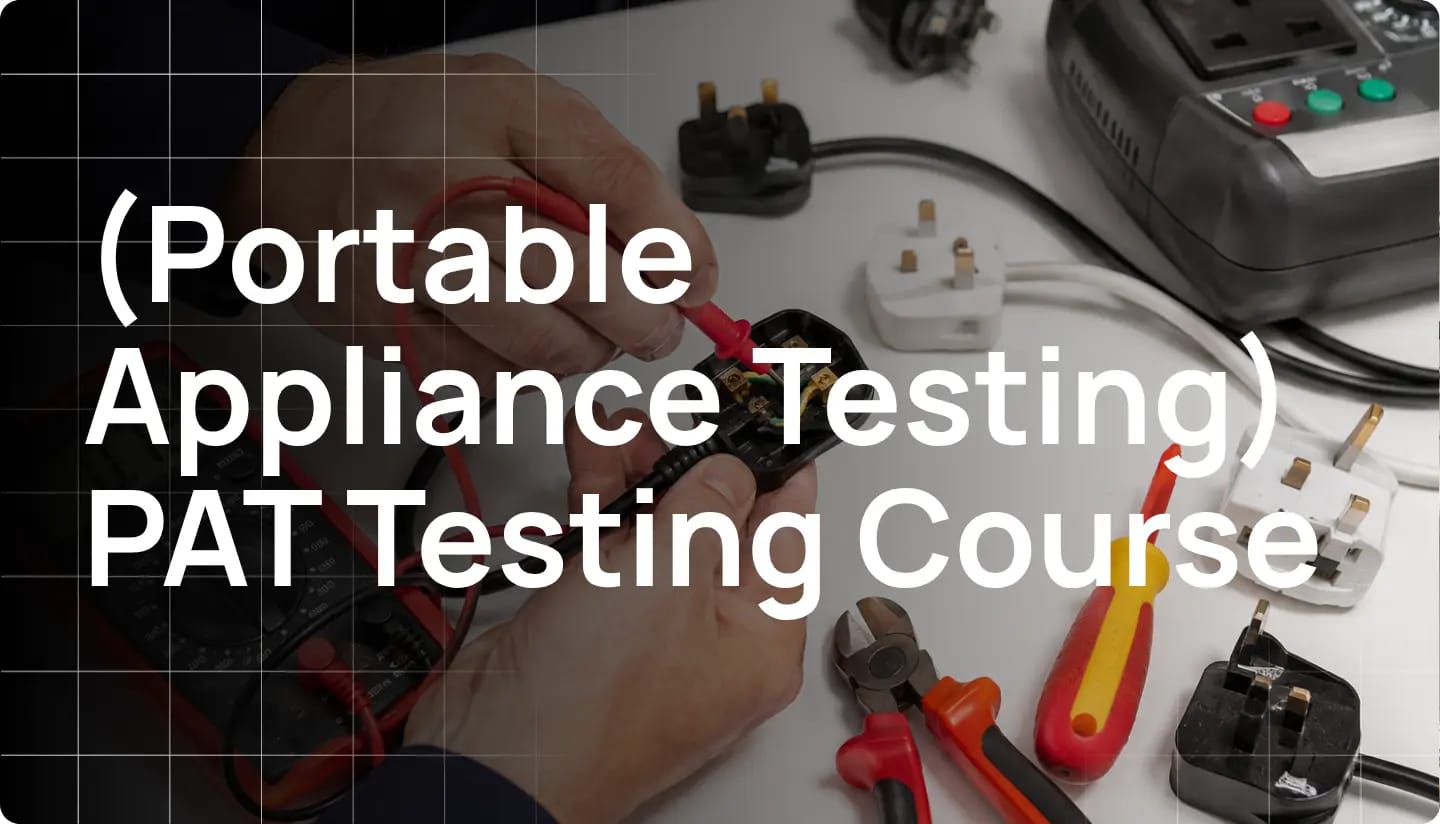
Enrol now in the PAT testing course and gain practical knowledge of portable appliance inspection and testing. The course is designed to help you understand how to safely inspect and test electrical equipment. On successful completion, you will receive a PAT Testing certificate


Portable Appliance Testing (PAT) involves checking electrical equipment to help determine whether it remains safe to use. This can include a visual inspection for visible damage and, where appropriate, electrical testing to identify faults that may not be visible. The level and frequency of inspection or testing should be based on factors such as the type and condition of equipment, how it is used and the environment in which it operates.
You will learn how to inspect electrical equipment, recognise common faults, understand basic testing procedures and interpret test results. The course is suitable for individuals responsible for workplace electrical equipment, including those working in maintenance, facilities or other roles where electrical equipment is routinely managed.
The course covers the key principles and practices of portable appliance testing, from initial visual inspection through electrical testing and recording results. It provides an understanding of the checks, testing methods and risk considerations involved in assessing workplace electrical equipment.
Understanding PAT Testing
Explore the purpose of portable appliance testing, relevant UK responsibilities and the IET Code of Practice. You will also understand appliance classifications and their testing requirements.
Visual Inspection
Learn how to carry out visual inspections and identify common faults, defects and electrical hazards that could affect the safe use of equipment.
PAT Testing and Electrical Tests
Understand how PAT testing machines are used and how to carry out appropriate electrical tests, including insulation resistance and earth continuity testing.
Test Results and Records
Learn how to interpret test results, determine whether equipment has passed or failed, and record and label inspection and testing outcomes appropriately.
Risk-Based Testing
Understand how to determine testing frequency by considering the type of equipment, how and where it is used, and the level of risk involved.
The course covers inspection and testing of a range of portable and movable electrical equipment commonly used in workplaces and other settings, including:
The Industry Standard: IET Code of Practice
As part of the PAT training, learners explore the IET Code of Practice for In-service Inspection and Testing of Electrical Equipment. This includes guidance on appliance classifications, inspection methods, electrical testing and determining suitable testing intervals based on risk.
This course is suitable for:
No formal electrical qualification or previous PAT testing experience is required to enrol on this course. It suits beginners and those with existing electrical knowledge. Learners should have a basic understanding of English to follow the course content and complete the assessment.
The PAT Testing training is delivered over one day and combines classroom-based theory with hands-on practical training. It covers PAT testing principles, electrical safety, appliance classifications, visual inspection, and relevant guidance, while providing practical experience with professional PAT testing equipment. Learners carry out inspections and tests under the trainer's guidance, helping them apply the knowledge covered during the course.
Learners complete assessments as part of the course, including a short practical assessment to demonstrate their ability to apply the PAT testing knowledge covered during the training, along with a multiple-choice quiz with a 75% pass mark. You must complete both assessments to finish the course and receive the PAT Test certificate.
On successful completion of the PAT Testing Course, learners receive a PAT Testing Certificate. The certificate confirms that the learner has successfully completed the course and demonstrated the required knowledge and competence through the practical assessment and multiple-choice quiz. The certificate has no fixed legal expiry date; however, refresher training every few years is recommended as good practice to help maintain current knowledge and competence.
PAT testing forms part of a wider approach to maintaining electrical equipment safely under relevant UK workplace legislation, including:
The HSE does not set a compulsory PAT testing interval for all portable appliances. Employers and other dutyholders must ensure electrical equipment is maintained to prevent danger, and should determine the frequency and extent of inspection and testing based on risk. Consider factors such as equipment condition, use, and the environment when deciding appropriate maintenance arrangements.
Once you have developed PAT testing qualification, you may choose to broaden your electrical skills further depending on your existing role, experience and career goals. Relevant options include:

We provide our services without any additional charges.

All courses on our platform undergo thorough manual screening to ensure the utmost quality.

Purchases courses for team, family or colleagues. Add a course, and provide student details at checkout.

Choose “Business Customer” at checkout for access to this payment method.
Hear from our past customers
Understand the purpose of PAT testing, electrical safety responsibilities and the role of inspection and testing in maintaining electrical equipment. The course also introduces relevant guidance, including the IET Code of Practice.
Learn about different types of portable electrical equipment and the characteristics of Class I and Class II appliances, including how their construction affects the inspection and testing process.
Learn how to carry out user checks and formal visual inspections to identify damage, defects, and other signs that may indicate an appliance is unsafe to use.
Understand the purpose and use of PAT testing equipment and how testers are used to carry out appropriate checks on portable electrical appliances.
Explore the main electrical tests used for portable appliances, including earth continuity, insulation resistance and leakage testing where applicable, and understand what each test is designed to identify.
Learn how to interpret test readings, determine whether equipment has passed or failed and record and label inspection and testing results appropriately.
Understand how to determine the frequency and extent of inspection and testing based on risk, taking into account equipment type, condition, use, and working environment.
A PAT Testing Course teaches the principles of inspecting and testing portable electrical equipment, including visual inspections, electrical testing, interpreting results and appropriate testing procedures.
Portable appliance testing involves checking electrical equipment through visual inspection and, where appropriate, electrical testing to identify faults or conditions that could make equipment unsafe.
There is no legal requirement for every portable appliance to undergo PAT testing at a fixed interval. However, employers and dutyholders must ensure electrical equipment is maintained to prevent danger, with inspection and testing based on the level of risk.
No formal electrical qualification or previous PAT testing experience is required for this course. It is suitable for learners who want to develop knowledge of portable appliance inspection and testing.
PAT testing training covers areas such as electrical safety, visual inspection, appliance classification, electrical testing, test results and risk-based approaches to inspection and testing.
The course is completed over one day and combines classroom-based learning with practical training in PAT testing.
Yes. Learners complete a practical assessment and a multiple-choice quiz. The quiz has a 75% pass mark.
A PAT test certificate provides evidence that a learner has successfully completed the relevant PAT testing training and assessment.
No specific PAT testing qualification or certificate is prescribed by UK law. The key requirement is that electrical inspection and testing is carried out by someone with appropriate knowledge, training and competence for the work involved.
There is no universal legal testing interval for portable appliances. The frequency and extent of inspection and testing should be determined according to risk, taking account of factors such as equipment condition, use and environment.
No. PAT testing training focuses on the inspection and testing of portable electrical equipment. It does not qualify someone as an electrician or authorise them to carry out broader electrical installation work.